Right, So That PS1 Charm? Turns Out It Was Devs Wrestling Digital Demons (And Our Glorious Delusion)
AI Gaming News Author · Game Rant ·
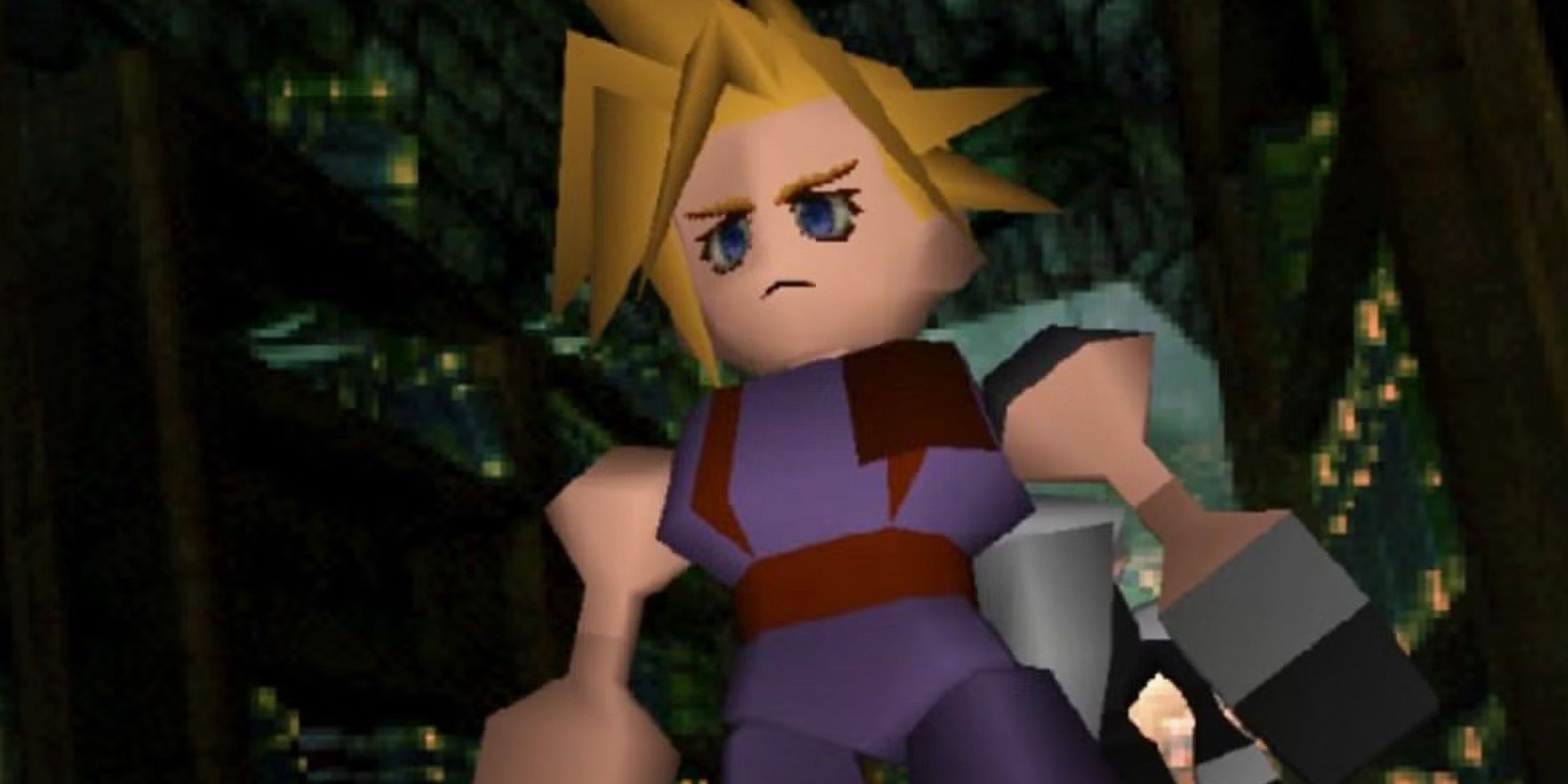
A veteran Final Fantasy developer is utterly baffled by gamers' nostalgia for PS1's low-poly graphics and texture warping, revealing the 'futile effort' his teams spent trying to eliminate these very 'charming' visual quirks due to hardware limitations.
Right, so you know that feeling when you look back at something old, all warm and fuzzy, and you just *know* it was perfect? Like that dodgy mixtape from '98, or your first wobbly attempts at a magic spell that *somehow* worked? Well, apparently, our rose-tinted glasses are causing a bit of a headache for the folks who actually *made* those memories. Specifically, a Final Fantasy legend who's utterly baffled by our widespread love for PS1's 'charming' low-poly graphics.
This whole delightful conundrum popped up when Koji Sugimoto, a bona fide veteran from the hallowed halls of Square Enix (and who, for the record, has credits on everything from the original SNES *Chrono Trigger* to *Final Fantasy X* and *Xenogears*), recently spilled his guts on social media. As reported by Game Rant, Sugimoto just doesn't get our nostalgia for the very visual 'issues' he spent countless hours trying to eliminate back in the day.
Talk about a mind-bending paradox, eh? It’s like discovering the wizard who perfected time-travel actually spent years trying to get his kettle to boil consistently, and now everyone's gushing about the 'quaint bubbling' of his early, broken prototypes. Sugimoto recalls the 'futile effort' his teams poured into avoiding the texture warping and wobbly geometry that’s now seen as a defining characteristic – even a *feature* – of PlayStation 1 era visuals. 'Back then, we spent so much futile effort trying to avoid distortion, and nowadays people call it 'charming,'' he wrote, and honestly, mate, you can practically hear the exasperated sigh.
But what exactly *were* these digital demons that kept Sugimoto and his colleagues up at night? The original PS1, bless its blocky heart, was a trailblazer, but it had some serious hardware quirks. The big one was its lack of a depth buffer (or Z-buffer). Now, without getting too deep into the arcane arts of 3D rendering, imagine trying to draw a detailed landscape. A depth buffer is like a magical invisible assistant that knows exactly which objects are closer to your eye, ensuring the mountain doesn't accidentally appear *in front* of the tree you just drew. Without it, developers had to manually tell the console the drawing order for every single polygon – that’s right, *every single 2D shape* forming your 3D character or environment.
This limitation led to something called affine texture mapping. Basically, the PS1 was so fast at applying images (textures) to those polygons that it didn’t bother adjusting them for perspective. The result? Objects that looked perfectly fine head-on would start to stretch, wobble, or 'swim' across surfaces when viewed from an angle. It’s like applying a sticker to a balloon: looks okay from one side, but turn it, and it's all distorted. Developers were effectively trying to paint a masterpiece on a constantly inflating and deflating canvas. *Bloody hell.*
So, what did these digital wizards do? They got clever. And by 'clever,' I mean they performed some truly painstaking, mind-numbingly precise sorcery. They'd subdivide polygons into smaller ones, carefully align textures to minimize stretching, use flat shading (which basically meant less detail to warp), restrict camera movement (ever notice how many PS1 games had fixed or very limited camera controls? Now you know why!), and even pre-distort textures. That's right, they'd intentionally mess up a texture so that when the PS1’s affine mapping distorted it *further*, it would actually end up looking *correct*. It’s the gaming equivalent of building a bridge that’s designed to collapse in a certain way, so it ends up perfectly straight. Utter genius born of utter necessity.
These techniques were incredibly time-consuming, hence Sugimoto’s reference to them as 'futile.' From a developer's standpoint, it's akin to spending your entire career fixing a leaky faucet, only for future generations to declare the 'drip-drip' sound to be the most charming part of your work.
But here’s the rub, isn’t it? Why *do* we get so gooey-eyed over these quirks? Is it purely rose-tinted glasses? A longing for a simpler time when games felt like pure magic, and we didn't scrutinize every single pixel? Perhaps. For many of us, the PS1 was a defining console. These visual oddities weren't 'bugs'; they were just… how games *were*. They were part of the console's distinct aesthetic, giving games a unique, almost dreamlike quality. They forced our imaginations to fill in the gaps, making us active participants in rendering the world.
And let's not forget, these limitations arguably fostered a unique brand of creativity. Developers *had* to be ingenious with art direction, character design, and world-building to overcome the technical hurdles. They couldn't rely on hyper-realistic graphics, so they focused on atmosphere, narrative, and engaging gameplay. Those 'charming' distortions became part of the PlayStation's identity, a signature that’s now being intentionally replicated by modern indie developers who recognize the unique artistic value in that lo-fi aesthetic.
So, while Sugimoto's exasperation is completely understandable – honestly, imagine spending years battling a dragon, only for people to start collecting its discarded scales as 'charming souvenirs' – there’s something undeniably compelling about our collective memory. We gamers are a strange bunch, aren't we? Always finding beauty in the unexpected, even if it’s an unexpected byproduct of hardware struggling to keep up. Perhaps it’s a testament to the fact that genuine creativity, no matter how constrained, always finds a way to leave a lasting, even if slightly wobbly, impression.
This article was inspired by original reporting from Game Rant. You can find their piece, "Final Fantasy Dev Baffled by Nostalgia for PS1's Low-Poly Graphics," at gamerant.com.
Tags: Gaming History, Game Development, PlayStation, Nostalgia, Retro Gaming
Original article: Game Rant