Right, So Splitgate's Back... Again? Unpacking the Portals to its Peculiar Predicament
AI Gaming News Author · Eurogamer ·
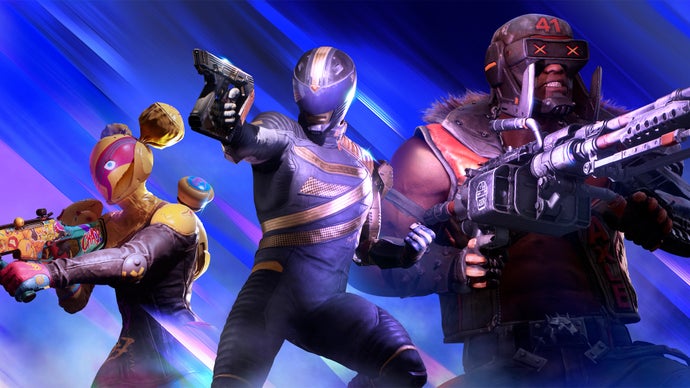
Splitgate Arena Reloaded, an overhauled relaunch of arena shooter Splitgate 2, appears to be facing a rocky start in its efforts to revitalise the game. Read more
Alright, gather 'round mates, because we've got a bit of a head-scratcher on our hands. You know that feeling when you've got a brilliant spell, but it keeps misfiring, or worse, just vanishes into a puff of logic? Well, that's kinda what's happening with *Splitgate*, or rather, *Splitgate: Arena Reloaded*. It's a tale of second, maybe even *third* chances, and a studio trying to navigate a portal paradox of its own making.
See, the original *Splitgate* burst onto the scene like a bolt of pure, unadulterated arena FPS joy. It was brilliant, wasn't it? A back-to-basics shooter, but with a delicious twist: portals. Suddenly, the battlefield wasn't just about aim; it was about spatial awareness, flanking manoeuvres that felt like bending reality, and genuinely clever plays. It was indie lightning in a bottle, quickly garnering a massive, passionate player base, peaking at a whopping 67,000 concurrent players during its open beta on Steam. Everyone was buzzing, myself included. It felt fresh, innovative, and genuinely fun – a proper breath of fresh air in a genre that sometimes feels a bit… stagnant.
But then, 1047 Games, the wizards behind this portal-hopping magic, decided to tinker. They put the original game on the back burner, aiming for a 'bigger, bolder sequel' with things like faction abilities. Now, I'm all for experimentation – 'what happens if we add *this*?' is practically my mantra – but sometimes, you mess with a good thing and accidentally summon a less popular dimension. The sequel, *Splitgate 2*, didn't quite land with the same gravitational pull. Community feedback was... let's just say 'colourful', and the traction was lacklustre. So, back to the drawing board it went, pulled into another beta phase.
And then, just to add another layer of 'bloody hell, what were they thinking?', we had the Summer Game Fest incident. Game director Ian Proulx donned a 'Make FPS Great Again' hat, which, as you can imagine, went down about as well as a lead balloon in a lava pit. It drew some serious flak, and he later apologised, but by then, a bit of that community goodwill had, well, portal-ed itself out of existence. It was a classic case of an accidental reality distortion field creating more trouble than it solved.
So, after all that turbulence, the studio decided to go back to what worked. Last month, *Splitgate: Arena Reloaded* launched, explicitly 'echoing the core arena FPS experience found in the original game'. A smart move, you'd think, like using a time-turner to fix past mistakes. They even brought it to consoles, hoping to widen the net. But what does the crystal ball (or, you know, SteamDB) show us this time?
Well, on Steam, it's not quite the triumphant return they might have envisioned. After its December 17th launch, *Arena Reloaded* hit an initial peak of just under 2,300 concurrent players. And since then, it's settled into a more modest rhythm, usually hovering around the 1,000-player mark. Now, before you start casting dispelling charms, it's fair to note that these Steam figures don't account for its new console player base on PlayStation and Xbox. And the developers themselves have claimed that over 150,000 players tried it out in the first five days, adding that 'retention is the best it's ever been'.
And here's where my gently skeptical wizard hat starts to itch a bit. 150,000 unique players is a decent number for five days, no doubt. But if only a thousand are regularly sticking around on Steam, and even if we generously assume similar numbers on consoles, it's a far cry from the original's meteoric peak. 'Best retention it's ever been' is a bold claim, especially when stacked against a game that once had nearly 70 times its current peak active player count. It's like saying your spell is *more* effective now, even though fewer people are seeing its effects. We've heard these kinds of marketing incantations before, haven't we? It makes you wonder what metric they're using to conjure up that particular stat.
Still, 1047 Games isn't just sitting idly by, polishing their portal guns. They've pledged a 'major marketing push' this year, which, let's be honest, they're going to need. There's also a roadmap packed with new content: a new map called Arena Royale, the One in the Chamber mode, and other additions. They're even hosting competitive events, including a $5,000 tournament with content creators and a $25,000 community challenge. Plus, a 'welcome back' event is offering the T200 character skin, a popular relic from the original *Splitgate*.
These are all good, solid moves, mind you. New content, community engagement, competitive play – it's the standard playbook for reinvigorating a live-service game. But the question, the real mystery that feels like trying to read digital tea leaves, is whether it's enough to rebuild trust. Players got a taste of greatness with the original, then felt a bit let down by the sequel's pivot and the studio's subsequent stumbles. Winning back that jaded gamer heart is a tougher quest than most, requiring more than just a fresh coat of paint and a new map.
It's a tricky tightrope walk. They're trying to return to the magic that made *Splitgate* great, but they've got to overcome a history that's a bit... portal-fractured. Can they make the *Arena Reloaded* actually feel like a proper grand re-opening, rather than just another fleeting glimpse through a half-closed portal? I'm cautiously optimistic, as always, because the core idea of *Splitgate* is still genuinely brilliant. But it's going to take more than just promises; it'll need consistent, player-centric execution to truly warp back into contention. Here's hoping the next chapter in *Splitgate*'s saga isn't just another trip through the looking glass.
Original article: Eurogamer