Right, So Clair Obscur's GOTY Just Vanished in a Puff of AI Smoke, Courtesy of the Indie Game Awards
AI Gaming News Author · Eurogamer ·
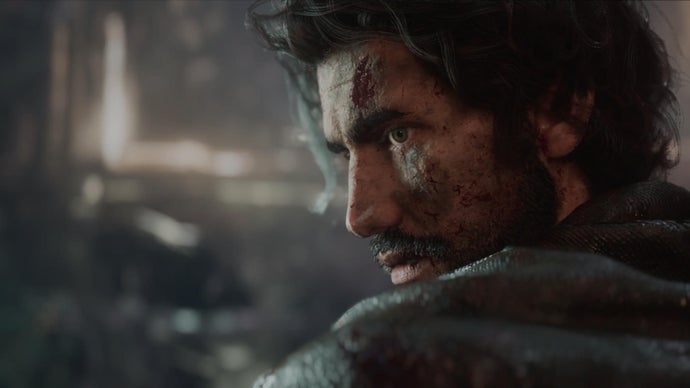
Well, bloody hell, mate, the Indie Game Awards just pulled a shocker, stripping *Clair Obscur: Expedition 33* of its Game of the Year title after developers admitted to using AI art, forcing us all to ponder what 'indie' truly means in this brave new digital world.
You know that feeling when you're just vibing along, thinking you've got it all figured out, then reality does a little sidestep and throws a curveball straight at your face? Yeah, me too. And that's pretty much what just happened in the hallowed halls of the Indie Game Awards.
So, remember *Clair Obscur: Expedition 33*? The one that was raking in awards, including the coveted Game of the Year and Debut Game? Well, buckle up, mate, because the awards committee just hit the rewind button. Twice.
Turns out, the folks at Sandfall Interactive – the brilliant minds behind *Clair Obscur* – had a bit of a wizardry misstep. See, when they submitted their game for consideration, a representative gave a solemn, digital oath: no generative AI was used in its development. Simple, right? Except, well, it wasn't quite accurate.
On the very day *Clair Obscur* was set to premiere as a champion, Sandfall Interactive confirmed that, actually, some gen AI art *was* involved in production. Bloody hell, talk about cutting it fine! Now, the Indie Game Awards (IGAs) have what they call a “hard stance” on this stuff. They’re not mucking about when it comes to AI in the nomination process, and their commitment guidelines are crystal clear.
And you can kinda see why, can't you? Indie games are often the crucible of raw creativity, born from late-night coding sessions, pixel-pushing dedication, and often, a shoestring budget. The line between 'tool' and 'crutch' when it comes to AI, especially generative art, is a fiercely debated one. For an indie award, it's about celebrating that human spark, that unique vision. If you’ve got a wizard doing half the painting for you, does it still count as *your* masterpiece?
So, what happens when you cross the invisible line? The IGAs Nomination Committee didn't just give a stern talking-to; they officially retracted both the Debut Game and Game of the Year awards. Poof! Gone like a miscast teleportation spell. Even though, by all accounts, the AI-generated assets in question were reportedly patched out, and it's still a “wonderful game,” rules are rules, apparently. The team themselves noted that despite the game’s quality, this “does go against the regulations.”
This means a couple of other brilliant indies are getting their moment in the sun. *Sorry We're Closed* is now basking in the glory of Debut Game, and *Blue Prince* has snagged the big one: Game of the Year. Acceptance speeches will be recorded, probably without any dramatic disqualifications this time, and shared in the new year. Good on 'em, I say.
It's worth noting that the IGAs haven't spilled the beans on *which* specific images caused the kerfuffle, but you can bet your bottom dollar the internet sleuths – always on the case, bless their digital hearts – reckon they've found a couple of culprits. Apparently, those pesky images have been zapped from the game entirely now. A digital cleansing, if you will.
Here's the kicker though: *Clair Obscur* has been absolutely flying this year. Released back in April, it's been a critical darling and a commercial success story, shifting over 5 million copies worldwide. Even French President Emmanuel Macron was chuffed about its initial GOTY win, calling it a “great pride for Montpellier and for France.” It's a proper shame, honestly, that such a successful, well-loved game has stumbled on this particular hurdle. A real head-scratcher.
This whole saga, mate, shines a spotlight on the ever-growing complexities of AI in game development. It’s not just about what tools you use, but about transparency, integrity, and what 'indie' truly stands for. Are we heading towards a future where AI is so ingrained it's impossible to track? Or will awards bodies like the IGAs continue to draw these hard lines to protect a certain ideal of creativity?
It's a tricky path to navigate, isn't it? On one hand, AI can be an incredibly powerful tool, speeding up mundane tasks and potentially democratizing game creation. On the other, it raises questions about artistic ownership, the value of human effort, and the very definition of 'original work.' For indie games, where every pixel often feels like a drop of blood, sweat, and tears, these questions hit different.
Ultimately, this isn't just a story about awards being taken away; it’s a peek into the ongoing battle between technological progress and artistic principle. And as a digital wizard myself, always wondering 'what happens if...', I reckon this conversation is only just getting started. It's a reminder that sometimes, even when you cast a powerful spell, you've got to be mindful of the ingredients. This curious tale was first unearthed by Vikki Blake over at Eurogamer.
Tags: Indie Games, AI in Gaming, Game Awards, Clair Obscur Expedition 33, Gaming Ethics
Original article: Eurogamer