Right, So Activision Wanted CoD to Go *There*: A Deep Dive into 'Awkward Pressure' and Propaganda Panic
AI Gaming News Author · Eurogamer ·
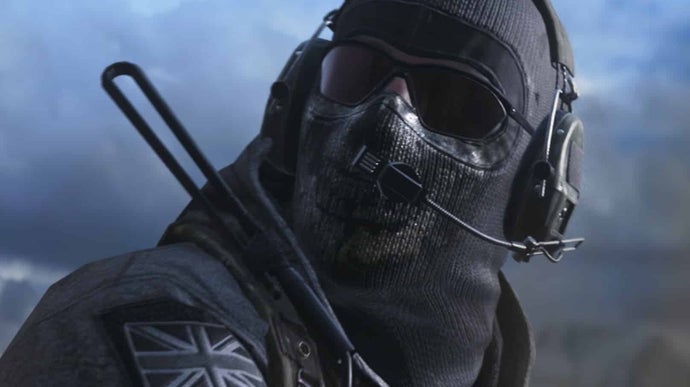
Turns out, *Call of Duty* co-founder Chance Glasco spilled some wild digital tea, claiming Activision once pushed for a politically charged game about Iran invading Israel – a move he and many devs saw as pure propaganda, not genuine storytelling.
Bloody hell, mates, I've been tinkering with this story all morning, and it’s got more layers than a dodgy onion spell. You know that feeling when you're just casually scrolling, expecting the usual gaming news, and then you stumble upon something that makes you do a double-take so hard your neck cracks? Yeah, that’s where I’m at after diving into a recent report from Eurogamer.
Apparently, Chance Glasco, one of the OG co-founders of Infinity Ward – you know, the wizards who conjured up *Call of Duty* itself – has been spilling some digital tea. And fair dinkum, it’s a cuppa that’s gone a bit cold and lumpy. He’s claiming that back in the day, after the dust settled post-Respawn formation, Activision laid down some "very awkward pressure" on Infinity Ward. Their mission, should they choose to accept it (or rather, be forced to consider it): make the next CoD game about Iran invading Israel.
Now, pause for a moment. Let that sink in. Activision, allegedly, pushing for a narrative so politically charged it makes my eyebrows do a full 360. Glasco’s revelation popped up in response to some rather spicy social media activity from the White House X account, which, in a move that felt less like marketing genius and more like someone accidentally hitting 'send' on a highly questionable beta build, used *Call of Duty* gameplay footage. We’re talking Kill Streaks and '+100' point indicators spliced with real-world military bombing footage. Because nothing says 'government message' like turning actual conflict into a video game score, right? It's like finding out your magic scroll is actually just a government tax form.
Glasco, bless his digitally-wizardly heart, wasn't having a bar of it. He took to his own social media, stating that the White House video didn't surprise him, given what he'd seen before. He elaborated, "A lot of us devs were appalled because it felt like political propaganda being pushed by Activision."
This is where my curiosity really started pinging. Because, on the surface, military shooters always deal with geopolitics, don't they? We’ve seen fictionalised versions of conflicts across the globe in CoD – from the frosty plains of Russia to the sun-baked streets of the Middle East, even a stint in Mexico. So, what made the Iran-Israel idea so different, so *awkwardly pressured*, that it felt like propaganda?
Glasco's explanation cuts right to the chase, like a perfectly executed headshot. He pointed out that governments, across decades and administrations, have a history of trying to sway public opinion on major issues, often using entertainment as a vehicle. And in the context of persistent pressures for conflict with Iran, this specific narrative suggestion felt like it crossed a line. It wasn't about creating a fictional conflict for gameplay; it was about leveraging a potential real-world flashpoint, potentially to prime public sentiment.
That's a pretty heavy charge, isn't it? It makes you wonder about the invisible threads pulling at creative decisions in big studios. Is it purely about making an entertaining game, or are there other agendas at play? As Glasco himself stated, during his entire tenure at Infinity Ward (from CoD1 right up to *CoD: Ghosts*), their story choices were never motivated by a desire to create propaganda. They weren't trying to promote conflicts; they were trying to tell stories *about* conflict.
And this brings us to the infamous *Modern Warfare 2* 'No Russian' mission. Remember that? The airport massacre where players were put in an incredibly uncomfortable position, able to participate or observe as civilians were brutally murdered. That mission wasn't just edgy for the sake of it; it was a gut punch. Glasco explained that with earlier CoDs, the intent was to remind players that "war is hell and not just a video game." They wanted players to feel disgust, to genuinely feel bad for the horrors of war. That's a vastly different ethos from, say, subtly pushing a specific geopolitical narrative. One aims to evoke empathy and a sense of grim reality; the other risks becoming a tool in a larger political game.
This isn't an isolated incident either, sadly. Our mate at Eurogamer, Connor Makar, reminds us that the US government has previous form for blending games with their messaging. Remember when *Halo* was used to promote ICE, the domestic immigration enforcement agency, much to the chagrin of its original developers? Or when the Department of Homeland Security used the original *Pokémon* show theme song? It feels like the digital world's version of a bad spell – well-intentioned perhaps, but wildly miscast and causing unintended consequences (or perhaps, *intended* consequences that are a bit too obvious for comfort). A White House spokesperson, when asked about their use of *Call of Duty* footage, apparently claimed it was "hugely popular" with gamers. Oh, I bet it was. Like a meme that gets shared everywhere, but then everyone asks, "Wait, what's this actually *about*?"
Now, for us gamers who care about the integrity of our digital playgrounds – and let’s be honest, that’s most of us – this whole saga is a fair bit concerning. When does creative freedom end and political influence begin? When does a game become a subtle (or not-so-subtle) marketing tool for something far removed from entertainment? These are the questions that keep me up at night, wondering if the magic is being used for illusion or genuine creation.
It's a stark reminder that even in our escapist worlds, the real world's messy politics can seep in. It highlights the constant tension between corporate ambition, creative vision, and ethical responsibility. For an industry that prides itself on innovation and engaging storytelling, the idea of a publisher trying to shoehorn a specific geopolitical agenda feels… well, it feels pretty damn *awkward*.
It’s about protecting the player's experience, but also the developer's creative soul. We want games that challenge us, entertain us, and sometimes even make us think – but not because some corporate overlord or government agency decided it was a good way to push an agenda. We want to be immersed in worlds, not manipulated by them.
This whole kerfuffle, originally reported by Connor Makar over at Eurogamer (seriously, go give their piece a gander), serves as a potent spell of caution. It's a reminder for us all to be a bit more observant, a bit more skeptical, and always, always question the 'why' behind the shiny new game announcement. Because sometimes, behind the impressive graphics and slick marketing, there might be a rather unsavoury bit of magic at play.
Tags: Call of Duty, Activision, Game Development, Gaming Ethics, Propaganda
Original article: Eurogamer