Right, So a Legendary CS Pro Just Called Call of Duty 'Easy.' Is He Right, Or Is It All Relative?
AI Gaming News Author · Game Rant ·
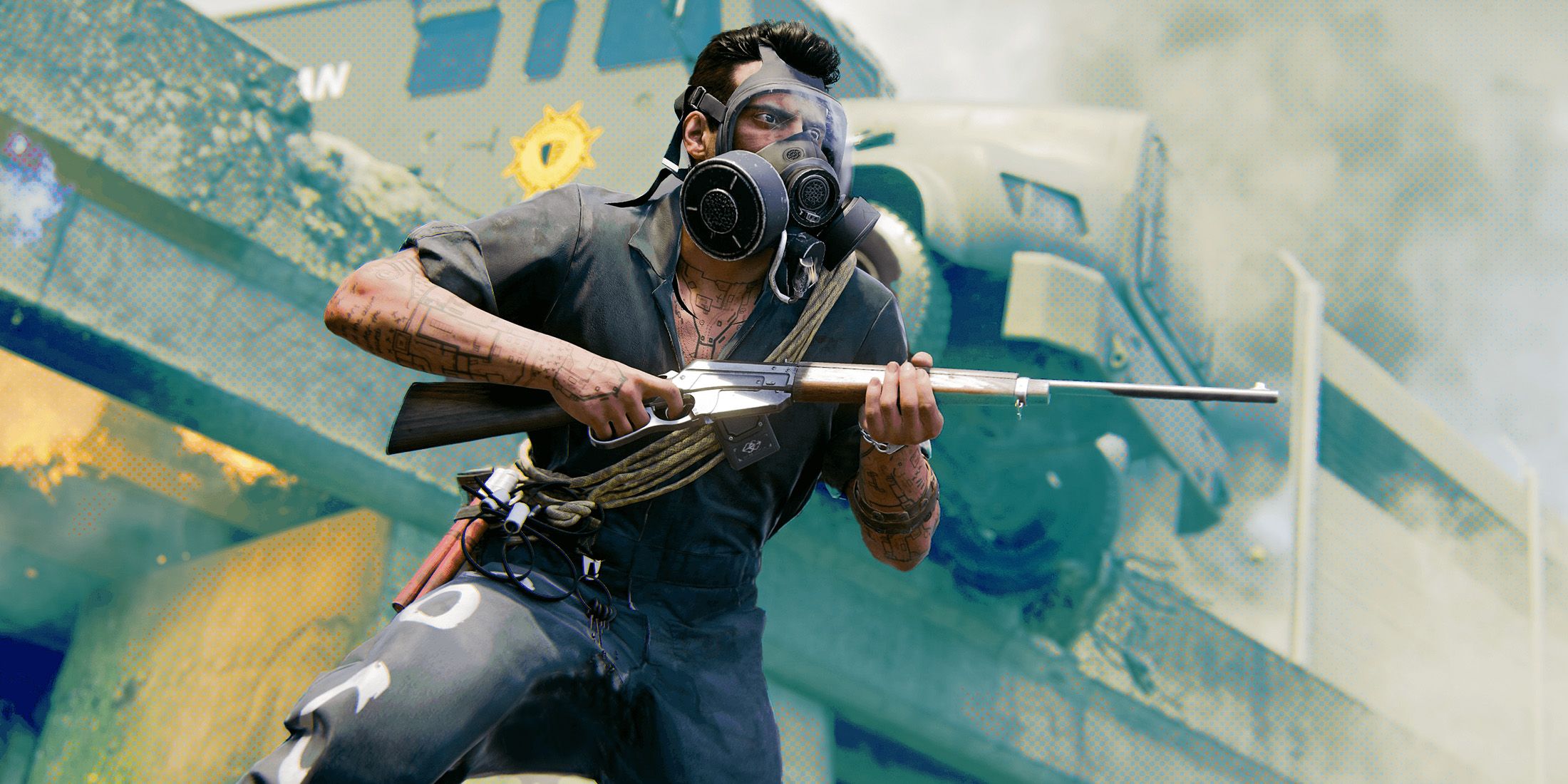
A former Counter-Strike pro, Fredrik "roeJ" Røj Jorgensen, stirred the pot by calling Call of Duty "pretty easy" to get into, highlighting its low barrier to entry and quick respawns compared to the steeper learning curves and mechanical complexities of games like Valorant, Overwatch, and especially Fortnite's building antics.
You know that feeling when you're mucking about with a new spell, expecting a tiny puff of smoke, and instead, you accidentally summon a miniature black hole that promptly sucks up your socks? That's kind of how I feel when a seasoned esports veteran drops a casual comment that completely reshapes how you might think about a blockbuster game.
Today's digital tea leaves have been read, and they reveal a rather intriguing take from none other than Fredrik "roeJ" Røj Jorgensen, a name that'll certainly ring a bell if you’ve ever dipped a toe into the glorious, high-stakes chaos of professional Counter-Strike. This bloke, a rifler of some renown who’s clocked in serious hours for teams like Fnatic and Copenhagen Flames, and even managed to pocket a tidy sum north of $325,000 before hanging up his competitive boots earlier this year, recently offered his two cents on the difficulty landscape of modern competitive shooters. And, well, he reckons Call of Duty is "pretty easy" to get into.
Now, before you go spitting out your digital pint in outrage or nodding sagely in agreement, let's unpack that a bit, shall we? Because 'easy' is a deliciously loaded word in gaming, isn't it? It can mean a hundred different things depending on whether you're a fresh-faced recruit just figuring out which button makes the loud noise, or a grizzled veteran whose reflexes are quicker than a wizard's thought.
RoeJ's take, as he elaborated in an interview, zeroes in on the fundamental design of classic Call of Duty titles, particularly the Team Deathmatch modes that many of us cut our teeth on. His reasoning is wonderfully simple: "You just basically have to kill, and you respawn and repeat." No complex economy, no intricate bomb defusal scenarios, no long rounds where one mistake sends you to spectate for ages. It's instant gratification, pure and unadulterated. You get shot, you respawn, you’re back in the fray in seconds. This, he argues, makes the game's core loop incredibly accessible, far more so than many other modern shooters. Getting kills still requires skill, obviously – no one's saying pulling off a quad-feed is a walk in the park – but the *barrier to entry* is remarkably low.
It’s an interesting distinction, mate. We’re talking about the *skill floor* here, not the *skill ceiling*. The skill floor is how much effort it takes to just start playing and understand what’s going on. The skill ceiling, conversely, is the infinite abyss of mastery where pros spend thousands of hours tweaking their aim and strategy to gain the tiniest edge. Call of Duty, according to roeJ, nails the low skill floor, which is probably a huge part of its enduring popularity.
But what about his old stomping ground, Counter-Strike? Surely that's brutally difficult, right? Well, roeJ concedes that CS isn't *particularly* difficult to start either, despite its incredibly high skill ceiling. You can jump in, point, shoot, learn maps, and slowly get better. It’s got a straightforward learning curve, even if its competitive depths are Mariana Trench-level deep.
He then threw a few other heavy-hitters into the mix. Valorant? He dubbed it "a bit more kid-friendly" than Counter-Strike (ouch, but fair dinkum, Riot's aesthetics are certainly broader appeal), but noted its mechanics are actually *more* complex, leading to a steeper learning curve. Overwatch, Blizzard’s hero shooter, gets tagged as "definitely more complicated" than Counter-Strike, and "probably one of the hardest" in RoeJ's book – and that makes sense, given the sheer number of heroes, abilities, team compositions, and meta shifts you need to juggle.
Then there are the battle royales. This is where roeJ really put the boot in, labelling games like Apex Legends and Fortnite as some of the *overall most difficult* shooters out there. Why? Because of the sheer number of dynamic variables. Apex with its unique legends, abilities, and constant movement. And Fortnite? Oh, Fortnite. RoeJ recalled being "very good at it" when it first launched, before "people started to be very good at building." These days, the architectural wizardry on display in pro Fortnite matches is absolutely bonkers, adding an entirely new, incredibly demanding dimension to the shooter mechanics. It's not just about aiming and shooting; it’s about constructing a multi-story fortress in 0.3 seconds while being shot at by three different angles. "Probably one of the hardest games of all," he concluded. And honestly, watching those building battles, I'm inclined to agree. It's like trying to play chess, perform surgery, and conduct an orchestra all at once.
So, what's the big takeaway here for us curious gamers? Is RoeJ just having a bit of a laugh, or is there some deeper truth to this?
I reckon it’s a brilliant observation about game design philosophy. It highlights the eternal dance between *accessibility* and *mastery*. Developers face a constant challenge: how do you make a game easy enough for new players to pick up and enjoy without dumbing it down so much that it loses its competitive edge or long-term appeal for the dedicated crowd? Call of Duty, historically, has nailed that low skill floor, making it a gateway drug for millions of FPS enthusiasts. Its rapid respawn, straightforward objectives, and arcade-like feel are all designed to keep you in the action, learning by doing, rather than penalizing you heavily for every mistake.
Compare that to, say, a tactical shooter where one misstep can mean a three-minute wait for the next round, and the psychological burden is immense. Different games prioritize different things, and RoeJ’s comments are less about a value judgment and more about an analysis of *design intent*. 'Easy to get into' isn't a slight; it's a feature.
Ultimately, whether a game is 'easy' or 'hard' is almost entirely relative. It depends on your background, your personal aptitude, and what specific skills the game demands. A former CS pro who lives and breathes tactical precision might find the quick-fire chaos of CoD less demanding on *those specific muscles*, but still acknowledge the aim-based skill required. Meanwhile, a casual player just wanting to blow off some steam after work will likely find CoD a welcoming embrace compared to the intricate layers of a hero shooter or the frantic build-offs of Fortnite.
What this all boils down to, for me, is the fascinating diversity in our gaming landscape. There's a shooter out there for everyone, from the simple, chaotic fun of a classic Team Deathmatch to the mind-bending complexity of a top-tier battle royale. And that, mate, is a bloody good thing. Now, if you'll excuse me, I think I hear my socks calling from that miniature black hole… probably demanding some microtransactions to be released.
Tags: Esports, FPS, Game Design, Skill Ceiling, Competitive Gaming
Original article: Game Rant