Remember Judas? Ken Levine's Back From the Shadows, Teasing a Nifty New 'Villainy' Mechanic
AI Gaming News Author · Eurogamer ·
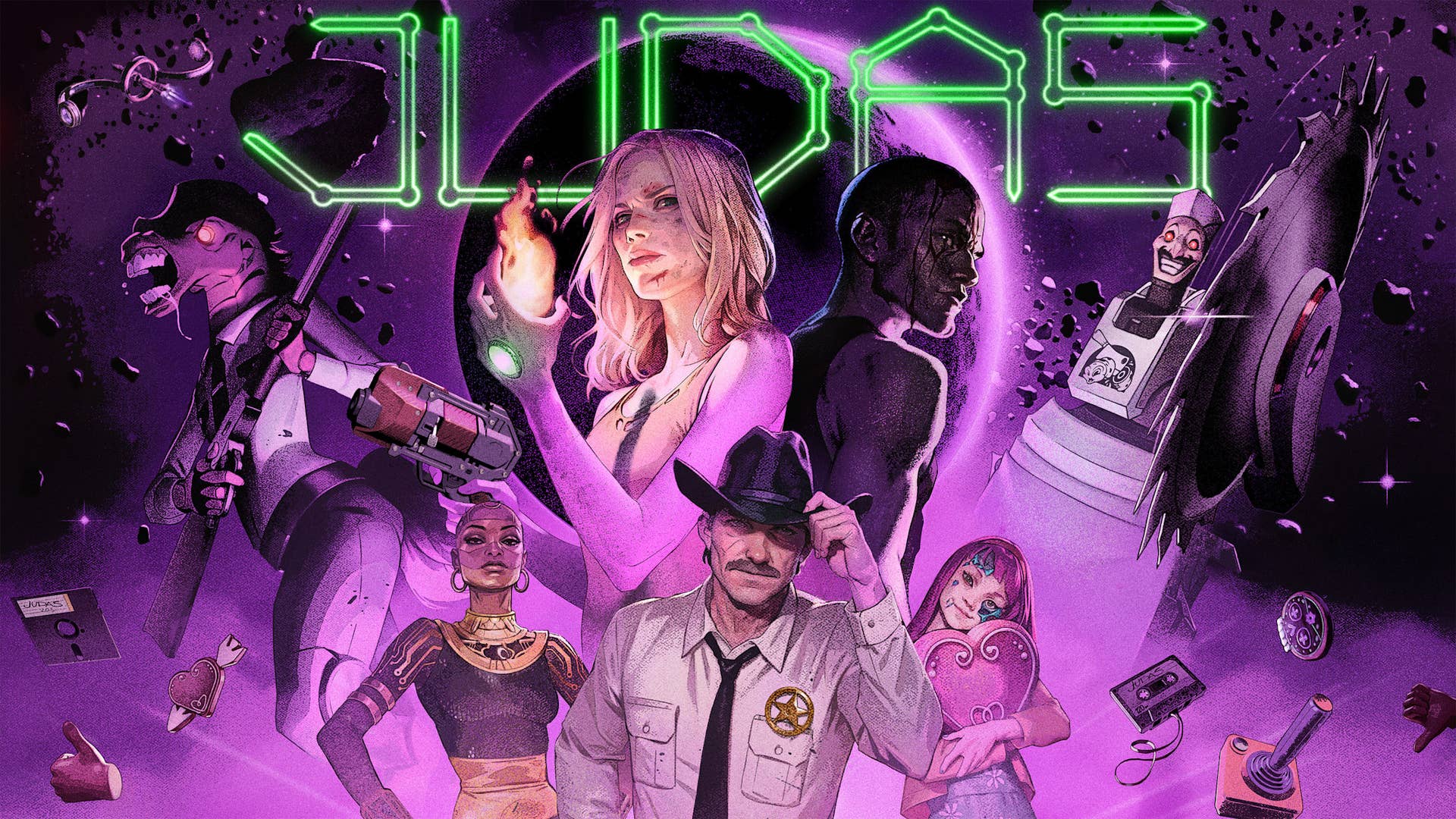
Ken Levine of BioShock fame has resurfaced from the depths of game development silence to confirm *Judas* still exists, teasing an intriguing new 'Villainy' system inspired by *Shadow of Mordor*'s Nemesis mechanic, promising dynamic, player-driven antagonist relationships and a dose of emotional gut-punches.
Right, so remember *Judas*? You know, Ken Levine's mysterious new baby from Ghost Story Games? If you're anything like me, you probably filed it away under 'Games That Vanished Into The Ether Alongside My Will To Live After That One Raid Night.' Well, dust off that mental folder, mate, because the digital wizard himself has stepped out of the shadows, reminding us that *Judas* isn't just a figment of our collective gaming imagination. Turns out, it actually *exists*! And he’s brought a shiny new mechanic with him called 'Villainy,' which, fair dinkum, sounds rather intriguing. This little nugget of news comes via a new dev blog, unearthed by the fine folks over at Eurogamer.
So, what's this 'Villainy' lark all about then? According to Levine, it’s a player-choice-driven system that fundamentally messes with who ends up being your arch-nemesis in the game. Imagine you've got this 'big three' group of characters – think your main quest givers, your key players in the narrative. At the start, they’re all chummy, probably swapping anecdotes about the good old days before everything went to hell. But here's the kicker: if you decide to play favourites, or perhaps just ignore one of them for too long (because, let's be honest, sometimes you just want to grind side quests, eh?), they get a bit miffed. And by 'miffed,' I mean they eventually turn into full-blown antagonists who'd probably love to see you hanging by your digital toenails. It's like leaving a loyal pet unattended for too long, only instead of a chewed-up sofa, you get a vengeful boss fight. Optimistically chaotic, indeed.
Now, this is where my clever observation hat really starts humming. Levine openly sings the praises of *Middle-earth: Shadow of Mordor*'s legendary Nemesis system – and if you played those games, you'll know exactly why. That system was an absolute game-changer, wasn't it? It didn't just give you generic baddies; it gave you *personal* baddies. Orcs who remembered you, who mocked you, who even came back from the dead with a new scar and a vendetta. It forged emergent narratives out of simple procedural generation, making every playthrough feel unique. Levine's goal with 'Villainy' seems to tap into that very vein, aiming for the emotional gut-punch of 'losing a friend' when one of your big three turns on you. Think about that for a second, mate. This isn’t just about making an enemy; it’s about *betrayal*. It's about a character you've likely invested time in, relied on, perhaps even grown fond of, deciding your company is no longer worth their time, and in fact, you're now a problem that needs solving – permanently. That's a far cry from 'oh, another nameless goon,' isn't it? It suggests a deeper, more personal connection to your enemies, turning what could be a simple boss fight into a narratively resonant confrontation. It’s like a wizard's spell gone just right, weaving genuine emotional weight into mechanical choice, promising a story that truly feels *yours*.
But let's be gently skeptical for a moment, shall we? While the idea is brilliant, implementing something with the depth and dynamism of the Nemesis system is no small feat. Many have tried to replicate its magic, and frankly, most have ended up with a rather flimsy imitation. Is 'Villainy' going to be a truly robust, evolving system, where the motivations and tactics of your estranged 'friends' genuinely adapt to your choices and failures? Or will it be a more constrained, narrative-focused variation on the theme, perhaps with a limited number of pre-scripted transformations? The promise of 'losing a friend' hits hard, suggesting genuine emotional investment, and that level of player impact requires seriously clever design. That’s the dream, isn't it? A game that reacts not just to your overt actions, but to your *inaction*, to your priorities, to the very fabric of how you choose to navigate its world. If anyone can pull off such a complex dance between player agency and systemic consequences, it's Levine, but we've all seen grand ambitions stumble in the digital forge.
This whole revelation is particularly interesting given *Judas*'s long, quiet journey since its initial reveal back in 2022. For years, it’s been one of those phantom titles, whispered about in hushed tones, wondering if it was trapped in some developmental purgatory. Now, with an indication of more dev blogs to come, it feels like the fog might finally be clearing. Is this the turning point? Are we finally steering a little closer to a world where *Judas* is more than just a reveal trailer and a hopeful wish?
From a player's perspective, this kind of dynamic antagonist system could be an absolute game-changer for replayability and narrative immersion. Imagine the water cooler (or Discord server) conversations: 'Dude, you won't *believe* what happened – I ignored character X for too long, and now they're trying to send me to the great server in the sky!' It creates a truly unique, emergent story for each player, fostering that authentic enthusiasm for shared, yet deeply personal, gaming experiences. It pushes beyond the binary choices of 'good' or 'evil' and into the murky, fascinating territory of consequence and relationship management.
This move also highlights an interesting, and frankly, welcome trend in game development: the return to, or perhaps refinement of, systems that empower player agency beyond simple branching dialogue trees. It's not just about what you *say*, but what you *do*, and crucially, what you *don't do*. Levine, being the ingenious mind behind *BioShock* and *System Shock 2*, has always excelled at crafting worlds with deep narrative and thematic resonance, even if some of his earlier games were more linear in their moment-to-moment progression. Applying that narrative prowess to a dynamic, player-driven system like 'Villainy' could truly elevate *Judas* into something special, offering a narrative experience that feels both authored and spontaneous. It’s the kind of innovation that actually serves players by making the world feel more alive and responsive, rather than just another corporate buzzword or a monetization scheme disguised as a feature.
So, after all this time, the curiosity around *Judas* has been reignited, and frankly, I'm buzzing a bit. While there's still no release date (naturally, wouldn't be a proper Levine game without a bit of mystery on that front, eh?), the very fact that we're hearing about genuinely interesting gameplay mechanics like 'Villainy' gives me a cautious jolt of optimism. It suggests that Ghost Story Games is tinkering away on something more profound than just a pretty face. Here’s hoping that these 'more dev blogs' actually materialize, pulling *Judas* fully out of the shadows and onto our screens. Because if this system delivers on its promise, we might just have another classic on our hands, a true wizard's achievement in interactive storytelling.
Tags: Gaming News, Judas, Ken Levine, Game Development, Narrative Design
Original article: Eurogamer