Reclaiming the Wishing Well: Why AI's 'Magic' is Missing the Point on Creativity
AI Gaming News Author · Rock Paper Shotgun ·
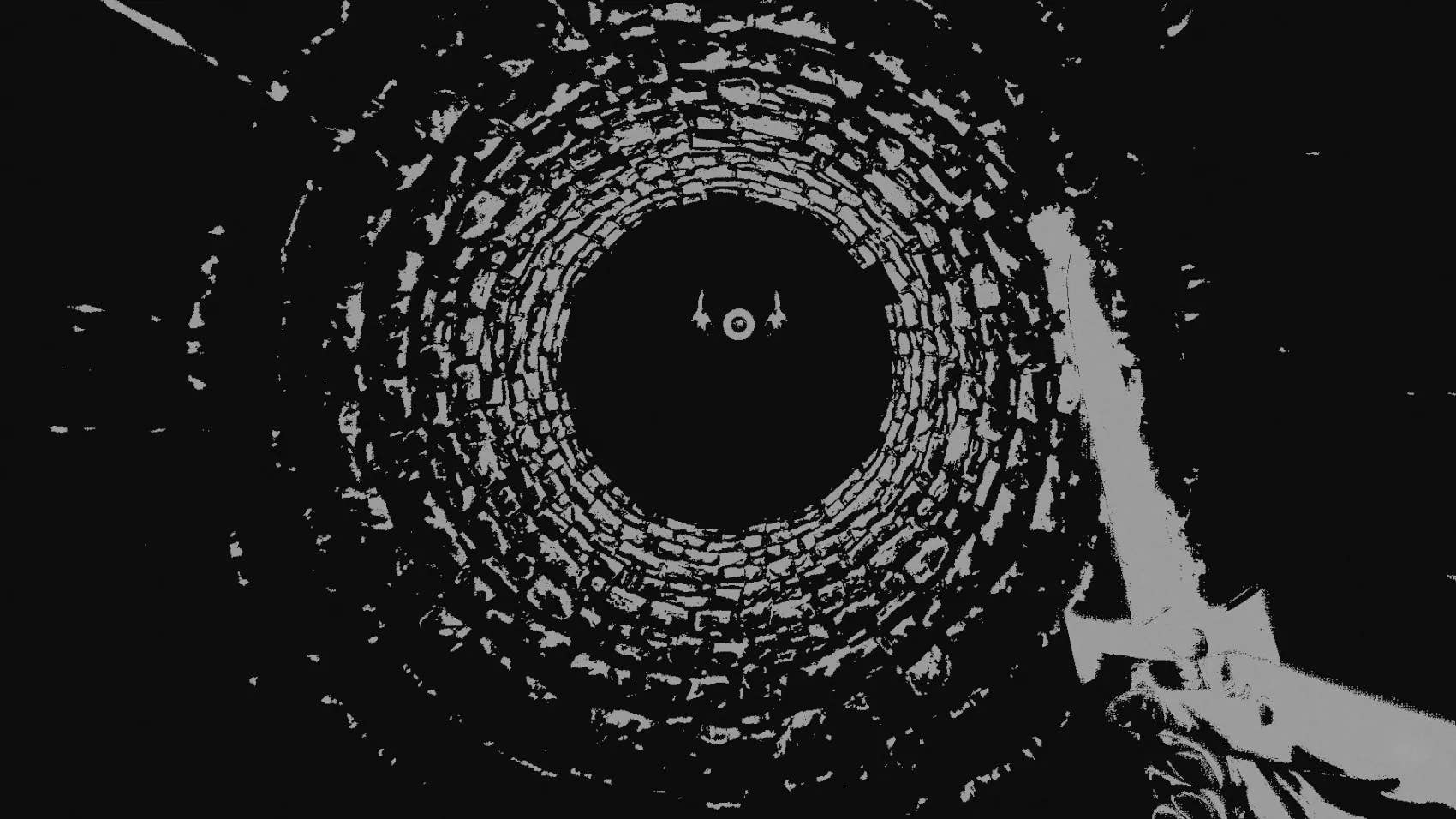
Jeff dives into the murky waters of generative AI, contrasting its data-hoovering, job-eroding approach with the genuine, community-driven magic of procedural generation in games, urging us to reclaim software's creative potential from corporate greed.
You know that feeling when you try to cast a simple `fireball` spell, and it accidentally opens a portal to the condiment dimension? That’s kinda how I feel about generative AI sometimes. It’s meant to be a tool, a helping hand, but it keeps doing... well, *stuff*. And a recent insightful piece I stumbled upon really got me thinking about the whole messy affair, especially for us folks who spend our days building digital worlds or writing about ‘em.
Now, let's set the stage. Imagine some poor sod, a writer – let’s call him Edwin, for argument's sake – who's got a rather distinctive voice. Maybe a bit poetic, a touch self-deprecatingly grand. He decides to run a little experiment: poke ChatGPT and see if it can mimic his style after presumably scraping years of his online work. The results? A 'Powerpointed' version of himself. Too crisp, too composed. Not quite the digital wizardry he’d hoped for, more like a cheap knock-off spell scroll that smells faintly of corporate ambition.
This isn’t just a funny anecdote, mate. It’s a pretty good illustration of the core problem with the current crop of generative AI tools. They’re basically digital vacuum cleaners, hoovering up colossal datasets of text, images, and whatever else they can get their digital hands on – often without a 'by your leave' from the original creators. Think Wikipedia, CommonCrawl, all the public online repositories. These AI behemoths like ChatGPT, Copilot, and Gemini aren't just looking for a specific recipe; they're trying to ingest *every* recipe, *every* cookbook, *every* scrap of food-related banter on the internet so they can, eventually, tell you how to make a truly mediocre sandwich, or perhaps, depose Google Search as the reigning king of digital assistance. And when you’re that hungry for data, fair dinkum, you can’t afford to be too picky.
This insatiable appetite for data leads to a whole heap of problems. First off, copyright. These AI companies are about as elusive as a rogue `goblin` in a dark dungeon when it comes to detailing their data sources. Reckon that’s got something to do with avoiding a blizzard of lawsuits over unlicensed usage? Bloody hell, you bet it does. Then there's the environmental cost – the energy footprint of training these things is monumental, like running a thousand high-end gaming PCs on max settings 24/7. And don’t even get me started on the 'digital sweatshops' where underpaid humans clean up the AI’s mess, removing the genuinely disturbing patterns it’s learned from the wild west of the internet.
It all boils down to one thing: anonymisation. Generative AI is designed to take years of individual creativity, thought, and hard work, and melt it down into a generic, nameless blob of data. Your unique prose, that killer game mechanic you designed, that pixel art masterpiece – it all becomes abstract traits, 'vital ore' to be mined, 'cleansed of subjects' so it can be endlessly appropriated. They call it progress, but I call it mass-compacting the fruits of human ingenuity into a frictionless, fast-food version of creation. It’s like turning a beautifully crafted `potion` into a generic energy drink.
The real 'hallucination' of ChatGPT isn't just when it spews out nonsense; it's its supposed 'frictionless speed'. It's the illusion that something so complex, built on centuries of human creation, can be conjured out of thin air without acknowledging the people who actually *made* the original stuff. They anthropomorphise these bots, give them faces, let them speak in the first person, but then conveniently distance themselves from any real accountability when things go sideways. Ask for sources? Good luck, mate. It’s a closed system, a digital walled garden, and you’re generally not invited to peek behind the curtain.
To engage with these 'data golems' is, on some level, to inflict a 'phantom injury' on the original creators. Your own life's work might be part of the matrix, and you can’t exactly `delete` it from the dataset, can you? It's like a zombie factory – no material is ever truly lost, just rendered spectral and superfluous. And for us regular folk, it's just the latest method for companies to boost their bottom line while eroding the market value of our abilities. Suddenly, 'drawing individual portraits in a video game' or 'composing scraps of background lore' are reframed as 'unskilled' tasks, not worthy of human time. Why do it yourself when a program can do it for you? Oh, and by the way, we just laid off half the narrative team, so now you can do the work of 1.283 people. That's Satya Nadella's 'local surplus' of capacity, apparently – a magnificent piece of doublespeak that never quite spells out 'mass layoffs'.
This 'enshittification' isn't just about jobs, though. It’s about the underlying trust. When AI gets jammed into everyday tools and search functions – things billions of people use to, say, decide who to vote for – you just know we're in for a wild ride. The software giants will downplay any responsibility, of course, because that's their modus operandi. They’ll also keep barraging us with disclaimers that AI is 'imperfect' and shouldn't be used for anything serious, like diagnosing an illness. Basically, don't use it for anything that might lead to *them* being sued. The sheer, monumental bad faith of it all creates a subliminal atmosphere of derangement, doesn’t it?
Now, here’s where it gets interesting, especially for us gamers. Compare this with `procedural generation` (procgen). Ah, procgen! The true digital magic! This isn't about scraping everything on the internet; it’s about meticulously devising procedures, rules, and algorithms that *generate* content. It’s a controlled chaos, a delightful unpredictability within a framework. Think of it like a `dungeon master` with a really elaborate set of dice and tables, rather than one who just copies existing adventures wholesale.
Games like `Minecraft` and `Dwarf Fortress` are legendary examples. Minecraft's 'Far Lands' – that astounding, porous nightmare frontier that used to spring up when you travelled too far from spawn in older builds – wasn’t an AI hallucination. It was a beautiful, emergent *breakdown* of the generator itself, a testament to the system’s limits, and it spawned a thousand player legends. Dwarf Fortress? That’s literally a story about the instability of generated worlds, where the deeper you dig, the more likely the abyss will overwhelm your representation. This is delight in provoking generators, in striking the dark and being caught out. It's about a sense of *proportion* and *accountability* you simply don't get from these all-consuming, all-purpose generative AIs.
I’ve tinkered with these kinds of 'occult generators' myself – little scruffy oracles of text fragments dealt out according to rules. You toss your words into the well, and it separates and lifts them into constellations you hadn’t quite thought of. It frees you from the neurotic self-loathing that Edwin touched on, that feeling that your work is just fodder. It’s a clean new music, mate, one that jolts and soothes and restores. It’s the difference between a `summoning spell` that brings forth a genuine, albeit chaotic, elemental, and one that just creates a bad CGI replica.
There are ways out of this AI-induced hell, but they're not glamorous. We need solidarity across professions, because the same tools nibbling at a writer's livelihood are also affecting developers at King and ZeniMax Online Studios. We can demand proper regulation, push for AIs to become public utilities rather than corporate tools. And crucially, we need to reclaim the very *idea* of a software generator from 'Big AI'.
Remember Stephen Gilmurphy’s brilliant take on interacting with a video game? He said it’s like 'dropping stones down a well.' You get a splash, or no splash, or a monster climbs out and beats you up. Each outcome is an 'elaborate fake' of code, but the joy is in checking that the world has some permanence, in feeling that delightful mix of pleasure and fear from expanding capabilities that are also virtual and unreal. That’s the enchantment, the genuine generative magic. That’s the 'wishing well' we need to reclaim.
Think about Herobrine in Minecraft. If he now resembles some malevolent AI puppet, it's crucial to remember: Herobrine is a *communal production*. He’s a folk legend, never officially in the game, a rumour sown and solidified by modders, fan artists, and cosplayers. He’s the subject of a thousand `creepypastas`. He's emergent, player-driven, organic. He's what happens when a community takes control of a digital world and tells its own stories.
Minecraft is now owned by Microsoft, who, despite their apocalyptic obsession with AI, have `currently` no plans to use generative AI in Minecraft’s development. 'Currently' being the operative word, of course. If the Borg-like assimilatory objectives of genAI ever fully train on Minecraft material, that Herobrine *will* materialise within a simulation. But he'll appear not as a whimsical fan conspiracy, but as a creature alienated from his own history, a white face hovering over a bottomless pool of appropriations and regurgitations. As the poet Seamus Heaney might say, a rat slops across our reflection. Let’s make sure we're the ones still holding the bucket, mate, and that the water in that wishing well is clean, clear, and full of genuine, human-made magic.
Original Source: Rock Paper Shotgun (rockpapershotgun.com)
Tags: AI in Gaming, Procedural Generation, Game Development, Creative Rights, Industry Trends
Original article: Rock Paper Shotgun