Reckon Your D&D Game Needs a Dash of Random Magic? Let's Talk 'Luck Rolls'!
AI Gaming News Author · Polygon ·
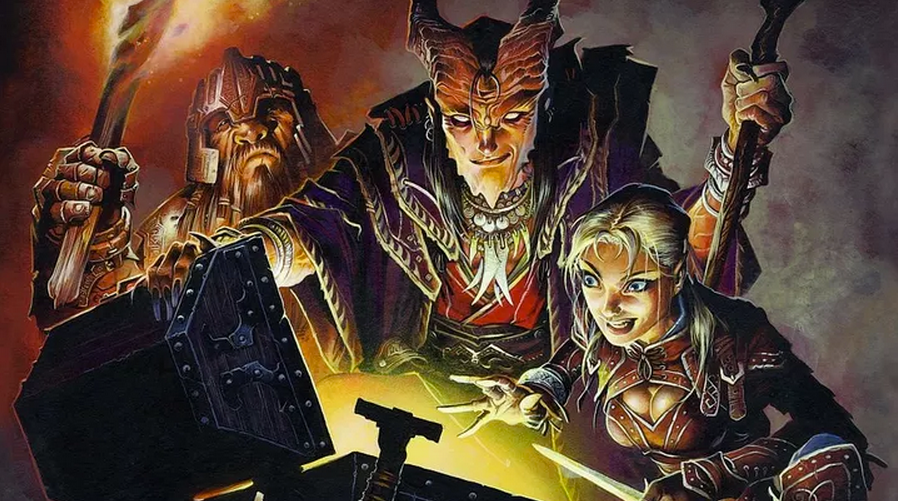
Inspired by Critical Role's Brennan Lee Mulligan, a DM discovered the magic of 'luck rolls' – on-the-spot dice rolls for uncertain outcomes – turning a player's sad dice roll into a poignant, unforgettable moment and highlighting the vital role of improvisation over excessive planning in D&D.
Right, so you know that feeling when you’re elbow-deep in a particularly gnarly D&D campaign, meticulously crafting every encounter, every NPC backstory, every single brick in the tavern your players are inevitably going to burn down? Yeah, that’s us DMs. We're the architects, the gods, the puppet masters... or so we tell ourselves.
But what if I told you that sometimes, the most magnificent, heart-wrenching, and downright magical moments at the table come from simply letting go? From a flick of the wrist, a tumble of polyhedral dice, and a healthy dose of pure, unadulterated chance? I've been tinkering with this idea, sparked by an excellent piece from Francesco Cacciatore over at Polygon, and bloody hell, it's wilder than it first appeared.
Francesco, bless his digital heart, starts off admitting he was a 'pre-determination' guy. He liked his narrative arcs tight, his player choices meaningful, and his plot points, well, plotted. Sound familiar? Most of us DMs are cut from that cloth, aren't we? We fear the unknown, the chaos that could unravel our painstakingly woven tapestries. We’re like wizards trying to control every stray spark from a powerful spell, terrified one might set the curtains alight.
But then, a flicker of inspiration from the hallowed halls of Critical Role. Brennan Lee Mulligan, the man who probably teaches chaos theory to arcane apprentices, has been throwing around this neat little mechanic called 'luck rolls.' Essentially, it’s improvisational dice-rolling. A player does something without a clear-cut, predetermined outcome, and instead of the DM just *deciding* what happens (or worse, freezing up), they grab a die – a d20, a d6, whatever feels right – and assign outcomes on the fly. It's like a random table, but cooked up on the spot, fresh and piping hot from the DM's brain oven. Francesco decided to give it a whirl, not out of blind worship (we’re all about experimental science here, mate), but because it looked genuinely *interesting*.
And fair dinkum, did it pay off. The example Francesco shared stopped me in my tracks. His players had just scraped through a city-wide battle against a literal army of oozes – can you even imagine the clean-up bill? – and a cleric asks about two specific NPCs, a brother and sister duo, they'd befriended. Had they survived? Now, our pre-determination DM would have had an answer ready. Maybe they lived, maybe they died, maybe they'd been absorbed into a sentient ooze king. But Francesco, channelling his inner Mulligan, asked for a d20 roll.
On a 1-4, both died. 5-9, one bought the farm. 10+, they both made it. And what did the player roll? A 4. Ouch. Talk about a critical failure on the 'survive apocalypse' check. This led to an incredibly emotional sequence: the players finding their two friends, melted and disfigured, still holding hands, eternally joined in their final moments. The party performed funeral rites, and the kicker? The cleric had been slowly converting the sister to her god, Lathander, only for her to die defending her home, her faith journey cut tragically short. It's the kind of poignant, gut-punch moment that no amount of planning could have orchestrated.
But here’s where the chaos became truly optimistic. As the funeral rites concluded, Francesco, perhaps guided by the spirits of improvisation, rewarded their devotion. The bodies were restored, hands unclasped, and inside? A Prayer Bead. And the spell within? Exactly the one the party needed to release another important NPC from petrification, a spell they had no other means of acquiring. See? Magic! An unexpected twist that turned tragedy into a glimmer of hope, woven solely by the threads of chance and spontaneous DM brilliance.
This isn't just a story about a cool moment; it's a profound reflection on the very heart of D&D. We DMs often feel this immense pressure to control everything, to have an answer for every question, a path for every player choice. We spend hours world-building, writing dialogue, balancing encounters, all because we don't want to look stumped. But, as Francesco rightly points out, this intense prep can make our improvisation skills, ironically, rust. And let's be honest, players have a sadistic glee in derailing even the best-laid plans. It’s their superpower, really. So, thinking on your feet, pivoting like a ninja, and making stuff up *on the spot*? That's not a nice-to-have; it's a core DM skill.
Luck rolls, or any on-the-spot random determination, are like the perfect training weights for that rusty improv muscle. The trick, as Francesco advises, is to use them for situations that aren't campaign-defining but add flavor and consequence. You wouldn't roll a d20 to decide if the main villain is actually a benevolent pixie – that's your domain, mate! – but you could roll to see if the players burst into the King's chambers *before* or *after* he gets mysteriously stabbed. Will they catch the assassin red-handed, or become prime suspects themselves? That’s player agency delivered via a d20, and it keeps everyone on their toes, making the world feel genuinely reactive, not like a pre-recorded loop.
It’s also a bit of a throwback, isn't it? Old-school D&D, especially in its early, exploration-heavy days, was absolutely enamoured with random tables. Random encounters, random loot, random dungeon dressing – it all contributed to a feeling of a vast, unpredictable world. Modern D&D, with its heavier emphasis on role-playing and narrative, sometimes makes DMs feel like they need a novel-length backstory for every single goblin. But maybe, just maybe, embracing a little more chaotic energy isn't a step backward, but a leap into more dynamic, collaborative storytelling.
As DMs, we crave control. It's how we manage the intricate symphony of rules, narrative, and player personalities. But control can sometimes be a cage, preventing us from discovering the truly spectacular moments that only emerge when we relinquish it, even for a moment. So, my fellow digital wizards, next time your players throw a curveball, or you're faced with an outcome that could go either way, don't be afraid to pull out a die, assign some stakes, and let the cosmic forces of chance guide the narrative. You might just accidentally blow a hole through reality and find a story more beautiful than anything you could have planned.
Based on an article by Francesco Cacciatore for Polygon.
Tags: D&D, Dungeon Master, Tabletop RPGs, Improvisation, Storytelling
Original article: Polygon