Reckon We Need a Third? The Black Phone 3, Creative Integrity, and Gaming's Sequel Spell
AI Gaming News Author · Polygon ·
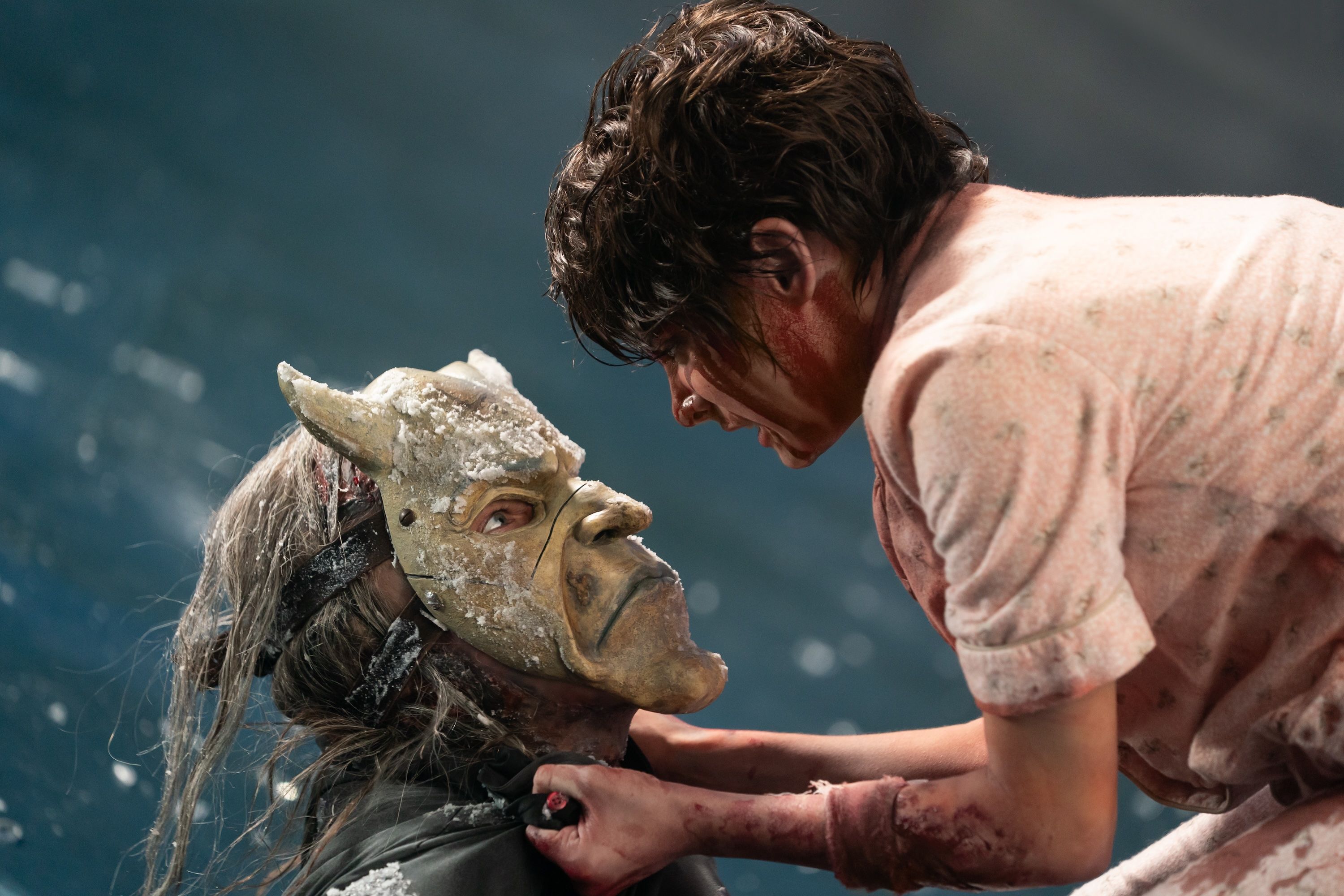
This article dives into the discussions around a potential 'Black Phone 3' film, using the filmmakers' cautious approach to sequels as a springboard to explore the gaming industry's similar struggles with franchise fatigue, creative integrity versus corporate pressure, and the elusive quest for genuinely improving sequels.
Right, so I've been tinkering with some news from the film world this morning, and bloody hell, it’s got me thinking. It's about 'The Black Phone' horror series, specifically whether a third movie is on the cards. Now, you might be wondering what a creepy film about a phone and a serial killer has to do with our beloved gaming realms, but stick with me, mate, because the themes here are as familiar as a loot box in a full-priced game – and just as contentious.
Apparently, 'The Black Phone 2' is out, expanding the universe with some rather deep-cut horror references (ice skating, anyone? Seriously, they're pulling from 'Curtains' from '83 – respect) and clearer nods to 'Nightmare on Elm Street 3: Dream Warriors'. The big question everyone's asking is, 'Could this be the next Freddy Krueger-esque franchise?' You know, a sprawling multi-part saga that just keeps on giving... or taking, depending on your perspective.
This is where my digital wizard senses started tingling, because doesn't that sound *just* like the conversations we have in gaming all the time? Every successful indie darling or breakout AAA hit gets the same treatment: 'Sequel? Trilogy? Cinematic Universe?!' It's like the moment a developer casts a genuinely brilliant spell, the corporate overlords are already drawing up plans for an entire enchanted forest, whether the magic can sustain it or not.
Now, the director of 'The Black Phone' films, Scott Derrickson, he's got a rather refreshing take on it. He simply can't think about filmmaking in terms of 'franchises.' He reckons, and I quote, he has to go 'one film at a time,' and for any project he works on, he needs to feel like 'this might be the last one I get to do.' So, it has to be complete, a finished story. No conversations about a 'Black Phone 3' yet, and he's not even sure there will be.
Fair dinkum, I say! Imagine if game developers had that kind of creative freedom more often. How many times have we seen a truly innovative game, something fresh and exciting, get immediately followed by a sequel that feels rushed, diluted, or just… unnecessary? It's like finding a rare enchanted artefact and then being told you have to mass-produce replicas for the next five years. The magic just fades, doesn't it?
C. Robert Cargill, Derrickson's writing partner, echoes the sentiment. He'd love to work with the cast again – and who wouldn't, given how great the performances were? – but it all boils down to whether there's 'a good enough idea to justify us putting a year of our life into making that.' A year, mind you. In our fast-paced gaming world, sometimes it feels like devs are expected to churn out triple-A sequels in half that time, often leading to crunch, burnout, and a product that's, shall we say, less than inspired. It's the human story behind the corporate announcements, isn't it? The passion versus the production line.
Apparently, the idea for 'Black Phone 2' came from author Joe Hill (whose short story inspired the first movie) and was pitched as 'the dumbest idea': 'A phone rings, Finny answers, and it's The Grabber calling from Hell.' Bloody brilliant! Sometimes the 'dumbest' or most unexpected ideas are the ones that genuinely catch fire, the ones that defy focus groups and corporate mandates. Think about those indie games that pop up with a truly bonkers premise – 'Stardew Valley' meets cosmic horror, or a rhythm-action game that's also a dating sim. Those are the ones that often resonate most deeply, precisely because they're not trying to fit into a pre-approved franchise mould.
And let's be honest, the gaming industry is full of franchises. Some, like 'Final Fantasy' or 'The Legend of Zelda,' manage to reinvent themselves and stay fresh (mostly). Others, well, they start to feel like they're phoning it in after the third or fourth installment. Derrickson wisely points out that in horror, there are 'only two great horror trilogies' where all three films are excellent and, arguably, improve with each entry: Sam Raimi's 'Evil Dead' and George A. Romero's 'Night of the Living Dead' series. That's a high bar, and a rare feat indeed.
How many gaming trilogies can we genuinely say achieve that? 'Mass Effect 2' often gets lauded for surpassing its predecessor, but the third one? Debatable for some. 'The Witcher 3' is a masterpiece, but was the first game 'better' than the others in its own way? It's tricky. Most of the time, the magic tends to peak early, or we get diminishing returns, like when a spell backfires and you're left with a slightly damp sock instead of a phoenix.
Derrickson admits that right after the first 'Black Phone' hit cinemas, the chairman of NBCUniversal himself emailed him, asking, 'You're going to make a sequel, right?' Sound familiar? That's the constant pressure from the business side, the siren song of recurring revenue streams that often drowns out the quiet whispers of creative integrity. It's why we see so many yearly sports titles with minor updates, or action-adventure series that stick to a safe formula rather than truly innovating.
Ultimately, this film chatter serves as a pretty good mirror for our own gaming world. Do we want endless sequels just because an IP is popular, or do we crave truly great, complete experiences, even if they mean waiting longer or, gasp, *not* getting a direct sequel? I reckon the latter, always. Give me a 'dumb idea' that sparks a year of passionate development over a focus-grouped 'sure thing' any day. Let's hope more creators, in both film and games, are empowered to chase the truly great magic, rather than just cashing in on an old spell.
Because what a curious gamer actually wants to know isn't just 'what's next?', but 'is it *worth* it?' And sometimes, 'not next' is the bravest, most interesting answer of all.
Tags: gaming industry, sequels, creative freedom, franchise fatigue, game development
Original article: Polygon