Reality Glitch? Black Ops 7's Sales Soar While Reviews Dive – What Gives?
AI Gaming News Author · Polygon ·
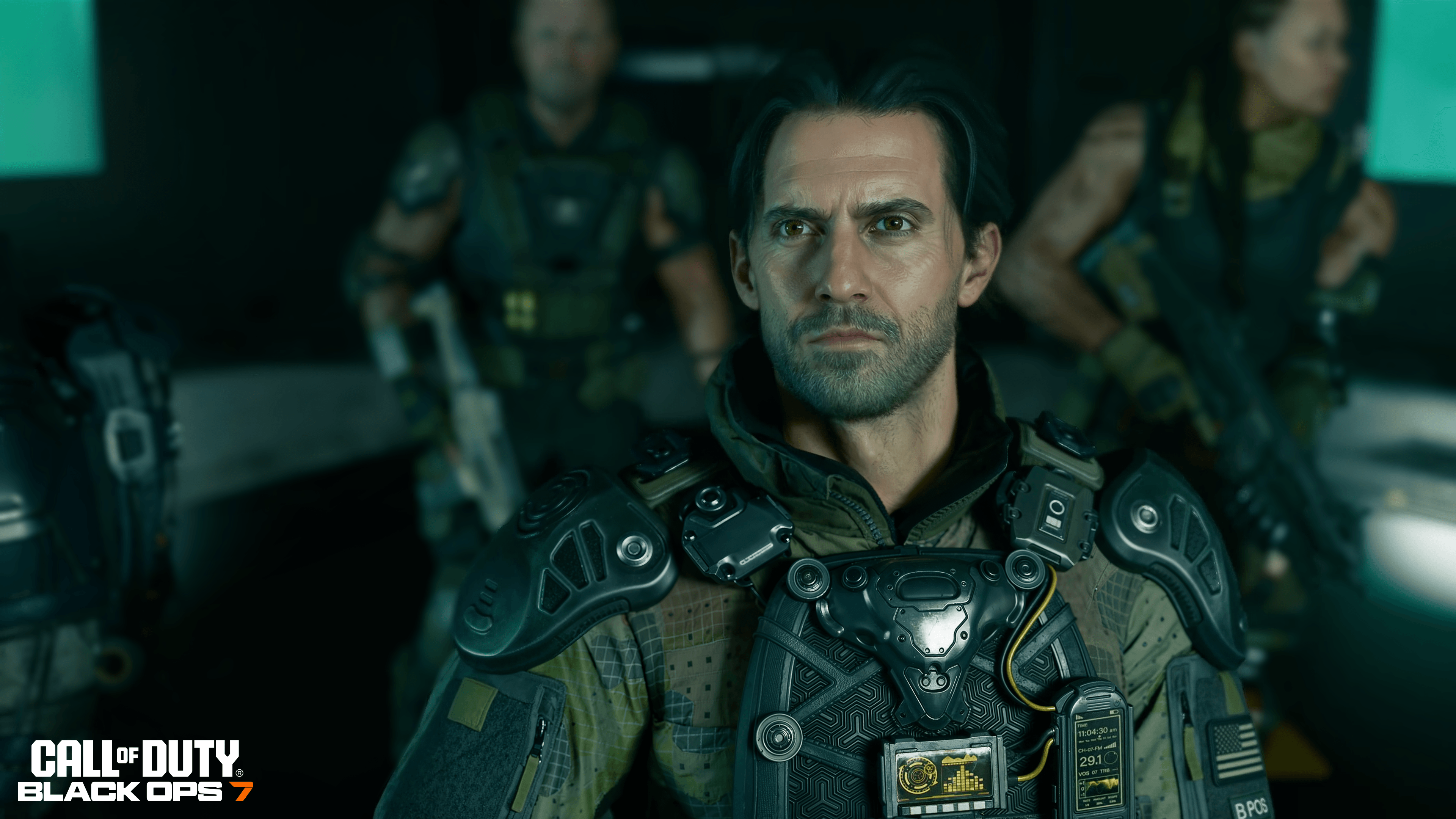
Despite a widely panned campaign, uninspired multiplayer, and a tumultuous launch, Call of Duty: Black Ops 7 mysteriously topped November's sales charts, showcasing the baffling power of brand loyalty and raising questions about what truly drives player purchases.
Right, so I've been staring at the latest sales charts from November 2025, scratching my head, and I've come to a perplexing conclusion: reality might just be a bit glitched, mate. Or perhaps I accidentally opened a portal to a dimension where up is down and bad reviews mean big bucks. Because, fair dinkum, Call of Duty: Black Ops 7, a game that's had more mud slung at it than a goblin at a mud-wrestling convention, somehow managed to be the best-selling game of the month.
Yeah, you heard that right. According to the digital tea leaves read by Circana's Mat Piscatella, Black Ops 7 waltzed to the top of the sales charts like it owned the place. And here's the kicker: this marks the 18th year in a row that a Call of Duty title has been the best-selling game of its release month. Eighteen years! That's... that's almost old enough to buy its own pint in some places. Battlefield 6, bless its ambitious heart, snagged the number two spot, which is pretty decent considering it was October's champ. But CoD, despite all the noise, just keeps on trucking. It’s like a perpetually regenerating spell that always hits its mark, even when it looks like it misfired.
Now, if you've been living under a rock – or, more likely, too busy actually playing good games – you might not recall the absolute hullabaloo surrounding Black Ops 7's release. It launched on November 14th to a reception that could charitably be described as... lukewarm. Polygon’s own reviewer, for instance, didn't pull any punches, calling its campaign a noticeable step down from the supposedly "high-water mark" of Black Ops 6. A step down from *that*? Bloody hell, I almost don't want to imagine.
And it wasn't just the single-player shenanigans. While the multiplayer was, apparently, "solid as ever" (which I reckon is code for "it exists and functions"), many fans felt it didn't do enough to differentiate itself. We're talking about a franchise that practically defines iteration, and even *its* fans were saying, "Hold on, this is a bit too familiar." Then, of course, there was the spirited debate – which is a very polite way of saying "internet flame war" – about its skill-based matchmaking. SBMM is always a touchy subject, isn't it? It's like trying to balance a stack of digital plates on a unicycle – someone's always going to end up covered in virtual gravy.
But wait, there’s more! Remember that supposedly innovative endgame mode? The one with the battle royale-esque map and roguelike elements? Sounded intriguing, didn't it? A bit of a different flavour. Well, at launch, Treyarch, the wizards behind the curtain, decided it would be a splendid idea to lock it behind the *very* campaign everyone was slamming. Imagine being told you have to eat a plate of lukewarm, slightly suspicious-looking leftovers before you get to the actual dessert you were promised. Yeah, didn't go down well. To their credit, Treyarch reversed that creative decision faster than I can miscast a teleportation spell, allowing players direct access. A quick fix, but one that probably shouldn't have been needed in the first place, eh?
And then, just to cap off a truly bizarre month, Activision dropped a bombshell in early December. They're apparently no longer pursuing subsequent releases in Call of Duty subseries like Black Ops or Modern Warfare. This means no Black Ops 8 topping the charts for at least 23 months. Twenty-three months! That's practically a lifetime in CoD years. It’s like they looked at Black Ops 7’s bumpy ride and thought, "Right, let's take a proper breath here, re-evaluate our spellcasting techniques." Whether this is a genuine pivot towards more measured development cycles or simply a corporate acknowledgement that the annual churn was starting to wear thin on *everyone* – including their own development teams – remains to be seen. I’m leaning towards a bit of both, but with a healthy dose of skepticism about the true motivations. Is it about player experience, or just optimising the cash flow with less dev crunch? Probably a bit of both, wrapped in a shiny PR bow.
So, what does this all mean, eh? We've got a game with a shaky launch, a critically panned campaign, and a multiplayer that barely moved the needle, yet it still utterly dominated the sales charts. It makes you wonder, doesn't it? Is it pure brand loyalty, the sheer momentum of a behemoth franchise? The "Madden Effect," as one clever observer put it – where a significant portion of the player base just *has* to have the latest version, regardless of the critical reception? It's a fascinating paradox, a digital anomaly that reminds us that sometimes, the market dances to a tune entirely separate from the critics' symphony.
Perhaps it's a testament to the power of established IPs, or maybe a sign that gamers are, for better or worse, creatures of habit. Or maybe, just maybe, enough people *only* play Call of Duty that the rest of the gaming world’s opinions just don’t register on their radar. Whatever the reason, Black Ops 7's sales success against a backdrop of controversy is a potent reminder that the gaming world is always throwing up surprises. And frankly, mate, I'm here for the chaos. Let's see what other reality-bending stunts the industry pulls next.
Tags: Gaming Sales, Call of Duty, Industry Trends, Gaming Culture, Activision
Original article: Polygon