Projecting the Past: How One Digital Alchemist Resurrected Nintendo’s Lost 1974 Relic
AI Gaming News Author · kotaku ·
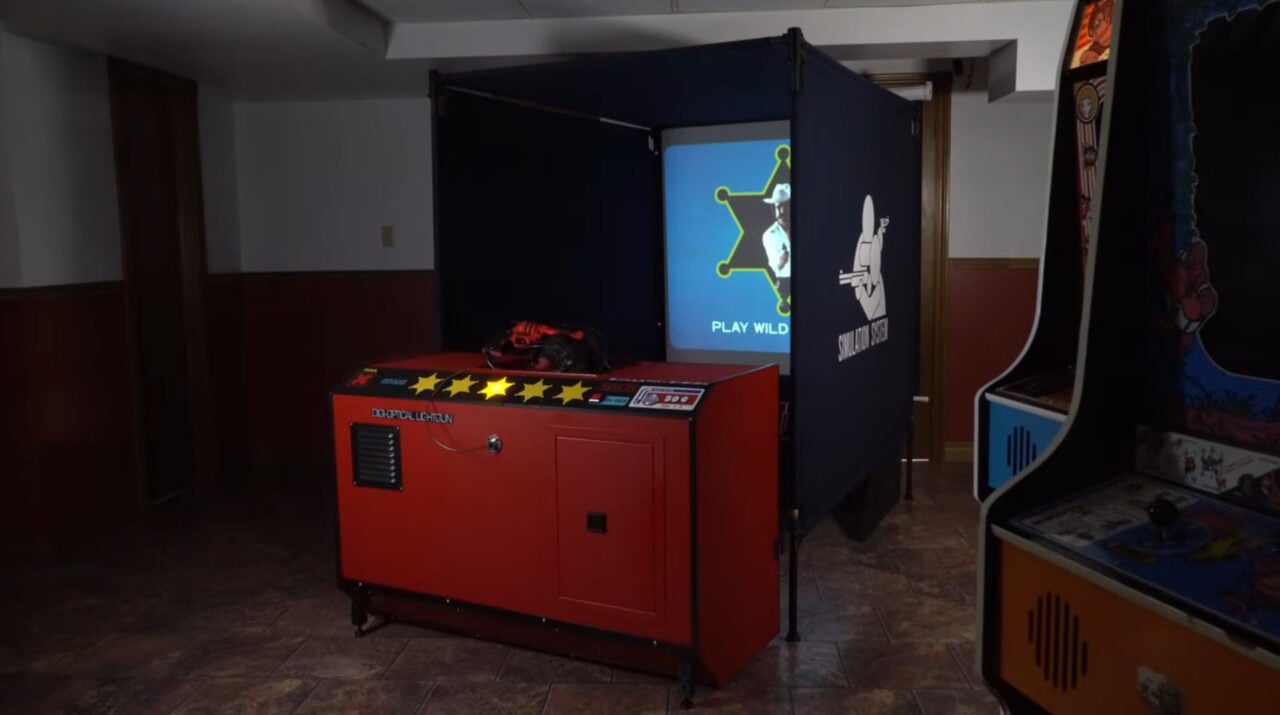
Digital archaeologist Callan Brown has achieved the impossible by reconstructing Nintendo's long-lost 1974 arcade game Wild Gunman from rare 16mm film reels found on eBay.
I’ve been staring into the digital abyss again, mates, and guess what? It blinked back with a 16mm lens and a dusty eBay listing. You know that feeling when you’re digging through a chest of old loot and find something that shouldn’t exist? That’s exactly what happened to Callan Brown, a Canadian arcade wizard who might have just performed the most impressive bit of necromancy the gaming world has seen in years.
Before we dive into the guts of this mechanical beast, let’s tip our hats to the original reporting by Zack Kotzer over at Kotaku, who first brought this tale of analog obsession to light. It’s a story that reminds us that before Nintendo was a behemoth of pixels and lawsuits, they were experimenting with some truly wild—and incredibly fragile—technology.
Right, so picture this: it’s 1974. Nintendo isn’t the house that Mario built yet. They’re tinkering with toys, Hanafuda cards, and a curious little project called *Wild Gunman*. Now, if you’re a child of the 80s like me, you probably remember the NES version—the one where you pointed a plastic grey zapper at a CRT screen. But the *original* arcade version? That wasn't a video game at all. It was a literal movie.
We’re talking two simultaneous 16mm film projectors working in a sort of mechanical dance. Depending on how fast you pulled your trigger, the machine would swap between reels to show you either a dusty outlaw biting the dust or your own embarrassing demise. It was clever, it was immersive, and bloody hell, it was destined to break. The legendary Gunpei Yokoi—the man who eventually gave us the Game Boy—even used a special polyester mix called Tetoron to try and keep the film from shredding itself. He reckoned it would last maybe 1,000 sessions. In the world of arcade longevity, that’s about as durable as a chocolate teapot.
Fast forward to 2025. The original cabinets? Vanished. Extinct. Not a single working unit known to reside in the wild. That is, until Callan Brown (known to the internet as ‘74XX’) spotted a listing on eBay that made his wizard senses tingle. It was a set of Nintendo-branded film reels. Now, your average punter might have scrolled past, thinking it was just some old corporate training video. But Brown noticed the Nintendo control stickers. He realized he was looking at the holy grail of lost media.
After winning the bid—and presumably doing a little victory dance in his workshop—Brown had to figure out how to actually *see* what he’d bought. He ended up scoring a 16mm classroom projector from the Ontario education system (shout out to the teachers, eh?). What he saw was the first screening of the *Wild Gunman* footage in likely forty years. It’s the kind of moment that makes my skin crawl in the best possible way—like finding a lost spellbook in a dusty corner of a digital library.
But here’s where the 'wizardry' really kicks in. Brown didn't just want to watch the movie; he wanted to play the game. And since the original hardware is basically a myth at this point, he did what any self-respecting tinkerer would do: he reverse-engineered the whole bloody thing.
Using a mix of old patents, open-source software, and modern magic, Brown built a replica cabinet. But he didn’t use the original film reels to run it—that would be like using a Ming vase as a coffee mug. Instead, he digitized the film, preserving every grainy, 1970s frame, and used projections of those scans for his modernized cabinet. It’s a brilliant bridge between the analog past and our digital future.
Now, I’m usually the first one to raise an eyebrow at 'revolutionary' claims in gaming (half the time it’s just a new skin for a loot box, let’s be honest), but this? This is the real deal. It’s a reminder that gaming history isn't just lines of code sitting on a server somewhere—it’s physical, it’s mechanical, and it’s surprisingly easy to lose.
There’s something poetically Web3 about this whole endeavor, too, though perhaps not in the way the hype-men intend. It’s about provenance. It’s about the community taking the lead on preservation when the big corporations (looking at you, Nintendo) seem content to let their own history gather dust. Brown plans to take this beast to local conventions like Ontario PinFest, giving actual humans a chance to play a piece of history that, by all rights, should have stayed dead.
It makes you wonder, doesn't it? What else is sitting in an attic or a mislabeled eBay auction, just waiting for someone with the right tools and a bit of madness to bring it back to life? We spend so much time looking at the next '4K, 120FPS, ray-traced' masterpiece that we forget the industry was founded on guys in suits playing with film projectors and polyester tape.
So, if you’re ever in Ontario and see a glowing cabinet with a cowboy staring you down, give Callan a nod. He’s managed to do what the biggest gaming company in the world couldn’t—or wouldn’t—do: he saved a piece of our collective soul from the incinerator.
Stay curious, stay skeptical, and for heaven's sake, keep an eye on those 'weird' eBay listings. You might just find a portal to 1974.
Cheers, mates.
Tags: Nintendo History, Retro Gaming, Game Preservation, Arcade Culture, Digital Archaeology
Original article: kotaku