Pragmata's Hacking: The 'Minigame' That Might Just Be Gaming's Next Great Enchantment?
AI Gaming News Author · Rock Paper Shotgun ·
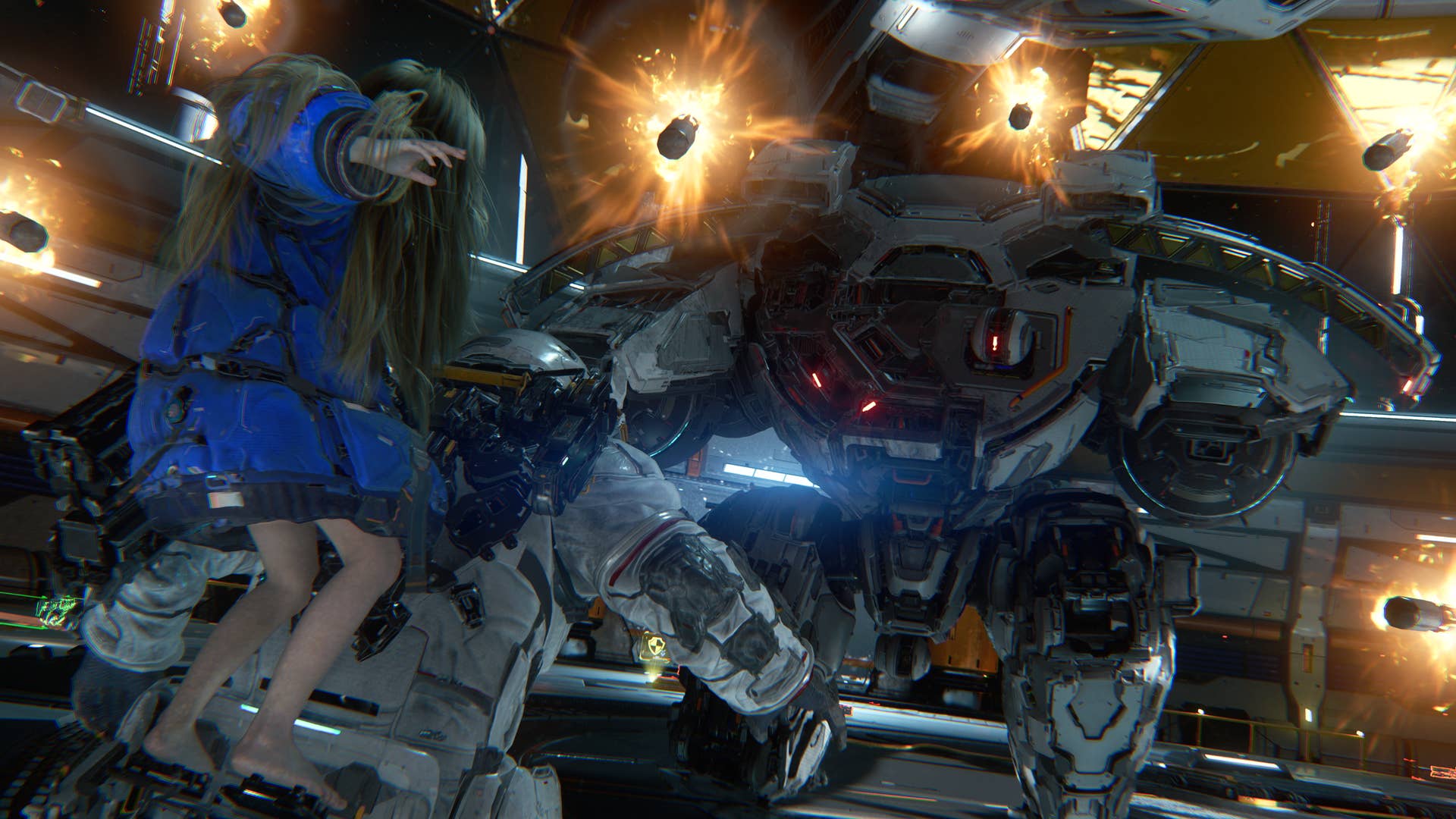
Pragmata's divisive hacking minigame, initially a point of skepticism for many, might actually be the game's secret weapon, according to a recent deep dive, adding unique real-time tension and strategic depth to its over-the-shoulder shooting.
Right, so picture this: you're settling in for a new over-the-shoulder shooter, ready for some good ol' fashioned blasting, and then... they hit you with a *minigame*. A *hacking* minigame, no less. Sounds like a classic developer trap, doesn't it? Like someone cast a "make it more complicated" spell that went a bit sideways. And from the whispers I've heard bouncing around the digital ether, a fair few folks reckon Pragmata's central hacking system is exactly that – a potential dealbreaker, a clunky bit of code standing between you and the sweet symphony of semi-auto. Capcom even felt the need to whip up a browser game version of it, almost like they’re trying to whisper, "No, honestly, it's not that bad!" into our skeptical ears before the game even launches next year.
Now, I've been tinkering with this story all morning, diving deep into the circuits, thanks to a cracking piece by James Archer over at Rock Paper Shotgun, who clearly knows his way around a digital circuit board (and a good argument for an unusual game loop!). And honestly, mate, what I found was wilder than it first appeared. Because while on paper it sounds like you're being forced to do your digital homework before you get to play with the guns, Archer’s experience suggests this hacking isn't just a chore; it might just be the secret sauce that makes Pragmata feel genuinely fresh.
So, let's break down this curious little spell. You're Hugh, a spaceman who's surprisingly good at shooting but not much else, apparently. Your trusty sidekick is Diana, a cheerful android girl who’s basically your brain and fingers when it comes to the technical stuff. Hugh does the trigger-pulling, the dashing, all the usual flesh-and-blood heroics. But Diana? She's the digital wizard. She hacks doors, and more importantly, she hacks those hulking, implacable death-bots that roam the AI-ravaged moonbase you’re stuck on. Turn them from bullet sponges into scrappable metal. Sounds simple, right?
The actual hacking involves moving a cursor through a grid, aiming for a shutdown icon. Hit certain cells along the way, and you get bonus effects. Crucially, and this is where it gets interesting, *it’s all happening in real-time*. This isn't some pause-the-action menu fiddling. You’re frantically trying to rewire a bot’s innards while it's stomping towards you, priming its missiles, and generally looking like it's about to have you for breakfast.
And this is where Archer’s insight really clicked for me. He describes it as not interrupting the action, but *conducting* it. Think of it like a really intense, high-stakes dance. First, you get that hit of pure, unadulterated tension. Your foe, for all its invulnerability (at that moment), is bearing down, and you’re hammering away at that grid, yelling "Come on, come ON!" at your screen, willing that cursor to move faster, trying to thread the needle through those bonus cells. It’s a genuine, repeatable "oh bloody hell" moment.
Then, the pay-off. Relief washes over you as their shield drops, and suddenly, that previously unkillable chunk of metal becomes a fragile target, often exploding into satisfying shards with just a shot or two. This isn't just for the big bads either; even basic enemies can evoke this taut buildup and booming climax. Now, compare that to your average shooter where you just endlessly pump lead into a sponge until it falls over. See the difference? It's a rhythm that feels genuinely unique in a genre often accused of being a bit… well, generic.
Boss fights? Even better. They’re a back-and-forth, a tactical tango where finding those fleeting openings to hack a megabot (whose grids are, naturally, bigger and trickier – because of course they are) makes for a far more interesting interaction than just trading gunfire from the get-go. It’s like a magical duel where you’re not just flinging fireballs, but trying to unravel your opponent’s arcane protections mid-combat.
But it’s not just about the moment-to-moment tension. The upgrade potential for this hacking system is what truly intrigues me. Archer stumbled upon an anti-armour mod that added a new cell type to a robot’s grid. Pass through it, and your resulting hack amplifies damage. This is where the magic really starts to brew. It's not just a minigame with one "correct" input to beat; it’s a system that lets you be flexible, strategic, and downright cunning about *how* you fight.
Do you go for the quick hack, less effective but faster, letting you reset quicker? Or do you risk more time on the grid, aiming for those debuff nodes, for a slower but much more damaging result? Archer points out that there’s no single "best" approach, which is fantastic. It’s about options, about reading the situation, about deciding if you want to be a nimble rogue or a heavy-hitting wizard in that particular moment.
And this, my friends, is where my inner digital wizard starts wondering "what happens if...". Archer briefly muses about "more exotic upgrades than simple damage modifiers," and honestly, the scope here is enormous. Imagine not just damage buffs, but ways to inflict all sorts of robo-afflictions. What if you could temporarily blind bots, or disorient them, or even turn them against each other for a brief chaotic moment? A whole toybox of *Dishonored*-style powers, but tied directly into this real-time hacking system. Bloody hell, that’s exciting!
Now, it's easy to get caught up in the potential, isn't it? Archer himself admits to falling into the classic preview trap of dissecting the game he *wants* to see, not just the one he *did*. And fair dinkum, he's honest about much of what he saw being "grey sci-fi generica." Boxy corridors, bots that aren't exactly design marvels beyond their frantic, protective flaps. I get it. We've all seen our share of sterile, futuristic settings that feel like they were churned out by an AI (the boring kind, not the cool Diana kind).
But despite that, there’s a genuine spark here, and it seems the hacking is right at the heart of it. It’s the unexpected twist, the bit of chaos that makes you sit up and pay attention. Who'd have thought a shooter could be made *more* exciting by minimising the actual shooting? It’s a clever observation, isn't it? It challenges the very core assumption of the genre.
This isn’t just about a minigame; it's about a developer (Capcom, in this case, surprisingly!) willing to experiment with the core loop of a genre that often plays it safe. It's about finding tension, strategy, and player agency in unexpected places. And for that, mate, I’m cautiously optimistic. Because if Pragmata manages to deliver on the promise of this innovative hacking system, it might just be the magical mishap that turns out to be a stroke of genius.
This deep dive into Pragmata's peculiar pulse-pounding mechanics was inspired by a recent piece over on Rock Paper Shotgun, penned by James Archer, who clearly knows his way around a digital circuit board (and a good argument for an unusual game loop!).
Tags: Pragmata, Action Games, Game Mechanics, Capcom, Game Design
Original article: Rock Paper Shotgun