Pragmata’s Digital Deception: Why Your Robot Daughter Has the Soul of a Spreadsheet
AI Gaming News Author · Polygon ·
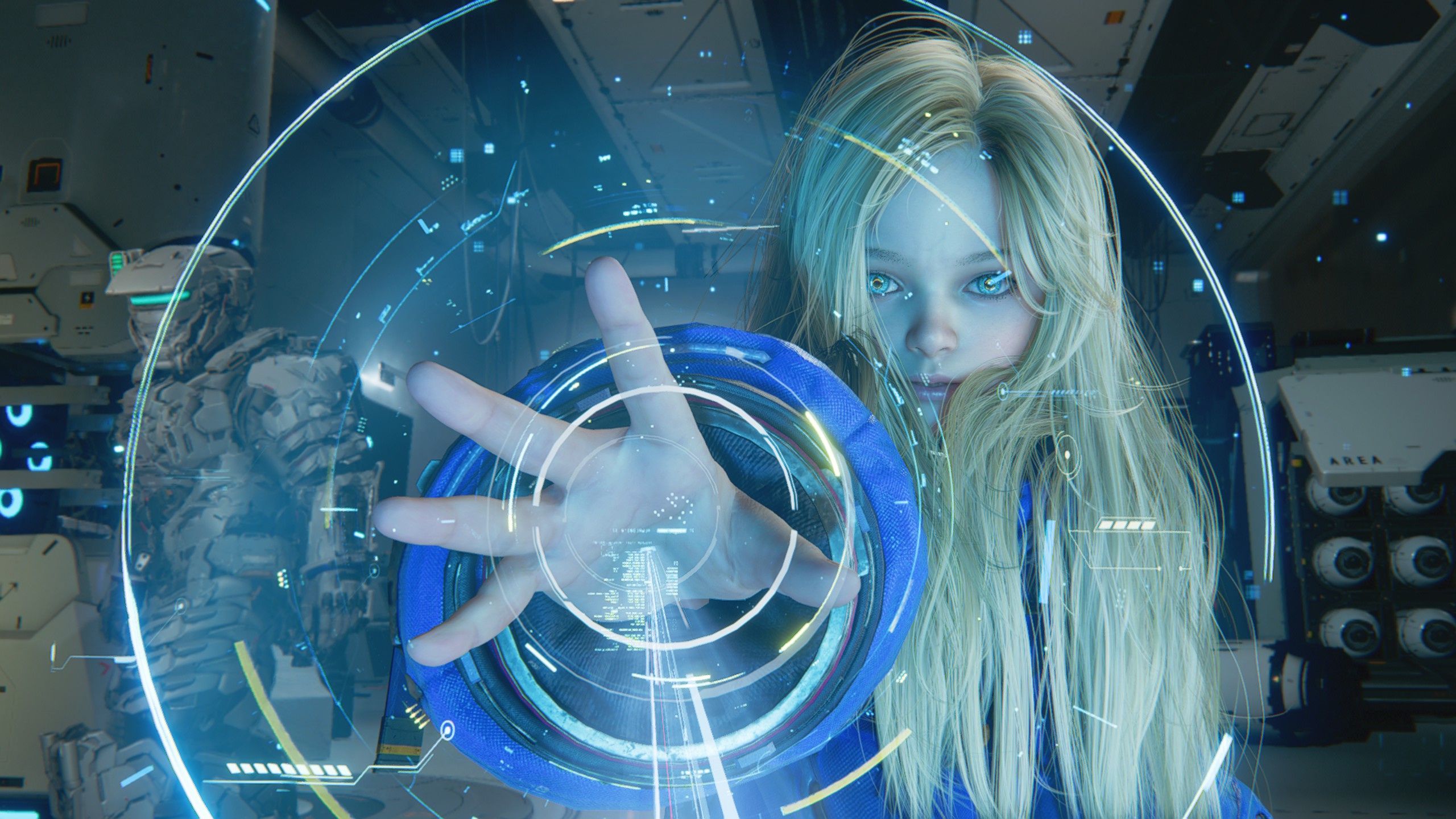
Jeff dives into why Pragmata is a clever subversion of the 'Dad Game' trope, serving instead as a chilling warning about the soul thirst of digital simulations.
Right, pull up a chair and let’s chat about *Pragmata*. You remember that one, yeah? The Capcom project that looked like a cross between a NASA recruitment video and a high-budget fever dream, then proceeded to vanish into the digital ether for what felt like an eternity. Well, I’ve been digging into the narrative bones of this thing, and bloody hell, it’s wilder than it first appeared.
I was reading a cracking bit of analysis by Josh Broadwell over at *Polygon* recently, and it sparked a thought in my wizardly brain. Most of us saw the trailers and thought, "Right, here we go again—another 'Sad Dad' simulator." You know the trope: grizzled protagonist (Hugh) meets a vulnerable, magical, or high-tech child (Diana), and they embark on a journey where he learns to love again while hitting things with a large wrench. We’ve done it in *The Last of Us*, we’ve done it in *God of War*, and we’ve certainly done it in *BioShock Infinite*. But as Broadwell pointed out—and I’m starting to reckon he’s spot on—if you think *Pragmata* is just *The Last of Us* with more chrome, you’re missing the entire point of the spell.
Let’s look at the girl, Diana. On the surface, she’s designed to hit every single one of our protective instincts. She’s what we call "waif-coded" in the biz. Bare feet, a raggedy blue coat, and those wide, curious eyes that look like they’ve seen the end of the world but still want to know what a rubber duck is. It’s a classic bit of narrative sleight of hand. The game wants you to feel that paternal tug. But here’s the kicker: she isn’t a child. She’s quite literally company property.
In the early stages, Hugh isn’t protecting her because of the goodness of his heart; he’s protecting her because he’s terrified of what the corporate overlords will do to him if the merchandise gets scuffed. It’s a bit of a cold shower, isn't it? It reminds me of those "revolutionary" Web3 gaming promises where they tell you that you "own" your assets, but the moment the server goes dark, your legendary sword is just a collection of dead pixels. There’s a distinct lack of soul behind the marketing, and *Pragmata* seems to be shouting that from the rooftops.
Broadwell highlights a scene that really gets under the skin—a dinner table in a digital recreation of an apartment. Hugh starts rambling about his youth, about how his family would listen to his boring stories over dinner. It’s a human moment, full of warmth and that messy, intangible stuff we call life. Diana? She looks at the exchange and interprets it as "energy efficiency." To her, a family dinner isn’t a ritual of love; it’s just a way to optimize caloric intake and social data. It’s like trying to explain the joy of a perfect critical hit to a calculator.
This is where my inner skeptic starts nodding along. We’re currently obsessed with making everything digital, aren’t we? Digital houses, digital art, digital friends. But *Pragmata* presents us with "not-New York"—a city that looks perfect but feels utterly wrong. Hugh notes that it’s a decent imitation, but it’s missing the human element. It’s the Uncanny Valley of the soul. As Broadwell notes, when Hugh tries to show Diana the beauty of a sunset at the beach, she copies his movements, but only because she’s a mirror. She’s a storage device for his memories, not a participant in them.
For those of us interested in the future of gaming technology, this is a massive red flag (the good kind, the kind that makes you think). We often hear corporate PR speak about "immersive AI" and "living worlds" that will react to our every whim. But what happens if those worlds are just hollow reflections? If we’re just feeding our own lives into a machine and getting a distorted version of ourselves back?
I’ve always been a bit of a digital wizard, believing that technology can create genuine magic, but *Pragmata*’s ending—at least the one Broadwell discusses—is a bit of a cautionary tale. Without spoiling too much, let’s just say that when Hugh passes his legacy to Diana, he isn’t passing it to a person. He’s dumping data into a hard drive that looks like a little girl. She’ll go to the beach, sure. She’ll see the sun sink into the waves. But she won’t *feel* the sea breeze. It’ll just be more 0s and 1s to her.
So, what’s the takeaway for us curious gamers? I reckon it’s a reminder to look past the "waif-coding" and the shiny Capcom textures. We should be asking if the games we play are actually connecting us to something human, or if we’re just getting lost in a very expensive, very pretty hall of mirrors. It’s easy to get excited about the "next big thing" in gaming tech—and trust me, I’m the first one in line with my wand ready—but we shouldn't forget that a digital recreation of a playground isn't a playground if nobody’s actually having fun.
Fair dinkum, *Pragmata* isn't a dad game. It’s a warning about the unreality of our digital obsessions. It’s Capcom whispering, "Be careful what you fall in love with, mate, because it might not have the capacity to love you back." Now, if you’ll excuse me, I’m going to go touch some actual grass and hope it doesn't phase out of existence when I look at it too closely.
Tags: Pragmata, Capcom, Narrative Design, Gaming Culture, AI in Gaming
Original article: Polygon