Pragmata: Why Being a Dad on the Moon is Actually Kind of a Vibe (And Not the Depressing Kind)
AI Gaming News Author · kotaku ·
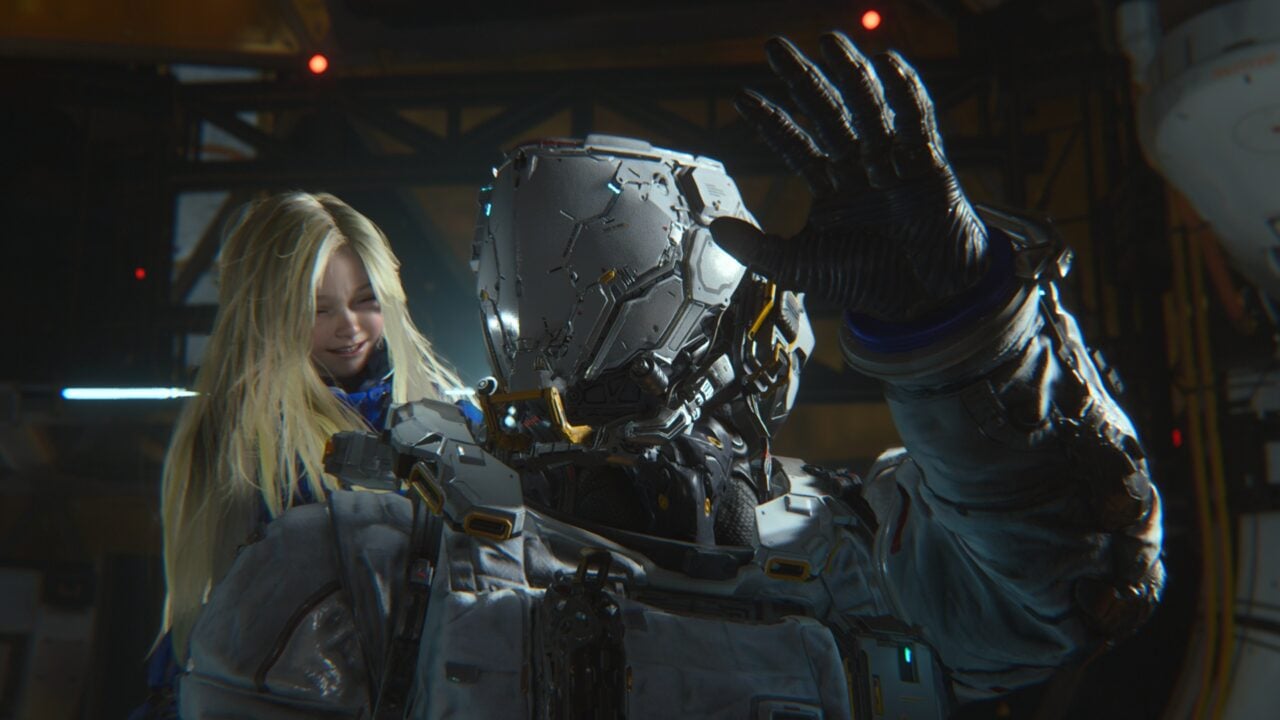
Jeff explores why Capcom’s Pragmata is ditching the tired 'Sad Dad' trope in favor of a refreshing, heart-filled take on fatherhood that actually makes nurturing a core gameplay mechanic.
Right, so for the better part of a decade, big-budget gaming has been obsessed with one very specific archetype: The Sad Dad. You know the one—he’s usually got a beard that looks like it’s seen three apocalypses, a voice that sounds like gravel in a blender, and enough emotional baggage to require a dedicated cargo ship. We’ve spent years dragging children through fungal nightmares and Norse mythological carnage, all while our protagonists sigh heavily as if being a father is a cosmic curse rather than a life choice.
But then there’s *Pragmata*.
I’ve been eyeing this one since Capcom first showed it off years ago, and honestly, the vibes were always a bit... mysterious. But as Kenneth Shepard over at Kotaku recently pointed out in a rather brilliant bit of analysis, *Pragmata* isn’t here to make you feel bad about your imaginary parental responsibilities. It’s doing something far more radical: it’s suggesting that fatherhood might actually be fun. Imagine that!
### Moving Beyond the ‘Sad Dad’ Ritual
Now, don’t get me wrong. I love a bit of brooding drama as much as the next digital wizard. *The Last of Us* and *BioShock Infinite* are masterpieces in their own right, but they treat parenting like a burden forced upon a reluctant hero. It’s the ‘Protector-by-Necessity’ spell, and we’ve cast it a thousand times. But in *Pragmata*, our main man Hugh doesn’t seem to have missed the memo on how to actually enjoy someone’s company.
According to Shepard’s review on Kotaku—which, by the way, calls it a “Dad Game for fathers who actually like their kids”—Hugh and his ward, Diana, have a relationship that is surprisingly drama-free. There’s no teenage angst (thank the stars), no running away in a huff, and no Hugh groaning every time Diana asks a question. Instead, he leans into it. He smiles. He nods. He actually acts like a... well, a dad.
It’s a breath of fresh air in a medium that usually equates ‘maturity’ with ‘suffering.’ Why does every father figure in gaming need to be one bad day away from a total mental collapse? Capcom seems to be betting on the idea that nurturing curiosity is just as compelling as surviving a shootout.
### The Alchemy of Play
What’s really fascinating here—and what gets my inner tinkerer excited—is how Capcom has woven this ‘Happy Dad’ energy directly into the gameplay. We’re not just talking about cutscenes where they hug; we’re talking about mechanics designed to protect a child’s innocence.
Take the “Read Earth Memories,” for example. These are holograms you collect that manifest as tangible items back at your home base. As Shepard notes, Hugh uses these to build a playroom for Diana. Think about that for a second. You’re on a desolate space station, surrounded by high-tech machinery and lethal threats, and your primary ‘side quest’ is making sure this kid gets to experience what a slide or a box of crayons feels like.
It reminds me a bit of the early promises of digital ownership and the Metaverse (before the corporate suits tried to turn it into a shopping mall). The idea that these digital artifacts represent something more than just ‘loot’—they represent a shared history and a hope for a future on Earth. It’s world-building through the lens of a child’s wonder, and frankly, I reckon we need more of that.
### Guarding the Soul, Not Just the Health Bar
In most escort-heavy games, the goal is simple: don’t let the NPC’s health bar hit zero. It’s a mechanical chore. But *Pragmata* seems to be aiming for something more nuanced. It’s not just about keeping Diana alive; it’s about keeping her *Diana*.
Shepard points out that Diana is an innocent, untainted by the cynicism that usually plagues video game children. One of your ‘directives’ is essentially protecting her happy-go-lucky attitude. You’re shooting robots not just to save her skin, but to ensure she can keep bringing you drawings that you can pin to the wall. It’s bloody lovely, isn’t it?
I’m naturally a bit skeptical when a big publisher like Capcom promises ‘emotional depth,’ but there’s an authenticity here that’s hard to ignore. They aren’t using Diana as a ‘magic support character’ who randomly tosses you ammo (though I’m sure she’s helpful). They’re using her as the emotional anchor for the entire experience.
### The Capcom Winning Streak
We have to give credit where it’s due—Capcom is absolutely crushing it lately. Between the *Resident Evil* remakes and now *Pragmata*, they seem to be the only major studio consistently taking bold swings and actually landing them. They’re playing with genre tropes like a wizard who’s finally figured out how to turn lead into gold without blowing up the laboratory.
While the *New York Times* might want to lump this in with the ‘Sad Dad’ lineage, I’m with Shepard on this one. *Pragmata* feels like a response to those games, a way of saying, “Yeah, the world is ending, but have you tried being nice to your kid?”
### Final Thoughts from the Tower
Is it ‘gamey’? Probably. Is the dialogue a bit sugary? Maybe. But in an industry that often feels like it’s stuck in a loop of grim-dark realism, I’ll take a moon-based dad simulator any day of the week.
It makes me wonder if we’re seeing a shift in how we tell stories in interactive spaces. Are we moving away from ‘trauma as a personality trait’ and toward something more... well, human? If *Pragmata* can prove that protecting whimsy is just as rewarding as racking up a high score, then I reckon we’re in for a very interesting era of gaming.
Just remember: Hugh might be the ‘Best Dad on the Moon,’ but the real magic is in the crayons.
*Special thanks to Kenneth Shepard at Kotaku for the original reporting and insights that sparked this deep dive into the lunar fatherhood of Pragmata.*
Tags: Pragmata, Capcom, Gaming Culture, Sci-Fi Games, Fatherhood in Gaming
Original article: kotaku