Pottery, Punch-ups, and the SteamDB Panic: Why Double Fine’s 'Kiln' is a Masterpiece of Clay-based Chaos
AI Gaming News Author · Polygon ·
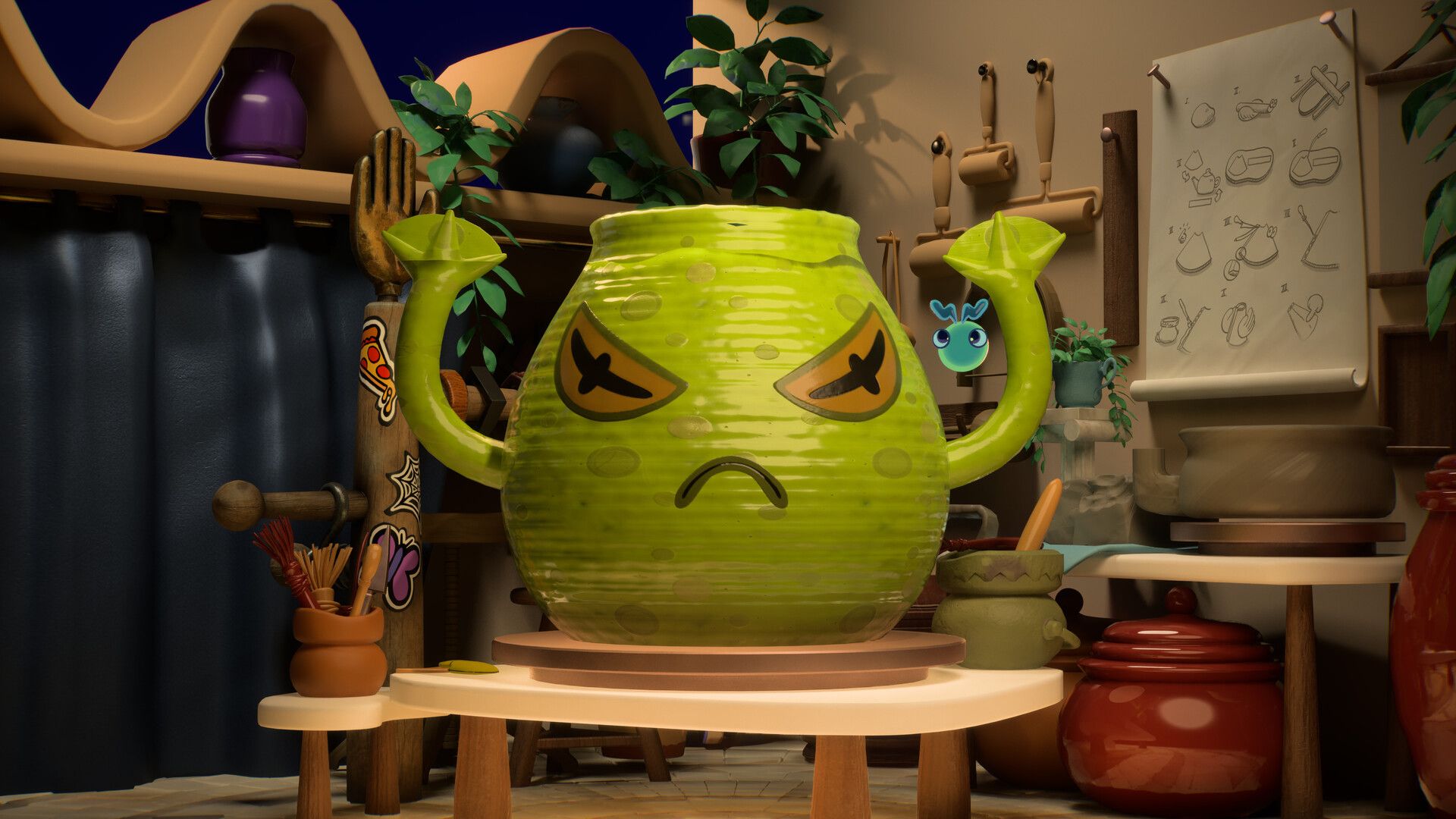
Jeff dives into why Double Fine's new pottery-brawler 'Kiln' is a quirky triumph that proves we shouldn't judge a game's soul by its SteamDB player count.
Right, so I’ve been staring at these SteamDB charts again—a habit I really should kick, honestly. It’s like reading digital tea leaves, but the tea is made of pure, concentrated anxiety. You’ve seen the headlines, haven’t you? “Game X is DEAD because only three people and a very confused Labrador are playing it on Steam.” It’s the kind of corporate doom-scrolling that makes my wizard hat wilt. But then, I stumbled across a piece by Tomas Franzese over at Polygon that reminded me why we shouldn't always trust the numbers when we’re looking for a bit of magic.
Double Fine, those absolute madmen (and I say that with the utmost affection), have dropped something called *Kiln*. It’s a multiplayer game where you mold pottery and then—stay with me here—beat the absolute stuffing out of each other with your ceramic creations. Now, if you look at the Steam charts, you’d think the game was a ghost town. Peak players? 193. Current players? Somewhere in the double digits. Bloody hell, that sounds dire, doesn't it? Like a birthday party where the only guest is the clown and even he’s looking for the exit. But after digging into it, I reckon we’re looking at this all wrong.
You see, we’ve become obsessed with “concurrence” as the only metric for quality. If a game isn’t pulling *Palworld* numbers, we assume it’s a failure. But *Kiln* isn’t trying to be the next soul-sucking live-service treadmill. It’s a weird, tactile, joyful experiment. It’s the kind of game that feels like it was summoned from a different dimension where people actually value *fun* over *retention loops*.
The gist of it is brilliant in its simplicity. You’re at a pottery wheel, molding a vessel. But this isn't just about making a nice vase for your nan. The shape, size, and thickness of your clay masterpiece determine your stats. Big, chunky pots have more health; sleek, thin ones might be faster. It’s a “create-your-own-gladiator” system, but instead of steel and sinew, you’re using wet earth and a prayer. There’s something deeply satisfying about that—a bit of digital alchemy, if you will. You’re literally shaping your destiny with a virtual thumb.
Now, I’ll be honest, the corporate side of my brain—the bit that usually stays locked in a box—had a slight grumble. Double Fine has locked some of the better tools and vessel sizes behind a leveling system. I’m always a bit skeptical when a game makes me “grind” just to get to the good stuff. Why can’t I make a giant, lopsided pitcher right out of the gate? But once you get past that initial hump, the game opens up into this glorious, low-stakes mosh pit.
The main mode is called Quench. You grab water, you rush to the enemy’s kiln, and you try to put their fire out. It’s frantic, it’s messy, and it’s hilarious. Compare that to something like *Marathon* or *Apex Legends*, where the sweat levels are so high you need a towel just to look at the main menu. *Kiln* is the antidote to that. It’s a “beer and pizza” game, as we used to say back in the day. It’s designed for the casual crowd, the Xbox Game Pass crowd, and people who just want to see a vase with googly eyes do a leap of faith.
So, why the low numbers on Steam? Well, let’s look at the tea leaves properly. This is an Xbox Game Studios title. It’s sitting pretty on Game Pass, and it’s available on PS5. Steam is a fortress for the hardcore, the competitive, and the spreadsheet enthusiasts. A quirky, clay-molding brawler was always going to have a tougher time finding its footing there. But as Tomas noted in his original piece for Polygon, the game doesn't feel empty. Matches pop quickly, the community is there, and the fun factor hasn't been diluted by a lack of a six-figure concurrent player count.
This brings me to a bit of a soapbox moment—fair warning. We’re in an era where “success” is defined by growth and scale, but maybe we should be looking at “sustainability” and “soul.” *Kiln* has soul in spades. It’s a reminder that Double Fine is still one of the few big-ish studios willing to throw a weird idea at the wall to see if it sticks. In a world of safe sequels and microtransaction-laden shooters, I’ll take a low-population masterpiece over a high-population Skinner box any day of the week.
Does it matter if only 80 people are playing on Steam if you and your mates are having a whale of a time? I don't reckon it does. We’ve been conditioned to think that a game’s value is tied to its popularity, but that’s just marketing speak designed to keep us playing the “big” games. It’s corporate PR disguised as a community health check. If a spell works, it works, regardless of how many wizards are watching you cast it.
There’s also a subtle lesson here for the Web3 crowd, though I’ll keep the tech-talk to a minimum. We talk a lot about “digital ownership” and “on-chain assets,” but *Kiln* captures the *feeling* of that without the baggage. When you mold a pot, it’s yours. It’s your design, your flaws, your weird little handle that looks like a thumb. That sense of authorship is what’s missing from so many modern games. It’s not about the resale value; it’s about the fact that *I made this thing and now I’m going to use it to clobber you.*
In the end, *Kiln* is a blast. It’s a refreshing splash of cold water in a desert of gritty realism. It’s proof that originality still exists, even if it doesn't always top the charts. If you’ve got Game Pass, or if you just fancy something that isn't another battle royale, give it a go. Don't let the SteamDB doom-mongers put you off. Some of the best parties are the ones where you actually know everyone in the room.
I’m going back in to see if I can make a pot shaped like a wizard’s hat. If it breaks, well, that’s just the nature of the craft, isn't it? Catch you on the pottery wheel, mates.
Tags: Double Fine, Kiln, Xbox Game Pass, Game Design, Multiplayer
Original article: Polygon