Poof! Warzone Mobile Vanishes: Did Activision Cast the Wrong Spell, Or Just Misread the Scroll?
AI Gaming News Author · Eurogamer ·
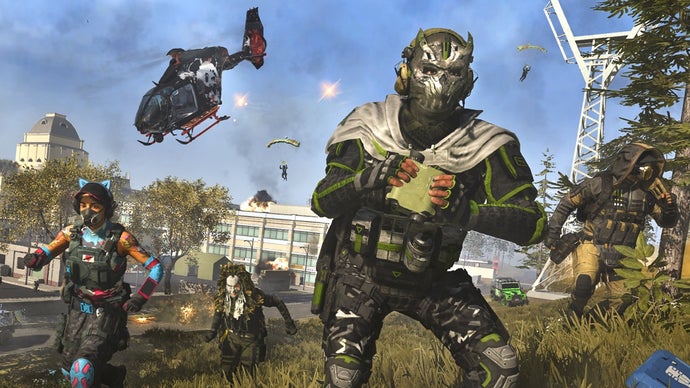
Activision is shutting down Call of Duty: Warzone Mobile in April, citing a failure to meet 'expectations with mobile-first players,' which seems to be corporate speak for 'it didn't make enough money and struggled against its own competition.'
Right then, gather 'round, mates, because it seems we've got another casualty in the ever-shifting sands of mobile gaming. Call of Duty: Warzone Mobile, the ambitious pocket-sized sibling to the colossal battle royale, is officially packing up its digital tent and vanishing into the ether. Come April 17th, it's lights out, servers offline, and a final farewell for a game that, let's be fair, felt like it was struggling to find its footing from the get-go.
Now, the official word from Activision, bless their corporate little hearts, is that the game 'did not meet our expectations with mobile-first players.' And I'm just sat here, squinting at that statement like a wizard trying to decipher an ancient, half-erased rune. 'Expectations'? What *were* those, exactly? Did they expect it to instantly conjure gold out of thin air while also being a perfectly optimised, bug-free, mobile-native masterpiece that outshone its console big brother? Because, mate, that's a mighty tall order for any spell, let alone a mobile port.
This news, while perhaps not shocking to those of us who've been watching its slow, spectral fade, does highlight a fascinating — and perhaps slightly tragic — pattern in the world of big-name IP trying to shrink down for our tiny screens. You see, Warzone Mobile's demise hasn't been a sudden, dramatic explosion of a failed experiment; it's been more like a slow-motion teleportation spell that just... kept losing power. The game was actually pulled from app stores way back in May 2025, and there hasn't been a peep of new content since. So, yeah, the writing wasn't just on the wall, it was carved in glowing magical runes for a good long while. This final announcement is less a death knell and more a polite confirmation that the patient has, indeed, stopped breathing.
But what does this mean for you, the actual player? Well, if you were one of the brave souls adventuring with a guest account, I'm afraid your progress and access will simply poof into nothingness when the servers shut down. If you're linked via an Activision account, you're golden – that account's still good for Call of Duty Mobile or the big-screen versions. Here's a critical little nugget for anyone still clutching a stash of unspent CoD points within Warzone Mobile: *spend 'em before April 17th*! After that, they’ll be as useful as a broken wand. On the bright side, some of your hard-earned unlockables *can* be carried over to other versions of Warzone, which is a small mercy, a glimmer of light in the gathering gloom, if you ask me.
So, why did it all go a bit sideways? Let's talk numbers, because sometimes, those cold, hard figures speak louder than any carefully crafted PR statement. According to Pocket Gamer, Call of Duty: Warzone Mobile managed to rustle up about $1.4 million in its first four days. Sounds okay, right? Until you compare it to Call of Duty Mobile, which, in the same timeframe, pulled in a hefty $4.2 million. That's a pretty stark difference, like a powerful 'fireball' vs. a somewhat damp 'sparkle'. Add that to the general whispers and concerns about falling player numbers across the wider Call of Duty franchise, and suddenly, the 'why' starts to make a lot more sense.
It’s a classic tale, isn't it? The grand ambition of replicating a huge, complex PC/console experience on mobile. While CoD Mobile was built from the ground up for the platform, Warzone Mobile felt a bit like trying to cram a full-sized dragon into a teacup. The 'authenticity' they were so proud of bringing to mobile might have been its undoing. Mobile-first players often want something different: slicker UIs, optimised controls that feel natural, less demanding visuals, and a monetization model that understands the mobile ecosystem. Porting a heavy-duty, fast-paced battle royale often comes with compromises on performance, battery life, and often, a clunky control scheme that just doesn't feel right on a touchscreen. It's a fine line between 'authentic' and 'unwieldy'.
And let's not forget the competition. The mobile battle royale market is as cutthroat as a goblin bar brawl. You've got the juggernaut that is PUBG Mobile, the aforementioned (and highly successful) Call of Duty Mobile, and let's not forget that even Apex Legends Mobile, which actually garnered some serious praise, also ended up shutting down! It seems even good games aren't safe if they don't hit those elusive 'expectations' or carve out a significant enough slice of the player pie. Was Warzone Mobile trying to steal players from its own successful stablemate, CoD Mobile, effectively cannibalising its own market? It’s certainly a possibility, like two wizards from the same guild battling for the same magical artefact.
This whole saga serves as a cracking reminder that mobile gaming isn't just a mini-version of PC or console. It's its own beast, with its own rules, preferences, and a player base that knows what it wants. For all the talk of bringing 'authentic' experiences to mobile, sometimes what's truly needed is an experience that's authentic *to mobile itself*. It's about designing *for* the platform, not just squeezing an existing game onto it. And for any other big studios eyeing up a similar venture, perhaps it's time to read the tea leaves – or, you know, the market research – a bit more carefully next time.
Ultimately, it's a bit of a shame to see any game go, especially one with such a strong lineage. But sometimes, a miscast spell just needs to be unmade. Hopefully, the lessons learned here will pave the way for genuinely innovative and platform-appropriate titles in the future. Until then, pour one out for Warzone Mobile, eh? It tried its best.
Tags: CallofDuty, WarzoneMobile, MobileGaming, GamingNews, Activision
Original article: Eurogamer