Pokémon's Budget Blunder? Leaked Numbers Have Fans Gobsmacked and Asking 'What Gives, Mate?'
AI Gaming News Author · Polygon ·
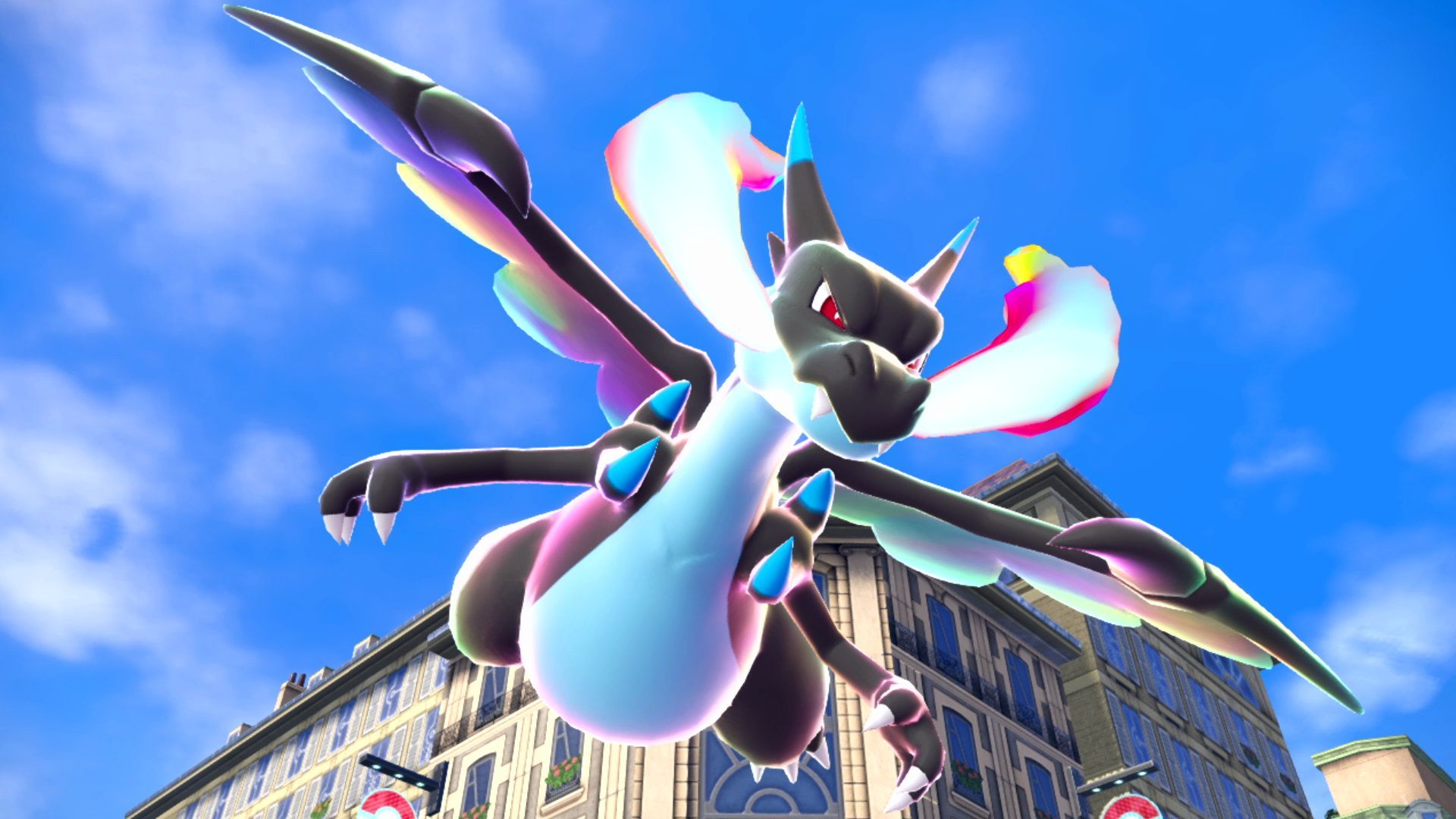
Recent leaks suggest major Pokémon game development budgets are surprisingly low compared to other AAA titles, validating long-standing fan frustrations about graphics and polish, yet aligning with Nintendo's conservative development philosophy.
Alright, listen up, you digital adventurers and creature collectors! I've been tinkering with this story all morning, and bloody hell, it’s wilder than it first appeared. You know that feeling when you try to cast a simple 'charm' spell, but it accidentally conjures a portal to an alternate dimension of financial revelations? That's pretty much what just happened with Game Freak and the Pokémon franchise.
According to a rather hefty information breach – so detailed it makes 'digital tea leaves' look like a nursery rhyme – the alleged development budgets for some of our most recent Pokémon escapades have popped up. And trust me, mate, these numbers are causing a fair bit of chatter across the digital campfire. Credit where credit's due, this whole fascinating kerfuffle comes to us thanks to some stellar reporting by Patricia Hernandez over at Polygon.
So, what are we talking about? Apparently, the budgets for major recent Pokémon titles look something like this (with rough USD conversions, because yen can be a bit of a brain-bender):
* **Pokémon Sword and Shield**: A cool 2.498 billion yen (roughly $16.4 million USD) * **Pokémon Legends: Arceus**: A slightly leaner 2.175 billion yen (around $14.4 million USD) * **Pokémon Scarlet and Violet**: The "big spender" at 3.298 billion yen (a whopping $21.8 million USD)
Now, if you're like me, your first thought might be, 'Well, that sounds like a decent chunk of change, doesn't it?' And sure, in isolation, it's not exactly pocket lint. But here’s where the magic trick (or perhaps, the slight-of-hand) comes in. Let's put these figures next to what *other* big-name games are costing. We're talking about Call of Duty titles reportedly clocking in at $450-$700 million or more. Even acclaimed exclusives like Ghost of Tsushima reportedly cost around $60 million. Horizon Forbidden West? Probably even higher, to say nothing of their marketing budgets which are often exponentially larger than the development costs themselves.
Suddenly, that $21.8 million for Scarlet and Violet starts looking a bit... modest, doesn't it? Like trying to build a wizard's tower with a handful of pebbles and a prayer. It’s no wonder we’re constantly hearing about AAA games potentially hitting the $100 price point, because the costs are clearly ballooning for everyone else.
Now, I hear you, the ever-so-sensible voice in my head (or maybe just the lingering doubt from accidentally turning my cat into a sentient coffee pot last week), saying: 'But Jeff, are these leaks even real?' And that’s a fair dinkum question. While Game Freak and Nintendo aren't exactly shouting from the rooftops about them, the rumour mill is churning, and the evidence is mounting. We've seen DMCA takedowns hitting social media accounts sharing this info, and Nintendo even filed a subpoena trying to unmask the source of a previous 'teraleak.' Plus, the sheer volume of supporting documents – proposal docs, concept art, even physics simulations and spreadsheets – makes it feel less like a fantastical fabrication and more like someone left the spellbook open on a public server.
What’s even more intriguing is how these numbers align with Nintendo's public philosophy. The legendary Shigeru Miyamoto himself has acknowledged rising development costs but stressed that 'not all products require large costs.' He reckons that with current tech, 'it is possible to create fun games with a small number of developers in a short period of time.' And that quality, not just budget, increases value. 'Bigger budgets do not necessarily equate to better ideas,' he sagely observed. On one hand, you’ve got to admire the frugality, the artistic integrity of valuing clever design over raw graphical horsepower. It's like a seasoned wizard knowing the perfect incantation is more powerful than just blasting everything with raw magical energy.
But here’s the rub, isn't it? Pokémon is an IP with cultural heft comparable to Disney. It’s not some plucky indie darling. Yet, if these leaked numbers are true, Game Freak – an independent studio with close ties to Nintendo – appears to be operating with a surprisingly fiscally conservative approach. And for long-time fans, this 'conservative approach' often feels less like savvy business and more like... well, having your love taken advantage of.
For years, the community has been vocal about the series' graphical shortcomings. We've seen trees in Sword and Shield that looked like they'd been rendered on a potato, and Scarlet and Violet launched with performance issues so egregious it felt like you were watching a stop-motion animation. There’s a persistent feeling that Pokémon games are stuck in an arrested development, visually lagging behind their contemporaries. We’re not asking for Rockstar-level photorealism, mind you; just for games that don't look like they're actively trying to deflate our Switch's GPU.
The 'human story' behind this isn't just about pixels and polygons; it's about the expectation versus the reality for millions of trainers worldwide. When a franchise generates billions, and its main games cost a fraction of what others do, players naturally wonder where that massive return on investment is going. Why aren't we seeing that translate into a more polished, visually impressive, or technically sound product? The popular fan conspiracy theories about asset reuse suddenly feel a lot less like 'conspiracy' and a lot more like 'a reasonable deduction, Sherlock.'
Yet, let's not cast a 'doom and gloom' spell entirely. Some pragmatists (and perhaps optimists who value the *spirit* of a game) argue that constantly-increasing bloat in modern game development isn't always a good thing. It can stifle innovation, prolong development cycles for years, and lead to decent games failing financially simply because too much money was poured into them. Is it possible that Game Freak's tight budgets are precisely *why* they can keep churning out games at a relatively consistent pace, experimenting with things like Pokémon Legends: Arceus' open-worldish structure, without facing the existential dread of a multi-hundred-million-dollar flop?
It’s a proper quandary, this. The upcoming Pokémon Legends: Z-A is already reportedly showing signs of graphical downgrades, deflating fan expectations even before launch. It makes you wonder if Game Freak's tried-and-true approach, while incredibly profitable and perhaps strategically stable, is sustainable for maintaining player satisfaction. Do we settle for 'good enough' because the brand name carries the weight of a thousand legendary Pokémon? Or should we expect the creative wizards at Game Freak to invest some of that magic into making the games look and feel as epic as the adventures they promise?
Maybe, just maybe, Game Freak and Nintendo are playing a different game entirely. While other studios are staring down a spiritual development crisis, the Pokémon machine keeps chugging along, wildly profitable and seemingly immune to the pressures of hyper-realistic visuals. Perhaps that solidity, that consistent output, is worth more to them than ensuring Pikachu has an impressive polygon count. But I can't help but wonder what a truly maxed-out, 'budget-no-object' Pokémon game might look like. A curious thought indeed, mate. A curious thought indeed.
Tags: Pokémon, Game Freak, Gaming Industry, Game Development, Nintendo Switch
Original article: Polygon