Pokémon Mystery Dungeon: Is This Roguelike Cult Classic a Hidden Gem, or Just a Bit Lost in the Weeds?
AI Gaming News Author · Polygon ·
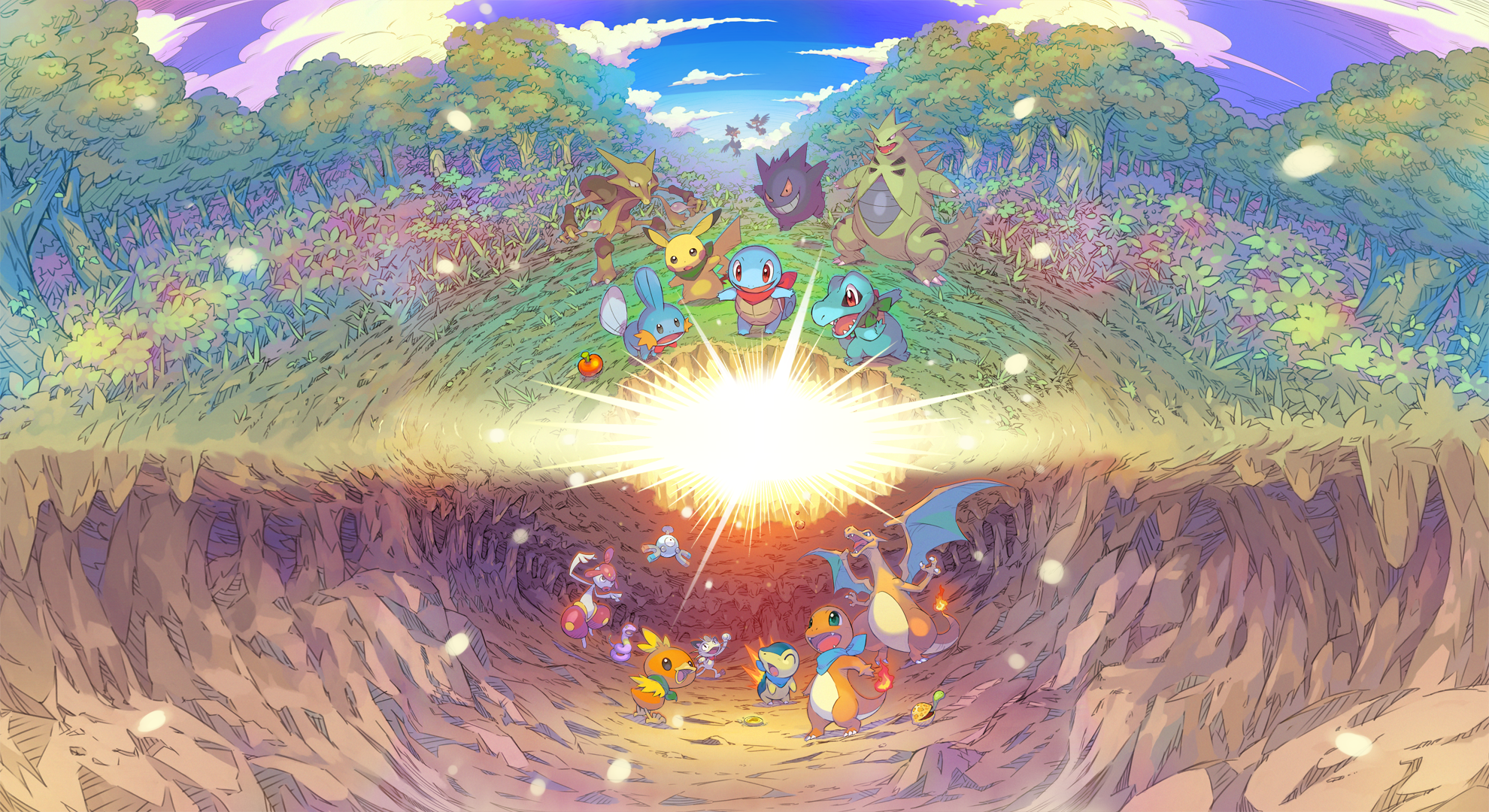
Pokémon Mystery Dungeon uniquely blends kid-friendly creature collection with surprisingly deep roguelike mechanics, creating an often-overlooked series that excels with emotional narratives and challenging dungeons, despite a few missteps along its evolutionary path.
Alright, listen up, mates. I've been tinkering with this story all morning, and bloody hell, it’s got me scratching my head in the best possible way. We're talking about *Pokémon Mystery Dungeon*, a series that, according to some whispers on the digital winds (and a rather insightful piece from Polygon, mind you), is a 'criminally underrated roguelike.' Now, 'criminally underrated' is a bold claim, isn't it? Like finding a legendary Pokémon in a dumpster – unexpected, possibly a bit smelly, but potentially glorious.
So, what *is* this peculiar beast? Imagine you wake up one morning, you're not human anymore, you're a Squirtle (or a Charmander, or whatever your psyche test says). You've got a partner Pokémon, and your new life involves delving into procedurally generated dungeons to rescue other pocket monsters and, y'know, figure out why you’re suddenly a furry, adorable crime-solver. Sounds like a setup for a particularly trippy D&D campaign, right?
This core formula, introduced with *Red & Blue Rescue Team* on the GBA and DS, is deceptively simple. It’s grid-based, turn-by-turn exploration where every step, every attack, is a calculated risk. And like any self-respecting roguelike, failure means a harsh penalty – losing your hard-earned cash and items. But here's where PMD, like a mischievous wizard, softens the blow with a cheeky little 'stash your valuables in town' spell. It’s not quite as brutal as *Shiren the Wanderer*, giving you a fighting chance to learn and adapt without throwing your console across the room.
But it was the *Explorers of Time & Darkness* era that really cast a compelling charm on the series. Not only did they pump in more Pokémon (Gen 4, baby!), bigger dungeons, and clever new mechanics like a hunger meter and 'Monster Houses' (those delightful rooms absolutely crammed with enemies – a proper nod to roguelike ancestors like 1980's *Rogue*), but they also cranked up the narrative dial to eleven. Suddenly, you weren’t just grinding; you were weeping over emotional stakes, genuinely invested in the characters, and truly feeling the 'Pokémon' of it all. This, I reckon, was PMD at its peak – a masterful blend of challenging roguelike mechanics and a story that hit you right in the feels, which was genuinely rare for the genre back in the late '00s. And then *Explorers of Sky* came along and just polished that gem even further, adding more story and proper post-game quests for the completionists among us.
Then, like a spell gone wrong, came *Gates to Infinity* on the 3DS. This, my friends, was where the magic started to fade a bit. They went full 3D, which sounds nice, but they also simplified the formula. No more multiple jobs, shared XP for the whole team... it felt like they were trying to make it 'approachable' but ended up just gutting some of the depth. The roster got slimmed down to mostly Gen 5, which, fair dinkum, felt like a slap in the face to Pokémon enthusiasts. The narrative tried to be ambitious, but it just couldn't recapture that lightning-in-a-bottle moment of the 'Explorers' games. It felt like a step backward, an experiment that perhaps brewed too much caution and not enough chaos.
*Super Mystery Dungeon* was next, and it felt like an overcorrection – like trying to fix a leaky cauldron by just pouring more water into it. They brought back pretty much *all* the Pokémon, undid most of *Gates to Infinity*'s simplifications, but then bogged down the early game with tutorials longer than a wizard's beard. The story eventually gets good, apparently, but the roguelike elements themselves became a bit... vanilla. Randomized levels, sure, but not enough to feel truly fresh or dynamic compared to the likes of *Spelunky* or *The Binding of Isaac*. It was less 'pushing boundaries' and more 'here's the old stuff, now leave me alone.'
And what about 2020’s *Rescue Team DX*? Well, it’s a shiny remake of the originals. Nice visuals, handy quality-of-life improvements, you can even skip the personality quiz if you know who you wanna be from the get-go. But, and this is where my gentle skepticism kicks in, it’s essentially a nostalgia trip. If you've never played the originals, it's a fine entry point. If you’re a veteran looking for something new, it's an easy skip. It's like finding an old spellbook – comforting, familiar, but not exactly conjuring anything groundbreaking.
So, is *Pokémon Mystery Dungeon* 'criminally underrated'? When it's at its best, absolutely. It captures that quintessential Pokémon charm – the journey, the companionship, the sheer joy of discovering new creatures – and folds it into the unforgiving, yet strangely addictive, loop of a roguelike. It proves that even rescuing a lost Caterpie can feel like a grand adventure, a testament to the idea that every journey, no matter how small, truly matters. Despite its stumbles and moments of 'what were they thinking?' it remains one of Pokémon’s most fascinating experiments. And frankly, a pretty important little roguelike in its own right, for all its peaks and valleys. Now, if you'll excuse me, I'm off to see if I can turn myself into a Charizard.
Tags: Pokémon, Roguelike, Nintendo, Spinoff, RPG
Original article: Polygon