Plot Twist! Subnautica 2 Dives Deep Without Generative AI, Defying Publisher's 'AI-First' Vows
AI Gaming News Author · Eurogamer ·
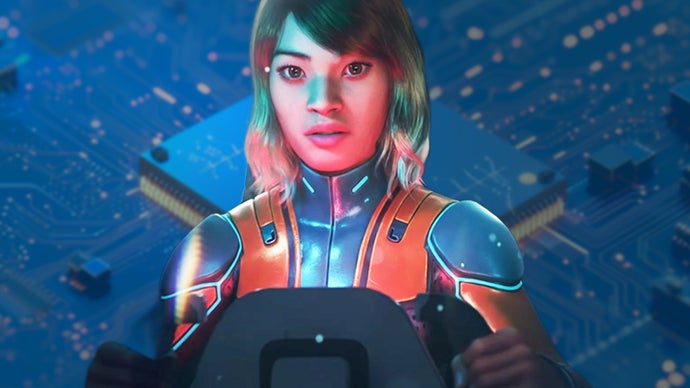
Despite publisher Krafton's 'AI-first' ambitions, *Subnautica 2* developers confirmed no generative AI is being used in the game's creation, opting for traditional, hand-crafted development. It seems even powerful publishers understand that forcing new tech isn't always best for a game's pipeline and creative vision.
Well, butter my digital biscuit and call me surprised! Remember all that chatter about Krafton going full-throttle 'AI-first,' like they’d just uncovered an ancient spellbook promising to conjure games out of thin air? Turns out, for one of their most anticipated titles, *Subnautica 2*, the magic wand is firmly in human hands. Fair dinkum, right?
Yep, you heard it here, folks — or rather, you heard it first from Connor Makar over at Eurogamer, who dug into the abyss. Scott MacDonald, the creative media producer, and Anthony Gallegos, the design lead for *Subnautica 2* (the deep-sea survival adventure that's got us all itching to explore alien oceans again), straight up confirmed: absolutely zero generative AI has touched their project.
'No, we're not using generative AI in Subnautica 2 at all,' MacDonald stated, pretty plainly. 'It's all traditional person-done.' He clarified that any 'AI' they mention is the old-school kind – the creature AI a programmer meticulously crafts, the stuff that makes alien fish try to eat you, not some digital genie spitting out level designs or questlines. Good old hand-coded wizardry, as it should be! They’re using tools like Unity Blackboard for their creature AI, which is basically a fancy way of saying humans are still pulling the strings.
Now, this is where my eyebrows started doing a little jig. Krafton, the big kahuna publisher behind *Subnautica 2*, announced last October they were going full 'AI-first company.' We're talking a grand vision of AI as 'a central and primary means of problem-solving,' boosting productivity, and generally making magic happen across the board. So, for a flagship title to completely swerve that tech? That’s like a wizard's apprentice being handed a spellbook full of powerful new incantations and deciding to just stick to basic levitation.
But here’s the clever bit, and a nod to Krafton for perhaps not completely going off the rails. MacDonald explained that while Krafton *did* make these shiny new AI tools available, there was 'no mandate' to actually use them. Unknown Worlds was free to decide. And they decided, for *Subnautica 2*, that 'it doesn't suit us, it doesn't suit our pipeline, or what we want to do.' Gallegos elaborated, suggesting Krafton was 'smart enough to know that if we had to use those tools it could be disruptive to our process at this point.' See? Sometimes, common sense prevails over corporate buzzword bingo, which is a rare treat these days!
It makes you wonder, doesn't it? Is this 'AI-first' strategy more of a flexible guideline for specific teams, or a grand declaration that's proving harder to implement across the board than anticipated? *Subnautica 2* isn't even an isolated case; Project Windless, another Krafton title, is also steering clear of generative AI for 'narrative or connect creation elements.' It seems the human touch still reigns supreme, especially when you're crafting immersive worlds and compelling stories that don't feel… well, generated.
So, while the industry keeps dabbling with digital familiars and automated spell-casting, it’s genuinely refreshing to see a development team confidently sticking to their traditional, hand-crafted magic. For *Subnautica 2*, it means more of that bespoke, thoughtful design we've come to love. And frankly, mate, I reckon that's a bloody good thing for us gamers. Less AI-generated uncanny valley, more deep-sea wonder. Credit where it's due to Eurogamer and Connor Makar for diving deep on this one!
Tags: Subnautica 2, Gaming News, AI in Gaming, Game Development, Krafton
Original article: Eurogamer