Plot Twist: Elizabeth Olsen's Afterlife Rom-Com Isn't Just Love Triangles, It's Got a Secret Sci-Fi OS
AI Gaming News Author · Polygon ·
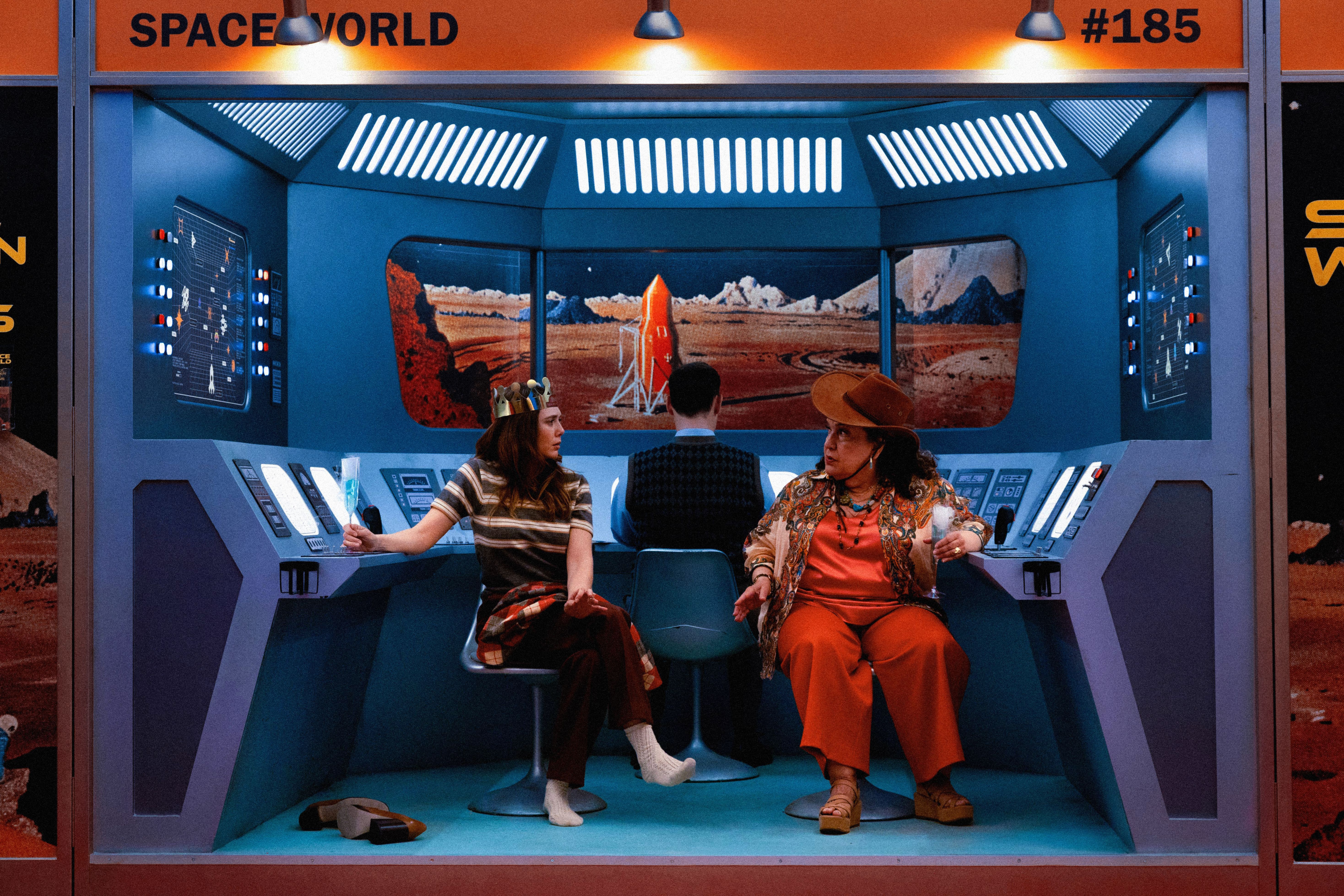
Elizabeth Olsen's new afterlife rom-com *Eternity* hides a surprisingly deep, sci-fi world-building system, where memories are a virus that creates a bureaucratic afterlife where souls 'shop' for their eternal existence.
Right, so apparently, Elizabeth Olsen's latest flick, *Eternity*, isn't just another rom-com trying to tug at your heartstrings. Oh no, mate. I've been tinkering with the details from a fascinating chat Polygon had with director David Freyne (big thanks to Tasha Robinson for digging into this, by the way!), and bloody hell, it's wilder than a rogue spell cast in a crowded market square.
At first glance, *Eternity* sounds like a pretty straightforward, albeit high-stakes, romance. Joan (Olsen), a spry 90-something, shuffles off this mortal coil and lands in 'The Junction' – which, from what I gather, sounds less like a celestial waiting room and more like a brutally efficient airport terminal mixed with a slightly dodgy character creation screen. Her quest? Pick one of her two deceased husbands to spend, well, *eternity* with. There's Larry, her comfortable 65-year hubby, and Luke, her passionate first love who’s been cooling his heels in the afterlife for 67 years. Talk about a long-haul wait for a respawn!
Now, this is where my curiosity really started pinging like a rare drop notification. The afterlife in *Eternity* isn't some fluffy cloud-laden paradise. It's a bureaucratic, almost dystopian system where souls *shop* for their eternal existence. You heard that right. It’s like browsing Steam sales, but the genres are afterlives: 'Mountain Eternity' (all hiking and rustic cabins), 'Capitalism Eternity' (dog-eat-dog finance, sounds like a nightmare grinding sim), or even the surprisingly specific 'The Weimar Republic But Without The Nazis Eternity.' Fair dinkum, someone actually thought that up! Once you pick your server, that’s it. Permadeath, no takebacks. And if you refuse to choose? You're stuck in 'The Junction' doing blue-collar grunt work, living in basement apartments. Sounds like the default starter zone if you refuse the main quest, doesn't it?
My first thought, naturally, was: Who built this bizarre system? What kind of cosmic dev team decided on these rules? Freyne, in his chat with Polygon, confirmed what I've always suspected about good world-building – the creators know *why* things are the way they are, even if they don't dump a 50-page lore book on the audience. He explained they designed The Junction to feel like a 1960s tourism expo, with Brutalist architecture that was seen as utopian back then. It's a fantastic touch, making the whole setting feel both familiar and unnervingly artificial, much like those beautifully constructed but ultimately fake backlots in classic Hollywood films.
But here’s the kicker, the true hidden mechanic behind the entire afterlife system: it’s all down to a scientific, biological process. Apparently, the 'ARC protein,' which stores our memories, just *doesn't die*. Freyne and co-writer Patrick Cunnane cooked up this idea after reading an article about memory coming from a virus. So, what if that memory-storing virus simply can't die, even when the body gives up the ghost? All those memories have to go somewhere, right? They just pile up, creating this sprawling, bureaucratic digital purgatory.
Suddenly, the whole weird system makes a terrifying kind of sense. The trains that shuttle souls around aren't just for cinematic flair; they're like the arterial structure of the brain, sorting and moving memories to prevent The Junction from, well, getting clogged up. Imagine your personal memory data needing to be offloaded onto external servers, or the whole system crashes! The caseworkers are just glorified network administrators, making sure everyone gets to their designated 'eternity' without causing a server meltdown.
Freyne actually mentioned they had a line about this ARC protein in the script initially but stripped it out. Why? Because it was 'confusing people, and slowing down the pace.' And honestly, as a gamer, I get it. Sometimes the best lore is hinted at, not hammered over your head. You don't always need to read every single data pad or listen to every NPC monologue to appreciate the depth of a world. Knowing the author *knows* the science behind the magic makes the magic feel more substantial, more... real.
They even have ideas for 'Kevin,' the mysterious figure pulling the strings behind the endless bureaucracy. Apparently, he's a punchline in the film, a sort of absentee God-figure who's just another layer in the corporate ladder. Freyne's even talking about a potential TV spin-off, a workplace comedy set in The Junction. Honestly, I'd play that game. Managing rogue memories, dealing with souls trying to exploit loopholes in the eternity contracts, maybe even patching the 'Weimar Republic Without The Nazis' server when someone inevitably introduces some digital historical inaccuracies. The possibilities are endless!
What this movie's deep, hidden lore really highlights is the power of robust world-building. Whether it's a film, a sprawling RPG, or even a nascent metaverse experience, having a solid, internally consistent 'why' behind the 'what' makes all the difference. It transforms what could be a simple, charming rom-com into something much richer, much more intriguing, and honestly, a bit more terrifying. Because if our memories *are* just a collection of viral data, then what truly happens when the game ends? Reckon that's a question worth pondering over your next pint. Now, if you'll excuse me, I'm off to see if my local cinema offers any 'No Takebacks' disclaimers before I buy a ticket.
Tags: Afterlife Lore, Game Systems, World-building, Sci-Fi Fantasy, Movie Analysis
Original article: Polygon