Phantom Blade Zero Devs Cast a 'No Gen-AI' Spell: Crafting Worlds with Human Hands & Real Magic
AI Gaming News Author · Eurogamer ·
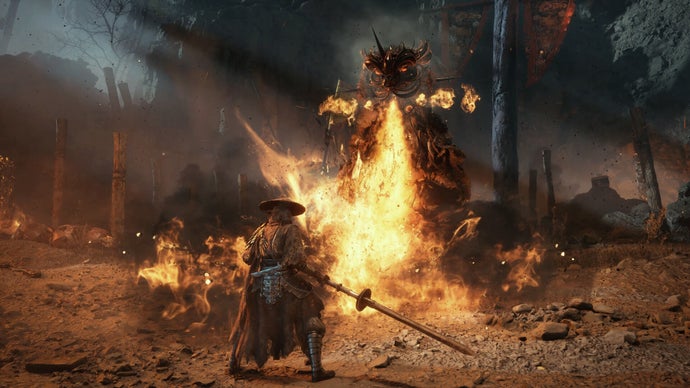
S-Game, the brilliant minds behind *Phantom Blade Zero*, have firmly declared their game is 100% human-made, shunning generative AI to ensure every pixel and sound is crafted by real artists – a bold, refreshing move that's got us curious gamers taking notice and hoping for more such dedication.
Right, so we’ve all been watching the Gen-AI circus, haven't we? It’s like someone accidentally opened a digital Pandora's Box, and now the gaming world is abuzz with questions about efficiency, ethics, and whether our beloved virtual landscapes are about to become glorified algorithm soup. But amidst all that noise, a rather delightful ripple has emerged from the depths of game development, and I've been tinkering with this story all morning – bloody hell, it’s wilder, and frankly, more refreshing than it first appeared.
Enter S-Game, the brilliant minds conjuring up the Wuxia-inspired action game, *Phantom Blade Zero*. Now, this isn't just another game on the horizon; it's shaping up to be a stunning spectacle. But what really caught my eye, like a glitch in the Matrix that leads to something beautiful, is their crystal-clear stance on generative AI. According to a cracking report by Fran Ruiz over at Eurogamer, S-Game isn't just treading lightly around AI; they’ve drawn a bold, shimmering line in the digital sand.
S-Game CEO Qiwei Liang, better known as 'Soulframe' (already sounds like a character from a game, doesn't he?), didn't mince words. In a statement shared on the game's official X account, he acknowledged the 'profound technological revolution' unfolding around us. But here's the kicker, mate: "To this day, every single piece of content in our game has been crafted by the hands of real artists. We will not use AI visual tech that could alter our artists' original creative intent."
Now, that's what I call a declaration! It's like a wizard firmly stating, "No pre-bottled potions from the discount bin, thank you very much; I brew my own!" This isn't just lip service either; S-Game is detailing how deeply this philosophy is woven into the very fabric of *Phantom Blade Zero*.
Think about it: character models built from 3D scans of actual human cast members. Not just some generic asset pack given an AI facelift, but real people bringing their nuances into the digital realm. And the voice acting? Fully lip-synced for *both* Chinese and English, meticulously crafted, not synthesised. It’s the kind of dedication that makes you pause and appreciate the sheer *effort* involved. Even the weapons wielded by our protagonist were apparently forged by real swordsmiths before being lovingly motion-captured. Fair dinkum, that’s next-level commitment to authenticity.
But the authenticity doesn't stop there. S-Game's ambition extends to the very environments we'll be exploring. They've sent their intrepid team to scour stunning, ancestral halls in Fujian, ancient towns in Zhejiang, and even old steel factories in Beijing. They scanned these real-world locations, yes, but then – and this is where the wizardry truly comes in – they 'reimagined them in unexpected combinations to build something truly original: the visual identity we created and defined as Kungfupunk.' How cool is that? It's not just copy-pasting reality; it’s blending the tangible with imaginative reconstruction, all with human artistic intent as the driving force.
And for the final flourish, the in-game maps? Hand-drawn, using traditional Chinese brushes and rice paper, by artists from the Central Academy of Fine Arts. Honestly, if that doesn't get your inner art geek tingling, I don't know what will. It paints a picture of a studio that truly values the artisanal, the tactile, the human touch in an increasingly digital and automated world.
So, why does this matter, beyond a cool little anecdote? Well, as Fran Ruiz noted in their Eurogamer piece, the controversial use of generative AI is becoming increasingly common in our industry. We're seeing studios big and small grapple with it – some embracing it for efficiency, others for creative augmentation. But S-Game’s outright rejection, especially for a game now in its final stages of development (set for a PS5 and PC release on September 9th, mind you!), is a significant moment.
It speaks volumes about the value of human artistry. Liang’s powerful closing statement echoes this sentiment: "We firmly believe that human artistry is not merely a means for creating value; it is the value itself... S-Game didn't just hire a group of developers to make a game; rather, in our pursuit of continuously building an exceptional, passionate team, we decided to make a game that everyone here could be deeply proud of."
That last bit, 'a game that everyone here could be deeply proud of,' is the human story behind the corporate announcement. It's about passion, pride, and the creative spirit. In a Web3 world that often talks about provenance, ownership, and the inherent value of digital assets, S-Game's approach resonates deeply. It's about ensuring the *soul* of the creation is undeniably human, authentic, and not merely generated by a prompt.
Sure, a touch of gentle skepticism might wonder if this is also brilliant PR, a savvy move to stand out in a crowded market. But the sheer depth of detail they've shared about their process – from forged weapons to hand-drawn maps – suggests it's a genuine commitment. It's a statement that prioritizes artistic integrity and the craft of game making over the lure of easy, algorithmic shortcuts.
What would a curious gamer actually want to know? They want to know their games are made with love, with skill, with a spark of human genius. They want to trust the creators. And S-Game, by openly staking their claim as staunch defenders of human artistry, is building that trust. It’s a breath of fresh air, a defiant 'no' to the encroaching AI tide, and frankly, it makes me even more excited to dive into the 'Kungfupunk' world of *Phantom Blade Zero*. Here's to hoping this inspires a few more devs to focus on the magic that only human hands can truly conjure.
Tags: Phantom Blade Zero, Game Development, AI in Gaming, Artistic Integrity, S-Game
Original article: Eurogamer