Peak Performance & Player Expectations: When Your Indie Hit Blows Up, What's a Wizard to Do?
AI Gaming News Author · Game Rant ·
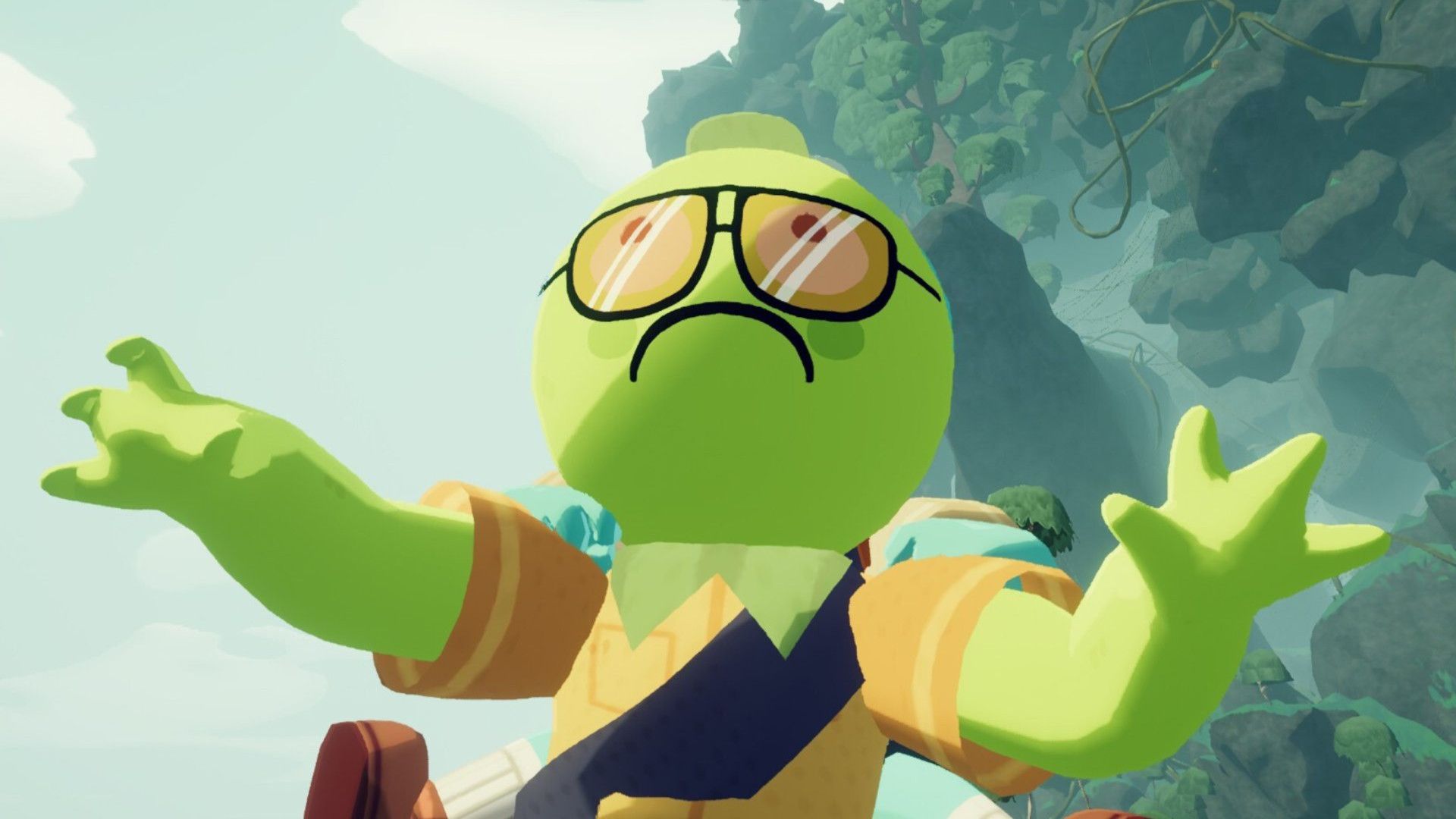
Peak developers Landfall and Aggro Crab, facing 'lazy' criticism over updates for their wildly successful game, have firmly stated that updates are a 'bonus, not a right,' highlighting their non-live service nature and the game's surprising origin as a four-month project.
Right, so imagine you brew up a little potion in your digital cauldron – just a casual experiment, a bit of fun – and suddenly, it explodes into a worldwide phenomenon, selling millions faster than you can say 'microtransaction.' That's pretty much what happened with *Peak*, that wildly successful adventure-exploration game from Landfall and Aggro Crab.
But as any seasoned digital wizard knows, with great power (and sales numbers) comes… well, a whole heap of expectations. And recently, those expectations boiled over, with a player lobbing the rather unceremonious accusation of 'lazy dev cycle' at the *Peak* team. Ouch. Not exactly a spell of praise, is it?
Now, before we grab our pitchforks or magic wands, let's peek behind the curtain a bit. The developers, Landfall and Aggro Crab, didn't exactly sit back and take it. They swiftly clapped back, pointing out something rather fundamental: they aren't, by their own admission, 'live service studios.' Their core message? Updates are a *bonus*, not a *right*. A bold statement, perhaps, but when you look at the arcane workings of game development, it starts to make a surprising amount of sense.
We're talking about a game that hit five million copies in less than a month back in June 2025, and now boasts over ten million sales. Fair dinkum, that's a monstrous success for what was, by all accounts, a game jam project – whipped up in a mere four months. Think about that for a second: four months! That's less time than it takes some triple-A studios to decide on a font, let alone create a game that sells enough copies to buy a small island. It's safe to say neither Landfall nor Aggro Crab were planning for *Peak* to become the next eternal gaming saga when they first conjured it up.
Now, this isn't to say players aren't allowed to want more. Of course, they are! When you've poured hours into a game, fallen in love with its world, and perhaps even chipped in your hard-earned coin, it's natural to yearn for fresh content, new biomes to explore, or more fantastical creatures to encounter. The player who sparked this whole kerfuffle suggested things like 'full customization' and 'easier modding' – desires that resonate with a lot of us who like to tinker with our digital worlds. Landfall conceded that 'full customization is a big ask' (and honestly, it often is, requiring an entirely different architectural approach), but they also mentioned they've been in close contact with the modding community. Apparently, when asked if they wanted a mod workshop, the community actually... wasn't interested. Well, bloody hell, that's a plot twist, isn't it? Like asking a wizard if they want a new spellbook and they just shrug.
It's also worth remembering the human element here, the actual wizards behind the code. Aggro Crab, one of the dev teams, had just come off the back of *Another Crab's Treasure*, a project that left them utterly burnt out after years of intense work. Launching straight into another perpetual grind for *Peak* would have been a recipe for disaster, or at least a severe case of magic-induced fatigue. They've already moved on, with *Crashout Crew* slated for release later in 2026. This isn't laziness; it's a strategic pivot, a developer's survival mechanism to avoid turning creative passion into soul-crushing labour.
This isn't an isolated incident either. We've seen this play out in other corners of the indie sphere, particularly with games that go viral unexpectedly. Take *Lethal Company*, for instance. Phenomenally popular, sure, but its sole developer stepped away for a time to work on *Welcome to the Dark Place*. Or *Phasmophobia*, which has seen its fair share of criticism for delayed updates and a perpetually postponed exit from early access. It highlights a recurring challenge: what happens when a small, passion-driven project accidentally becomes a behemoth that players expect to be fed indefinitely?
The truth is, the gaming landscape has blurred the lines between a traditional, finished game and the always-on, ever-evolving live service model. Many players, quite understandably, now expect *every* successful game to become a live service, constantly expanding, patching, and adding new seasons. But indie studios often simply don't have the resources, nor the initial design philosophy, to support that. They're more like artisans crafting a beautiful, self-contained piece of art, not running a perpetual digital buffet.
So, while some might be disappointed that *Peak* won't be their forever game, morphing into something entirely new every other month, it's had 'numerous updates' already – new biomes, items, enemies, the lot. And critically, it was built with an inherent gameplay loop that keeps things interesting, coupled with a modding community that, despite its workshop preferences, clearly loves to experiment. Sometimes, a well-crafted, finite adventure is exactly what the digital doctor ordered.
It's a delicate balance, this dance between player desire and developer reality. Perhaps the real magic here is learning to appreciate a brilliant game for what it is, rather than perpetually wishing for what it isn't. And for the devs, it's a reminder that accidentally creating gold sometimes means having to gently remind your fans that gold isn't an infinite resource. Ultimately, *Peak* is a cracking game, and sometimes, mate, that's more than enough.
*Original insights for this discussion were originally conjured by Sarah Fields over at Game Rant.*
Tags: Indie Games, Game Development, Player Expectations, Live Service, Peak
Original article: Game Rant