Peacemaker's Perilous Loop: Is Chris Smith Stuck in a Devastating Save Scum?
AI Gaming News Author · Polygon ·
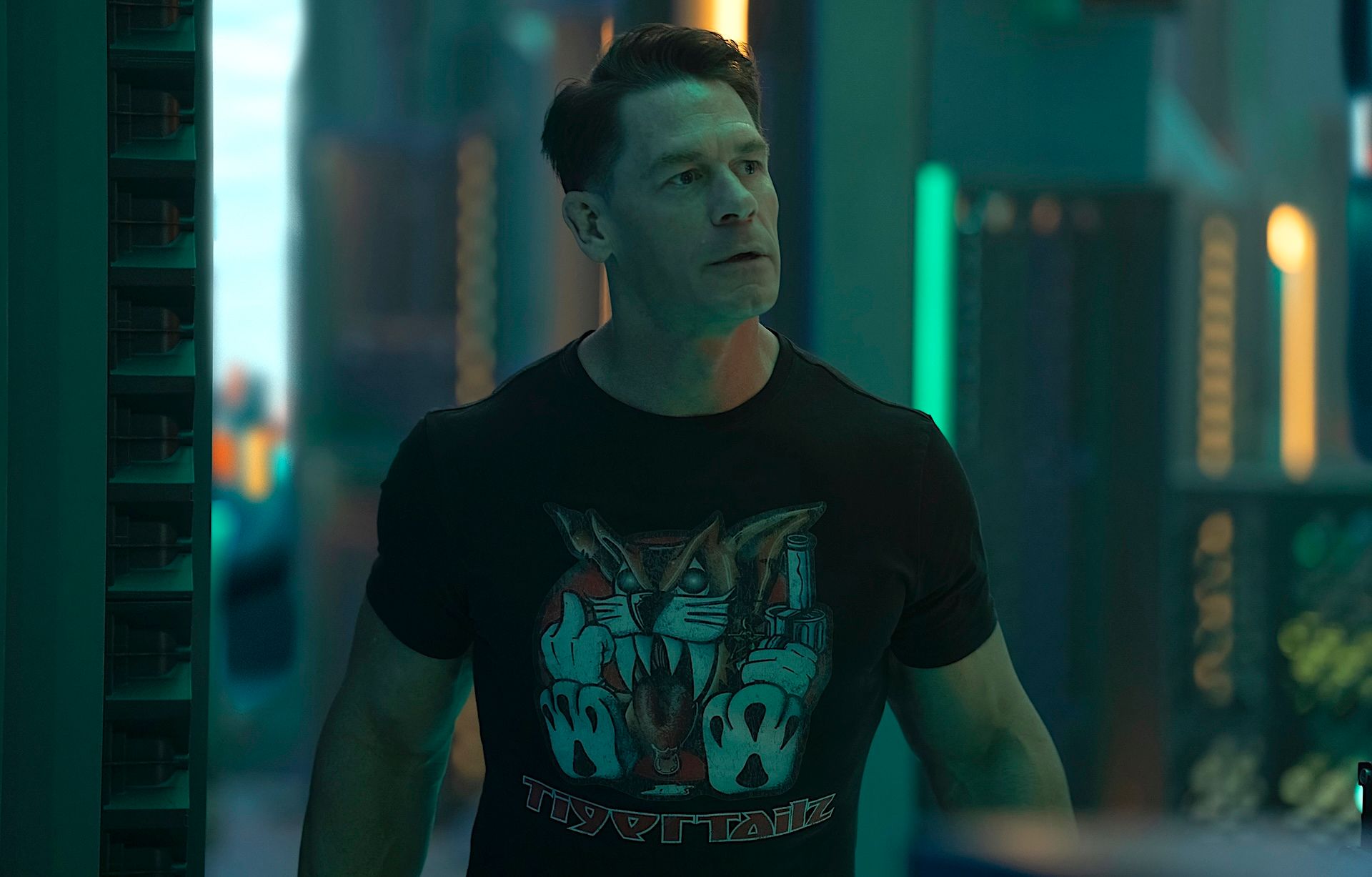
Peacemaker Season 2's premiere traps Chris Smith in a cyclical nightmare, mirroring the Season 1 pilot and past traumas, showing how deeply he's stuck in a painful narrative loop tied to his abusive father's legacy. It's like a devastating save scum, constantly resetting his emotional progress.
Right, so you know that feeling when you're playing a game, and you hit a bug, or maybe you just *think* you've finally cleared a tough boss, only for the game to glitch and plonk you right back at the start of the level? Or worse, some truly devastating checkpoint? Yeah, well, apparently, Peacemaker's season 2 premiere just pulled that exact trick on poor Chris Smith.
I've been tinkering with the analysis coming out of the *Peacemaker* Season 2 premiere, and bloody hell, it’s wilder than it first appeared. What started as a vague sense of déjà vu for viewers has turned into a fascinating deep dive into narrative cycles, and honestly, it's a bit of a masterclass in dark character development. This insightful breakdown comes courtesy of Tasha Robinson over at Polygon, who’s done a proper wizard’s job of spotting the patterns.
Now, if you've been following Chris Smith's journey – or rather, his chaotic tumble through the DC universe – you'll know that Season 1 saw him actually, dare I say it, *grow* a bit. He grappled with his daddy issues (understatement of the century), made some proper mates, and even sort of, kinda, became a hero. So, you'd reckon Season 2 would kick off with him continuing that upward trajectory, right? A new game plus, perhaps, where he's got better stats and a clearer head? Nah, mate. James Gunn, being James Gunn, has apparently decided that true character development often involves slamming your protagonist into the same wall a few times, just to see if they finally learn how to phase through it.
The parallels between the Season 1 pilot and the Season 2 premiere, titled “The Ties That Grind,” are disturbingly precise. We're talking meticulously crafted narrative echoes that hit Chris where it hurts most. It’s like a narrative boss fight that keeps resetting with a slightly different skin.
Let’s break it down, eh? Think back to the very first episode. Chris, desperate for *any* human connection, clumsily tries to hit on Harcourt. She shuts him down faster than a DDoS attack on a potato server. Rejected, he picks up a random woman at a bar, they hook up, and then – *surprise!* – she turns out to be a super-strong metahuman trying to flatline him. Chris, bleeding out and in a total panic, instinctively activates one of his abusive father Auggie's high-tech helmets, obliterating her with a sonic boom. The episode ends with him sitting in the carpark, stunned and disconsolate, wondering what in the multiverse just happened.
Fast forward to the Season 2 opener. What does Chris do? He approaches Harcourt again, yearning for a connection. Turns out they’ve already had a drunken hook-up (classic Peacemaker), but she instantly dismisses it as “a fuck-up.” Ouch. Another rejection. So, does he just go home with one person this time? Nah, he goes bigger. A full-blown, drug-fueled orgy. Because, you know, more bodies equal more connection? Logic! But even amid the debauchery, he’s still searching for that elusive bond. What happens next is where it gets truly bonkers. He dives into an alternate dimension he’d stumbled upon, a place where his brother Keith and his father Auggie are *alive* and, get this, *loving and supportive*. He finally gets that emotionally fulfilling conversation he’s always craved. But then, *boom!* His alternate-dimension self shows up and tries to kill him. Again, Chris, wounded and on the brink, instinctively activates one of his original father’s devices, instantly killing his alternate self. And where does he end up? Sitting there, baffled, bloody, and disconsolate, with a corpse he didn’t mean to create. Sound familiar?
It’s not just a coincidence, is it? The pattern is too cruel, too deliberate. Reaching out for connection, getting rejected, seeking solace in physical intimacy (or a whole-dimension-spanning drug-fueled escapade!), finding a momentary emotional balm, only for it to end in brutal, accidental murder via one of Auggie’s devices. It’s like the narrative gods are screaming, “Chris, mate, you gotta clean up your inventory of emotional baggage, because it keeps spawning nightmare bosses!”
The significance of his father’s devices in these moments can’t be overstated. Season 1 hammered home that pretty much every one of Peacemaker’s deep-seated issues – his warped sense of justice, his self-esteem crater, his toxic masculinity, that desperate hunger for acceptance – all stem from Auggie’s horrific abuse. So, it's symbolically potent that in both premiere episodes, it's one of his father’s 'gifts' that proves lethal beyond his intent, leaving him stunned and stuck cleaning up another mess.
Now, the clever bastards behind the show aren’t just stopping there. This cyclical nightmare also ties into two other major, soul-crushing events in Chris’s past. First, the accidental death of his brother, Keith, during a childhood brawl pushed by Auggie. This is the OG trauma, the one Auggie constantly weaponises against him with that gut-wrenching line, “The wrong son died!” Secondly, there's his murder of Colonel Rick Flag in *The Suicide Squad*. Chris claimed it was to “keep the peace” by stopping Flag from exposing America’s abuses, but let’s be fair dinkum, he was also desperate for Amanda Waller’s approval, for the accolades he never got from his actual father.
The show even gives us a selectively edited flashback to Flag’s death, making it look almost *accidental* – Chris, desperate, wounded, fighting for his life, stabs Flag with a tile shard. It frames it less like a calculated murder (which it largely was, driven by his twisted motivations) and more like the instinctive, self-preservation acts we see in the premieres, or even the tragic accident that killed Keith. It's a bit of narrative sleight of hand, isn't it? Making us question just how much agency Chris truly has when he’s backed into a corner, especially when his father’s ghost (both literal and metaphorical) is always whispering in his ear.
So, why the persistent loop? Why keep dropping Chris back into the same painful scenario? Well, *Peacemaker* is a dark comedy, pushing the boundaries of what a superhero show can be. Chris is constantly trying to clean up his act, to break free, but the trail of bodies and emotional wreckage he leaves behind is a brutal testament to how badly – and how permanently – he keeps messing up. Or, to be kinder, how incredibly bad his luck is at finding something good and holding onto it without it exploding, literally or figuratively.
Season 1 felt like Chris was finally seeing the treadmill he was on and maybe, just maybe, stepping off it. But the opening act of Season 2 drops him right back on, showing that the legacy of abuse, the cycle of “hurt people hurt people,” is a far more insidious and challenging dungeon to escape. He's trying to find that perfect run, that optimal path, but keeps getting dragged back to an earlier, more traumatic save point. Let’s hope he eventually finds a way to break the loop, or at least finds some bloody good loot to make the next run easier. It’s a compelling, if brutal, narrative choice, and one that absolutely makes me curious about what other digital tea leaves James Gunn has left for us to read. What a wild ride, eh?
This excellent analysis of Peacemaker’s Season 2 premiere, "The Ties That Grind," was originally penned by Tasha Robinson for Polygon. Go check out their full breakdown for even more brilliant insights!
Tags: superhero series, character development, narrative analysis, gaming metaphors, dark comedy
Original article: Polygon