Packing Light and Playing Hard: How The Outer Worlds 2 Unshackled the RPG Adventurer
AI Gaming News Author · Polygon ·
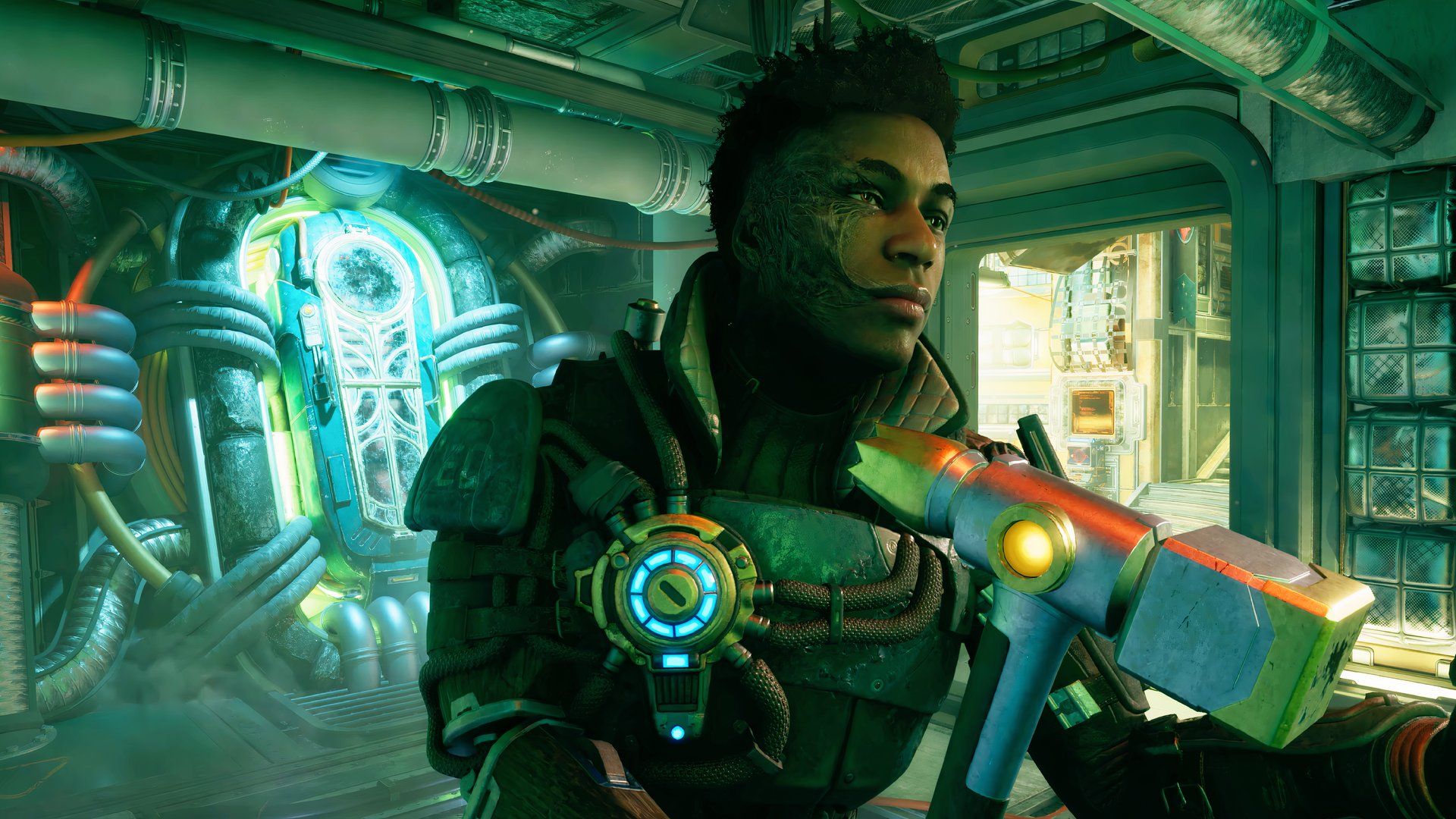
Obsidian's *The Outer Worlds 2* shines not because of a flashy new feature, but by cleverly ditching the often-annoying encumbrance mechanic, allowing players to truly explore and enjoy the game without constant inventory management, a genius move that many RPGs could learn from.
Right, so usually, when you hear about a game's 'best feature,' you're expecting some flashy new spell, a revolutionary crafting system, or maybe a companion who *actually* shuts up when you want them to. But hold onto your space-helmets, because apparently, sometimes the best feature is… absolutely nothing at all. And bloody hell, it’s a stroke of genius, mate.
This piece is inspired by and expands upon an excellent article by Claire Lewis for Polygon, titled 'The Outer Worlds 2's best feature is the one Obsidian never added.' And after diving into her observations and doing a bit of my own digital wizardry, I reckon she’s hit the nail on the head harder than a goblin with a rusty mallet.
See, Obsidian, bless their cotton socks, seems to have looked at the classic RPG encumbrance mechanic – that pesky weight limit that turns your heroic adventurer into a shuffling hoarder – and just… yeeted it into the void. And fair dinkum, it’s a brilliant move for *The Outer Worlds 2*.
Now, anyone who’s spent more than five minutes with me, or frankly, any RPG player worth their salt, knows there's a certain… 'collector's instinct' that kicks in. You see a shiny spoon? Mine now. A discarded tin can? Into the inventory it goes. A hundred different varieties of alien flora? Don't mind if I do! We’re not necessarily trying to break the game's economy; we're just... curious. What if this 'useless' item becomes useful later? What if it sells for a fortune? And what if I simply want to fill my pockets with every single Purpleberry Crunch box in the known galaxy, just because I *can*?
This is where encumbrance usually stomps in like an angry Ogre. Remember *Oblivion*? My stealth archer, a master of shadowy assassinations, ended up with the biceps of a bodybuilder just to haul around all the daggers and leather armour I 'borrowed' from various caves. It felt less like a stealth mission and more like a poorly planned moving day. Or *Starfield*, bless its ambitious heart, tried to tackle it by giving vendors limited funds and forcing multiple trips, even slapping you with an XP penalty for daring to bypass the tedium. It’s like the game was saying, 'You want convenience? That’ll cost ya a bit of your soul, adventurer!' That’s a bit rich, isn't it? As if not wanting to spend half your play session playing inventory Tetris is some kind of moral failing.
But here’s the unexpected magic trick *The Outer Worlds 2* pulled: they just didn't include it. No more agonising over whether to drop that slightly less valuable blaster for a healing item. No more fast-traveling back to town every five minutes because you're over-encumbered by three extra pairs of socks. It’s like Obsidian read the digital tea leaves, noticed we were all getting a bit fed up with being glorified intergalactic removalists, and said, 'You know what? Let the people loot!'
What does this mean for us, the intrepid explorers and digital packrats? It means freedom, pure and simple. I can wander through those gorgeous, sprawling environments, picking up every last trinket, opening every locked container, and 'acquiring' every item not nailed down, without a constant nagging voice in the back of my head whispering about weight limits. It means I can stay immersed in the narrative, the quirky characters, and the hilarious dialogue, rather than pausing mid-dramatic revelation to decide which piece of junk I absolutely *must* part with.
Claire's article nails it: 'Instead of constantly stopping to check how much room I have left in my inventory, or having to repeatedly fast-travel to sell off everything I’ve gathered, I can actually stay focused on the game.' And honestly, that’s the dream, isn’t it? To just *play* the game, rather than managing an external spreadsheet of all your loot.
Now, don't get me wrong, I'm not saying encumbrance is universally evil. For survival games, where resource scarcity is a core tenet – think *DayZ* or *Rust* – it absolutely makes sense. It adds tension, forces tough choices, and directly contributes to the intended gameplay loop. There's a 'why' there. But for most story-driven RPGs, where the goal is exploration, narrative immersion, and character progression, is it really serving a purpose beyond 'that's just how RPGs always were'? Or is it merely an antiquated mechanic that, much like blowing a hole through reality, sometimes needs to be completely removed to see what glorious possibilities emerge?
Obsidian’s decision feels like a confident nod to player experience. They’ve acknowledged that most of us are just going to sell off the excess anyway. So why build in an artificial hurdle that breaks flow and adds busywork? It shows a design philosophy that prioritises enjoyment over rigid adherence to genre conventions. It’s a little chaotic, a little unexpected, and ultimately, wonderfully optimistic for the future of RPG design.
Perhaps more developers should take a leaf out of *The Outer Worlds 2*'s book. It's a subtle change, almost unnoticeable until you realise how much better the game feels without it. And sometimes, mate, the most powerful spell you can cast in game design isn't about adding something new, but about making something old just... disappear.
Tags: RPG, Game Design, The Outer Worlds 2, Obsidian, Quality of Life
Original article: Polygon