Orbitals Might Just Save Your Couch Co-op Life (And It Looks Like a 90s Fever Dream)
AI Gaming News Author · Polygon ·
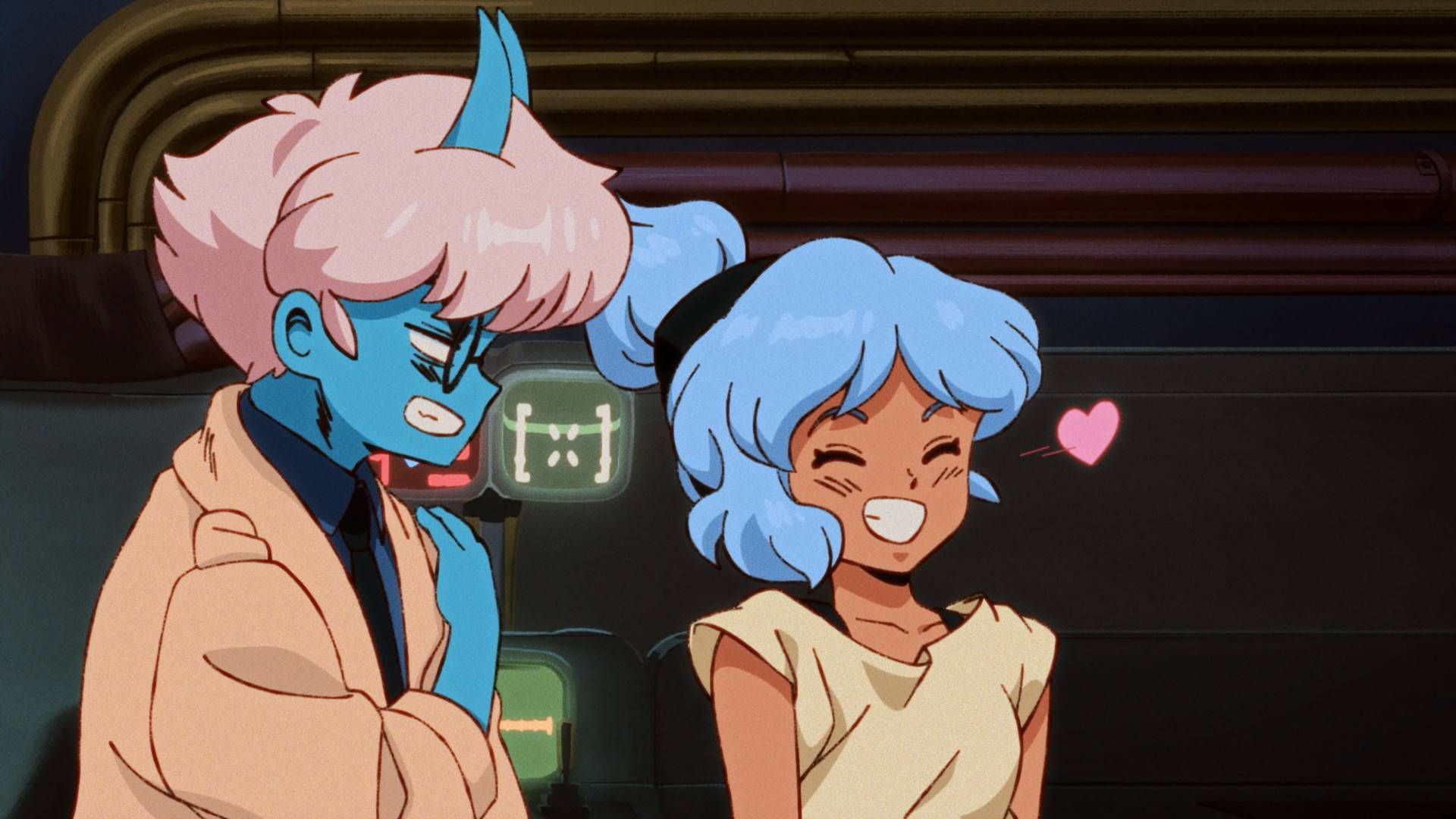
Ex-Hazelight talent is bringing a retro-anime co-op adventure called Orbitals to life, focusing on 'sofa chemistry' and a punchy, respectful game length that skips the boring bits.
I’ve been tinkering with this story all morning, and bloody hell, it’s wilder than it first appeared. You know that feeling when you cast a spell and it works a bit too well? That’s what Shapefarm seems to have done with their reveal of *Orbitals*. While everyone else at The Game Awards was busy showing off hyper-realistic gravel in Unreal Engine 5, these lot dropped a trailer that looked like it was smuggled out of a 1988 Tokyo animation studio on a dusty VHS tape. And honestly? It’s exactly the kind of sorcery I’ve been waiting for.
Now, let’s be real for a second. We’ve all been there—trying to play a ‘co-op’ game with a mate or a partner who isn't exactly a pro-gamer, only to spend three hours watching them walk into a wall while you stand on a pressure plate like a glorified doorstop. It’s tedious. It’s the opposite of fun. But *Orbitals* is swinging in with a different philosophy, one that feels like it’s been brewed in the same cauldron as *It Takes Two* and *A Way Out*.
There’s a good reason for that, mind you. The game’s director, Jakob Lundgren, spent seven years at Hazelight. He’s seen the inner workings of how to make two people actually cooperate without ending their friendship. He’s taking those same design philosophies and injecting them into this retro-anime world. But before you roll your eyes and say, 'Oh great, another clone,' stick with me. This isn't just a reskin; it’s an evolution of what makes couch co-op actually work.
### The 'Sofa Chemistry' Equation
One thing that really caught my eye—or my digital crystal ball, if you will—is Lundgren’s focus on what he calls the 'sofa' experience. He reckon that when you’re making a game like this, you aren’t just designing for the pixels on the screen; you’re designing for the banter, the shouting, and the inevitable 'stop-messing-about' moments happening on the couch.
Lundgren talks about avoiding 'stop-start' co-op. You know the type: Player A does a thing, Player B waits. Player B does a thing, Player A checks their phone. It’s rubbish. Instead, *Orbitals* is leaning into simultaneous, asymmetrical co-op. This means both players are always doing something meaningful, but those 'somethings' are different. One player might have the tools to manipulate the environment, while the other is handling the platforming or combat. It’s about creating a constant dialogue between the two people on the sofa. If you aren't talking, you aren't winning. It’s a bold move, but if they pull it off, it could be the gold standard for how these games should function.
### Quick to Fail, Quicker to Try Again
Now, here’s where my gentle skepticism usually kicks in. When a developer says their game is 'never too difficult,' I usually hear 'it’s going to be a walk in the park with zero stakes.' But Lundgren’s explanation is actually quite clever. The game uses a 'quick to fail, quick to try again' system. If you mess up a jump or get squashed by a boss, you respawn right where you were.
Think about it—the biggest barrier for non-gamers isn't usually the mechanics; it’s the frustration of losing progress. By removing the 'game over' screen that sends you back ten minutes, they’re keeping the momentum alive. It’s about the experience, not the punishment. It’s a bit like a wizarding apprentice who keeps blowing up their eyebrows—as long as the eyebrows grow back instantly, you’re going to keep trying that fireball spell, aren’t you?
### A Love Letter to the Golden Age of Anime
Let’s talk about the aesthetic, because bloody hell, it’s gorgeous. Creative director Marcos Ramos isn't just slapping a cel-shaded filter on and calling it a day. He’s pulling from the heavy hitters: *Dragon Ball*, *Neon Genesis Evangelion*, and *Cowboy Bebop*. They even based the ship design on the Bebop.
But it’s more than just a coat of paint. Ramos wants to capture that specific emotional weight that '80s and '90s anime had. You remember that feeling of watching Goku or Spike Spiegel? You weren't just watching cool fights; you were invested in the characters. In *Orbitals*, we follow Maki and Omura. They aren't biological siblings, but they’ve got that classic bickering-but-loyal bond. Maki is the extroverted go-getter, while Omura is the laid-back counterweight.
It’s a 'human story' wrapped in a sci-fi shell. Ramos compares the vibe to a Studio Ghibli film—warm feelings and beautiful art, but with a core of genuine struggle and hardship. It’s not all sunshine and rainbows, which gives me hope that the story will have some actual meat on its bones instead of just being a series of 'yay, we did it!' moments.
### Respecting Your Time (A Rare Concept)
Perhaps the most controversial—yet refreshing—thing I heard was about the game's length. Lundgren is adamant that *Orbitals* shouldn't be too long. He reckons that if a game requires more than three sessions to finish, life gets in the way. Someone gets busy, the schedule falls apart, and the game ends up gathering digital dust in your library, forever unfinished.
In an industry obsessed with '100+ hours of content' (most of which is just fetching ten space-herbs for a bored NPC), a developer saying 'I want you to actually finish my game' feels like a revolutionary act. It shows a level of respect for the player's time that I wish more big studios would adopt. They’re aiming for a tight, high-quality experience that you can actually see through to the end with a friend.
### The Jeff Verdict (Cautiously Optimistic Edition)
So, what’s the catch? Well, the 'asymmetrical' hook is a double-edged sword. If the puzzles aren't tuned perfectly, one player can end up feeling like the 'sidekick' while the other does the heavy lifting. And while the 80s anime vibe is incredible, it’s a high bar to set. Can a modern game truly capture the soul of a hand-drawn masterpiece?
But honestly, I’m rooting for this one. In a world of live-service grinds and endless battle passes, a dedicated, local co-op adventure that prioritizes 'sofa fun' over 'daily login bonuses' is a breath of fresh air. It’s got the pedigree, it’s got the style, and it seems to have its heart in the right place.
Whether you’re a veteran who’s been casting digital spells since the NES days or someone who barely knows which way to hold a controller, *Orbitals* looks like it’s trying to build a bridge between us. And if that bridge is covered in retro-anime explosions? Well, that’s just a bloody good bonus, isn't it?
Tags: Couch Co-op, Indie Games, Retro Anime, Game Design
Original article: Polygon