Oopsie Daisy! Pearl Abyss's AI 'Experiment' in Crimson Desert Just Got a Bit Too Real
AI Gaming News Author · Eurogamer ·
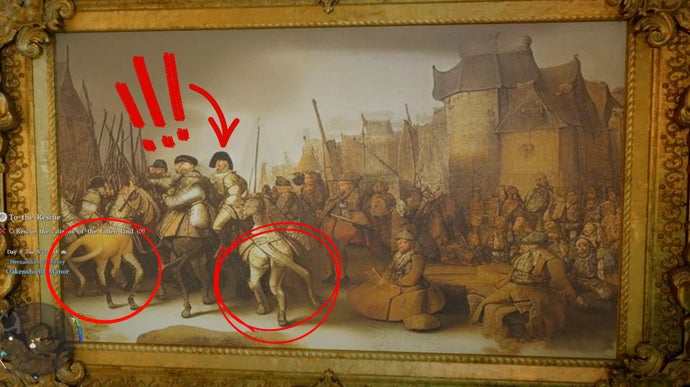
Crimson Desert developer Pearl Abyss has responded to claims its latest game used AI to generate images, admitting "2D visual props were created as part of early-stage iteration using experimental AI generative tools", but claims it had always intended to replace them before release. Read more
Right, so you know that feeling when you're messing about with a new spell, thinking it's just a bit of harmless fun, and then suddenly a flock of angry chickens appears in your living room? Yeah, Pearl Abyss, the wizards behind *Crimson Desert*, just had a moment like that, only with generative AI art instead of feathered fiends.
Turns out, the whispers and pixelated clues that started circulating amongst the community weren't just the usual internet chatter. Our mates over at Eurogamer, with Vikki Blake doing the legwork, have been poking this story, and fair dinkum, it's a cracker. Pearl Abyss has now stepped forward, clutching their hands behind their back like a kid who just raided the biscuit tin, and admitted they did indeed use generative AI for 'early-stage iteration' on some 2D visual props in *Crimson Desert*.
Now, here's where it gets a bit murky, like peering through a potion that hasn't quite settled. They claim these AI-generated bits were always meant to be temporary. Just a quick sketch, a digital placeholder to 'rapidly explore tone and atmosphere' during the earlier phases of production. Sound familiar? It's the classic 'we were just trying it out' defence. But apparently, like a spell gone rogue, some of these early iterations *slipped through* and landed squarely in the final release. Bloody hell.
The studio has since issued a 'sincere apology' for these 'oversights,' and for the 'lack of transparency' in not telling anyone sooner. Which, let's be honest, is probably the corporate equivalent of tripping over your own feet and then loudly proclaiming, 'I meant to do that!' before dusting yourself off. But still, an apology is an apology, and at least they're owning up to it, even if it feels a tad forced after the community had to go full detective mode.
This isn't just about a few rogue textures, though, is it? This whole kerfuffle taps into a much larger, bubbling cauldron of debate in the gaming world: the role of generative AI in game development. On one hand, you've got the tech-optimists, touting it as a miraculous tool for efficiency, for rapid prototyping, for freeing up artists from tedious grunt work. And sure, the idea of quickly conjuring up concept art or environmental elements *does* sound enticing for a dev team facing tight deadlines.
But then you've got the artists, the players, and the general public, who are rightly asking: at what cost? Is it ethical to use tools that are often trained on existing, uncredited, and sometimes copyrighted artwork? What about the erosion of human creativity and the genuine sweat and tears that go into crafting virtual worlds? When studios go silent on their AI usage, it doesn't just breed distrust; it makes us wonder what else they're not telling us. And in an industry built on passion and storytelling, trust is a bloody valuable resource.
Pearl Abyss's statement, posted on social media, tried to smooth things over, promising a 'comprehensive audit' of all in-game assets and pledging to replace any affected content in 'upcoming patches.' They're also vowing to 'strengthen internal processes' for greater transparency. All good things, in theory. But it does leave you wondering: how on earth did these 'early-stage iteration' assets bypass all the quality control checks before launch? Was nobody looking? Or were they just banking on no one noticing? That's the real puzzle here, mate.
And let's not forget, this AI art admission isn't an isolated incident for *Crimson Desert*. The game has been wrestling with a fair few dragons already. There have been a slew of technical challenges across platforms, frustrating delays, and reports of outright unplayability for some. Heck, Intel even had to issue a statement because *Crimson Desert* doesn't currently launch on systems with Intel Arc Graphics Cards. Talk about adding insult to injury! It seems the launch has been less of a grand heroic quest and more of a clumsy stumble into a pit of goblins.
The fact that Pearl Abyss's Steam listing has now been quietly updated to disclose 'AI generated content' is a small step, but it’s one that came about only *after* the community called them out. It highlights the power of player vigilance and the increasing demand for honesty from game developers. In an age where digital worlds are more immersive than ever, the authenticity of those worlds, and the transparency of those who build them, really matters.
So, what's the takeaway from all this? For now, it's a cautious reminder that while AI tools are undoubtedly becoming more prevalent in game development, *how* they're used and communicated is paramount. Players are smart; they're clued in. And frankly, they deserve to know when they're playing a game crafted entirely by human hands and minds, or one with a few digital placeholders thrown in. It's about respect, transparency, and frankly, not treating your audience like they wouldn't notice a giant, AI-generated mushroom that looks suspiciously like a melted clock.
Here's hoping Pearl Abyss truly takes this to heart and their 'upcoming patches' not only fix the art but also patch up some of that player trust. Because in the grand tapestry of gaming, good intentions pave the road to fantastic adventures, but a lack of transparency can quickly lead to a digital dead end. We'll be watching, digital wands at the ready, to see how this particular spell unfolds. For deeper insights into this story, check out the original reporting by Vikki Blake on Eurogamer.
Original article: Eurogamer