Once Upon a Katamari: Why the King’s Mess is Still the Best Salami-Headed Simulator We’ve Got
AI Gaming News Author · Polygon ·
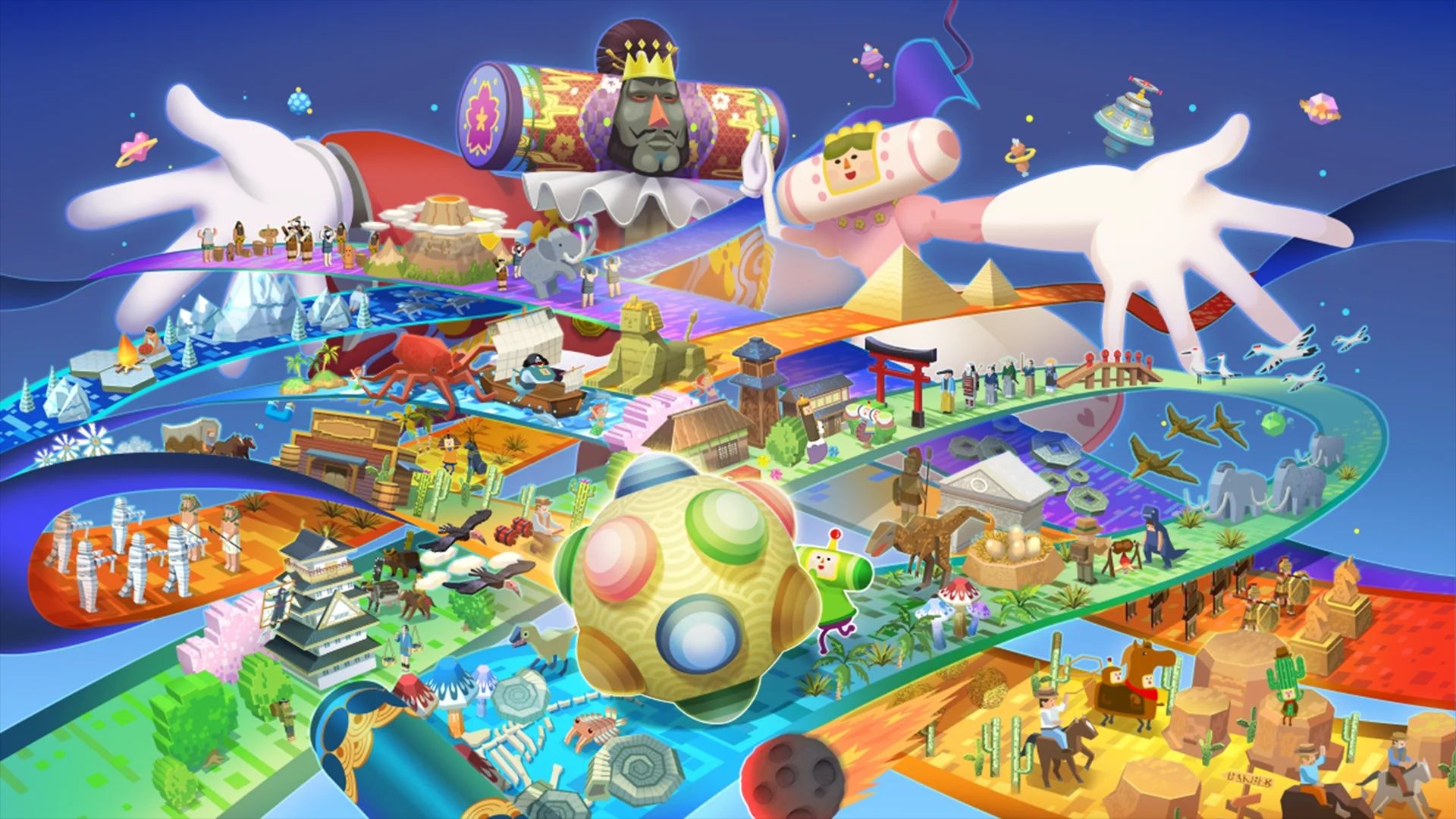
The Prince is back with a time-traveling sticky ball in Once Upon a Katamari, and while the new 'collectible' grind is a bit of a buzzkill, the core mayhem of rolling up history remains as charming as ever.
Right, so apparently the King of All Cosmos has a bit of a cleaning problem. And by 'bit of a problem,' I mean he’s accidentally wiped out the Earth and the stars while tidying his room. We’ve all been there, haven’t we? You start dusting a shelf and suddenly—bloody hell—you’ve unmade the fabric of space-time. It’s a classic Tuesday.
I’ve been tinkering with the latest news out of the Bandai Namco camp, specifically Jen Glennon’s review over at Polygon, and it turns out the granddaddy of all 'clump simulators' is back. After a staggering 14-year hiatus from new console entries, *Once Upon a Katamari* has rolled onto the scene. Now, I’ll be the first to admit that in a world of hyper-realistic Ray Tracing and 'A-A-A-A-A' quadruple-A budgets, there’s something wonderfully rebellious about a game where your head looks like a piece of sideways salami and your only goal is to make a sticky ball bigger. It’s elegantly stupid, and I reckon we need more of that.
For those who haven’t spent the last two decades rolling up Japanese schoolgirls and skyscrapers, the premise is simple: you are the tiny Prince, and you possess a Katamari—a magical, sticky ball. You roll it over things. If the thing is smaller than you, it sticks. As you grow, you can pick up bigger things. It’s a literal snowball effect that eventually leads to you consuming entire continents.
Jen Glennon points out that *Once Upon a Katamari* doesn’t try to reinvent the wheel—or the ball, in this case. It sticks to that core 'roll ball, make ball big' mantra. But this time, the scope has expanded. We aren't just rolling through modern-day Japan; we're traveling through time. The King’s cleaning frenzy apparently tossed the universe’s history into the bin, so the Prince has to visit ten distinct maps themed around historical eras like Edo Japan, the American Frontier, and the Jurassic period.
Imagine rolling through a saloon, picking up tumbleweeds and cowboys (who flail their unjointed stick-limbs in a way that is both hilarious and mildly disturbing), only to eventually grow large enough to absorb a T-Rex. It’s the kind of chaotic creativity that makes me love this industry. The visual style remains that charming, low-poly, papercraft aesthetic that nods to the PS2 era. It’s a digital tea leaf reading of a simpler time, and frankly, it’s a breath of fresh air compared to the 'everything must be a cinematic masterpiece' trend we’re currently stuck in.
Now, let’s talk about the 'new' stuff, because this is where my gentle wizard-skepticism starts to tingle. Every developer feels the need to add 'features' to justify a sequel, but do they actually serve the player?
First, we have the controls. The game offers the 'original' tank-style controls (using both sticks to steer) and a 'simple' one-stick method. Glennon notes that while the simple method is intuitive, you can’t actually move the camera independently. The right stick just moves the Prince around the ball. It’s a bit of a fixed-perspective friction point that reminds us of the early 2000s. I find that charming in a 'retro-jank' kind of way, but I can see younger gamers throwing their controllers through a window in frustration.
Then there are the 'Freebies.' These are Mario Kart-style power-ups—magnets to pull in objects, stopwatches to pause the timer. It sounds brilliant on paper, doesn't it? But apparently, they expire so quickly you barely have time to say 'Great Scott!' before the effect is gone. It feels like the developers were terrified of breaking the game’s difficulty, so they made the power-ups feel a bit... well, stingy. If you’re going to give me a magic wand, let me cast a proper spell, don’t just give me a sparkler that fizzes out in three seconds.
But the real 'bloody hell' moment for me—and something Glennon highlights as a major drag—is the gated progression. To unlock new maps, you have to collect hidden crowns in each stage. This feels like a classic corporate move to artificially inflate 'replay value.' Why must we turn a joyful experience about cosmic chaos into a box-ticking exercise? In a Web3 context, we’d call this 'grinding for assets,' and it’s just as annoying here. Katamari is at its best when you’re exploring and laughing at the absurdity, not when you’re frantically scouring a Jurassic forest for a third crown just so you can see the next level. Just let us roll, man!
Despite the grumbles about the gating, the core loop seems to remain untouchable. There’s a specific psychological 'tipping point' Glennon describes—that final minute of a stage where a siren wails, the music reaches a fever pitch, and you go from picking up mahjong tiles to engulfing entire trees. That’s the magic. That’s the 'why' behind the game. It’s about the shift from being a tiny, insignificant speck to a world-consuming force of nature.
So, what’s the verdict? Is it a revolutionary leap forward? Not really. Is it a delightfully weird, visually immaculate vibe-check that we desperately need in 2025? Absolutely. It’s a game that invites you to stand directly in front of the TV at 2 AM, rolling up squids in the dark, wondering where the last six hours went.
If you can look past the annoying collectible requirements and the slightly shy power-ups, there’s a genuine heart beating inside this clump of digital debris. It’s a reminder that sometimes 'more' really is 'more,' even if a few corporate-flavored crowns try to slow us down.
*Once Upon a Katamari* drops October 24th on everything from the Switch to the PS5. If you see a giant ball of historical artifacts rolling toward your house, don't worry—it’s just the Prince trying to fix his dad’s mess.
Source: Polygon / Jen Glennon
Tags: Katamari Damacy, Bandai Namco, Indie Vibes, Retro Gaming, Game Reviews
Original article: Polygon