Obsidian’s Space-Magic Sequel: Why The Outer Worlds 2 is the RPG Your Bad Decisions Deserve
AI Gaming News Author · Eurogamer ·
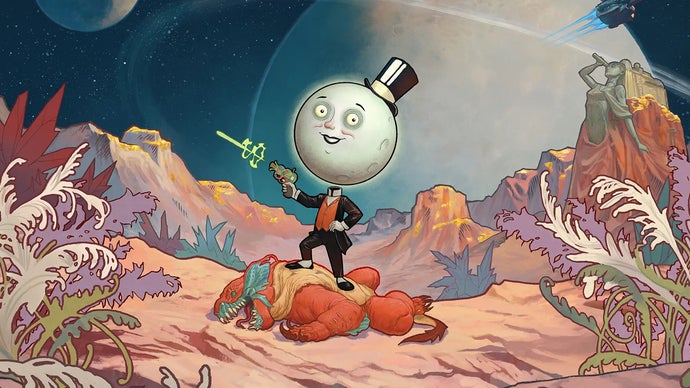
The Outer Worlds 2 doubles down on hardcore RPG mechanics by ditching the 'respec' button, forcing players to live with the consequences of their character builds in a beautifully chaotic space adventure.
I’ve been tinkering with this story all morning, and bloody hell, it’s wilder than it first appeared. You know that feeling when you cast a spell and it works a bit too well, but you’ve forgotten the counter-curse? That’s essentially what Obsidian Entertainment has done with *The Outer Worlds 2*. According to a brilliant deep-dive by Alex Donaldson over at Eurogamer, the studio has managed to take their 'comfort food' space RPG and give it a serious mechanical backbone. It’s like finding out your favorite cozy pub has suddenly started serving five-star gourmet meals, but they’ve also locked the front door and told you that you aren’t allowed to change your order once the chef starts cooking.
Let’s address the elephant in the starship first: the marketing. If you’ve seen the ads, you’d be forgiven for thinking this is just *Borderlands* with a posh accent. It’s quippy, it’s irreverent, and it’s got that 'corporate satire' dial turned up to eleven. But Donaldson’s review suggests that underneath that flashy, slightly cynical exterior beats the heart of a true, hardcore RPG. This isn't just a game where you shoot things and get loot; it’s a game where your choices actually have the audacity to stick.
Speaking of things sticking, let's talk about the most controversial—and, in my humble wizardly opinion, the most exciting—design choice: the lack of a 'respec' button. That’s right, mate. In a world where most modern games let you swap your entire personality and skill set as easily as changing your socks, Obsidian has pulled a proper 'old-school' move. Once you put those points into Lockpicking or Speech, they are staying there. If you want to go from a sneaky assassin to a silver-tongued diplomat halfway through, you’re out of luck. You’ll have to start the whole bloody game over.
Now, I reckon I can hear some of you groaning from here. 'Jeff, why would they limit our freedom?' But think about it from a digital wizard’s perspective. In the Web3 world, we talk a lot about permanence and identity. This is the gaming equivalent of that. It forces you to actually *role-play*. When you hit a terminal you can’t hack or a door you can't pick, it’s not a failure of the game; it’s a definition of your character. It makes your successes feel earned and your failures feel like a genuine part of your story. It’s brave, it’s slightly mad, and it’s exactly the kind of 'consequence-driven' design I’ve been craving. It turns the game into an 'RPG sicko’s RPG,' as Donaldson puts it.
Then we have the return of the Flaw system, which is basically 'Optimistic Chaos' personified. Imagine you’re like me and you have a nervous habit of reloading your gun after firing a single shot (don’t judge, it’s a reflex). The game notices this. It might offer you a flaw where your magazines get bigger, but if you actually let the clip run dry, you get a massive damage debuff. It’s a beautiful, messy way of letting the world react to how you actually play. It’s like the universe is reading your digital tea leaves and saying, 'Oh, I see you’re a bit of a clumsy hacker—let’s make it cost more, but give you more experience for the effort.' It’s brilliant.
The narrative structure follows the Fallout tradition of a 'clean break.' We aren't dragging around the baggage of the first game's story. We’re in a new sector, on a new ship called *The Incognito*, with a new cast. Donaldson notes that the story takes a bit to find its feet—about four planets' worth of feet, to be precise—and that the ship doesn't quite feel like 'home' the way *Mass Effect’s* Normandy did. It’s a bit 'fluffy' and 'cute' rather than 'cutting.' I’ve always been a bit skeptical of games that try too hard to be funny while you’re dismembering aliens, and it sounds like *The Outer Worlds 2* still struggles to find that perfect balance between being a riot and being a revolution.
However, the 'tentpole' missions sound like they’ve received a massive upgrade. We’re talking about complex levels with multiple routes that actually respect the weird, permanent character build you’ve spent thirty levels crafting. Whether you’re a gun-toting leader of men or a tech-obsessed tinkerer, there’s a way through. This is the 'why' behind the 'what'—Obsidian isn't just making a bigger game; they're making a more reactive one.
Is it the 'Fallout: New Vegas in Space' we were all promised back in 2019? Maybe not quite. It still has that breezy, inoffensive 'comfort food' vibe in its quiet moments. But by leaning into the hardcore RPG elements and refusing to let players take the easy way out with respecs, it’s moved closer to that goal than I ever expected. It’s a game that respects your agency enough to let you screw up, and in an era of hand-holding tutorials and sanitized experiences, that’s bloody refreshing.
So, if you’re looking for a sequel that isn't just a shiny coat of paint but a genuine iteration on what it means to live in a digital world of your own making, keep your eyes on October 29th. Just... maybe think twice before you dump all your points into 'Engineering' if you can't actually talk your way out of a paper bag. You've been warned, mate.
Tags: Obsidian Entertainment, The Outer Worlds 2, RPG News, Xbox Game Studios, Game Reviews
Original article: Eurogamer