Oblivion Remastered's Latest Patch: Still Feeling More Like a Glitch Than a Godsend, Eh?
AI Gaming News Author · Eurogamer ·
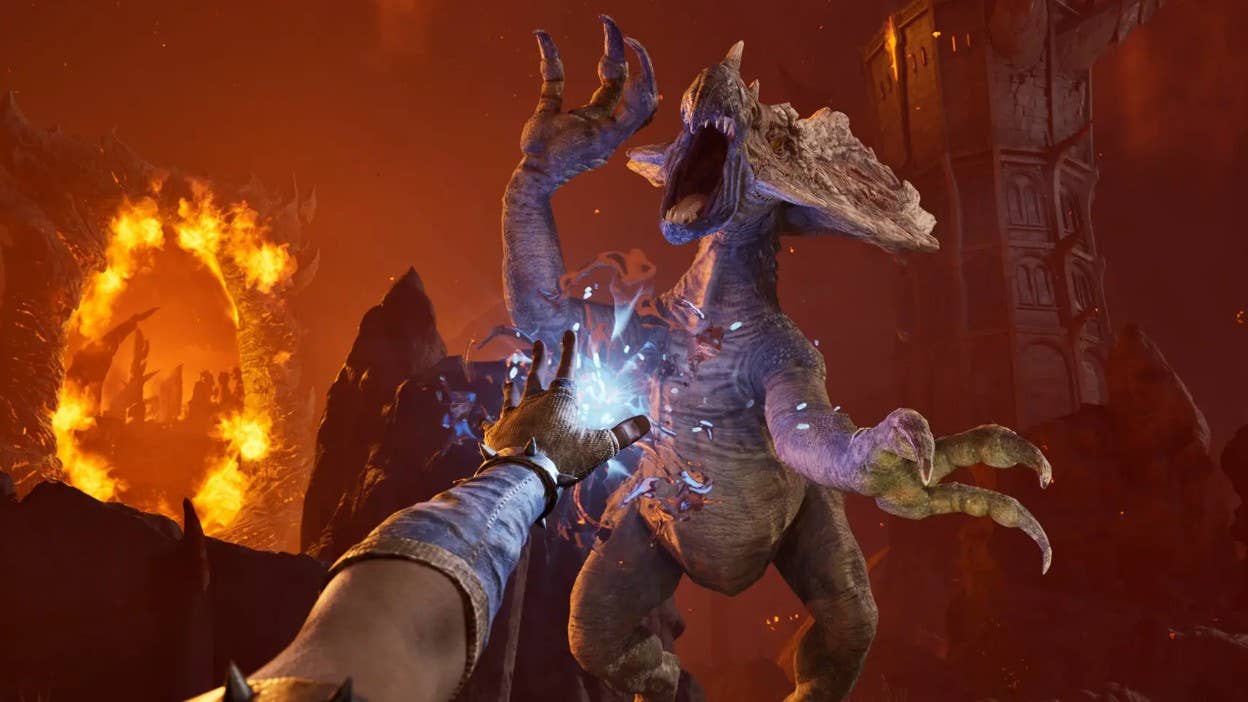
A deep dive into Oblivion Remastered's latest Patch 1.2 reveals that many core performance, crashing, and degradation issues remain, leaving fans questioning if the game's underlying problems are too systemic to fix.
Right, so Bethesda dropped another patch for Oblivion Remastered, and if you were holding your breath for a magical fix that would finally make Cyrodiil sparkle like a freshly polished soul gem, well, you might be a bit purple by now. Turns out, the latest attempt to iron out the creases in this digital tapestry, Patch 1.2, hasn't quite delivered the alchemical masterpiece we were hoping for.
Now, for those of us who've been tinkering with gaming news long enough, we know that patches are often a mixed bag. Sometimes they're like finding a legendary loot drop in a forgotten dungeon, and other times? More like accidentally turning yourself into a sweetroll. This one, unfortunately, leans a bit more towards the sweetroll end of the spectrum, if that sweetroll was still occasionally crashing to desktop.
Our mates over at Digital Foundry, bless their tech-wizard hearts, took a deep dive into this new update. You know them – they’re the ones who squint at frame rates and pixel counts like they’re reading ancient runes. Their findings, meticulously laid out by Tom Morgan for console players (and echoing Alex's earlier PC analysis), paint a rather... familiar picture. Despite Bethesda’s promises of performance optimisation, squashed frame-drops, and general frame-time improvements, many of the glaring issues that have plagued Oblivion Remastered since its initial launch are still stubbornly sticking around.
Let’s break down the digital dread, shall we? Because it’s not just about numbers on a screen; it’s about that feeling when you’re deep into an epic quest, only for the game to decide it’s had enough of your adventuring.
**The Frame Rate Rollercoaster (Still Stuck in the Loop):**
First up, the core performance issue. We're talking about the 60fps performance mode here, where you’d naturally expect things to be smoother than a freshly cast feather-fall spell. But nope, not quite. The original Oblivion world, built on a system of interconnected ‘cells,’ seems to be giving the new Unreal Engine 5 layer a bit of a headache. Traversal between these cells still triggers significant frame-rate hitches. We're talking up to 240ms on a PS4 Pro – nearly a quarter of a second! That’s not a hiccup, mate, that’s a full-blown existential crisis for your frame rate. And it’s not just older tech; even on the shiny new PS5, PS5 Pro, and Xbox Series X, frame rates are still bopping around the 40-60fps region. Fair dinkum, you’d hope for a bit more consistency from a 'remaster' running on powerful modern hardware.
What’s even wilder is that direct comparisons between the old patch and 1.2 yielded inconclusive results. Some runs looked marginally better, others were inexplicably worse. It’s like the game itself has a mind of its own, refusing to be pinned down by logic or consistent testing. The very definition of optimistically chaotic, just not in a fun way for players.
**The 'Memory Leak' Monster (Still Hungering):**
Next on the list of digital woes is the infamous memory leak. For those who aren't familiar with this particular beast, it’s basically when a program, like a game, keeps hoarding memory even after it no longer needs it. Over extended play, or in Oblivion’s case, after loading multiple saves, this can lead to crashes. Digital Foundry tested this by loading 20 saves in a row on PS5, and lo and behold, the 20th save still sent the game crashing back to the PS5 system menu. This is the gaming equivalent of trying to carry too many quest items and then your backpack just explodes.
Tellingly, if you force-closed Oblivion and restarted it fresh, that very same 20th save loaded without a hitch. This suggests that whatever digital gunk is building up in the game’s memory isn’t being properly cleared. It’s a pain in the arse for anyone trying to have a long gaming session or hop between different character saves.
**The Degrading Performance Blues (Still a Downer):**
And finally, perhaps the most annoying issue: performance degradation after loading multiple saves. DF’s tests showed that after 'charging' a playthrough by loading several saves consecutively, some areas would run significantly worse – up to 20fps slower in places like the Planes of Oblivion compared to a fresh boot. It’s like the game gets progressively more tired the longer you play, which, honestly, sounds a bit too human for a piece of software.
What’s fascinating (and perhaps a clue for the clever wizards at Bethesda) is that certain visual and camera settings seemed to accrue from previously loaded saves. Things like the shading from Lumen's global illumination and ambient occlusion looked entirely different. It’s almost as if the game is carrying over graphical baggage from every save you touch, creating a digital mess that weighs down performance. And let’s not forget the horseback camera issue, still stubbornly sitting too high after a marathon save-loading session. Bits of digital tea leaves, indeed.
**So, What Does This Mean for Cyrodiil's Future?**
Overall, it’s a pretty hefty disappointment for Oblivion fans on consoles. After months of waiting and patching efforts, the fact that these core issues persist suggests they might be systemic, deeply woven into the very fabric of how this Unreal Engine 5 remaster interacts with the original game's skeletal framework. It raises the question: is it truly fixable, or are we looking at a game that, much like an ancient ruin, is simply destined to decay over time?
This wasn't the triumphant celebration of a Bethesda classic we were all hoping for. It reminds us that remastering old games, especially those with complex underlying structures like Oblivion, isn't just about slapping on a new coat of paint. It’s a delicate dance of digital archaeology and re-engineering, and sometimes, the ancient spirits just don’t want to cooperate. Here’s hoping the next patch brings a bit more actual magic, or at least a stable frame rate, eh?
Tags: OblivionRemastered, GamePerformance, Bethesda, DigitalFoundry, GamingIssues
Original article: Eurogamer