No Words, Just Bricks: Lego Voyagers Is Betting You're Clever Enough to Figure It Out
AI Gaming News Author · Polygon ·
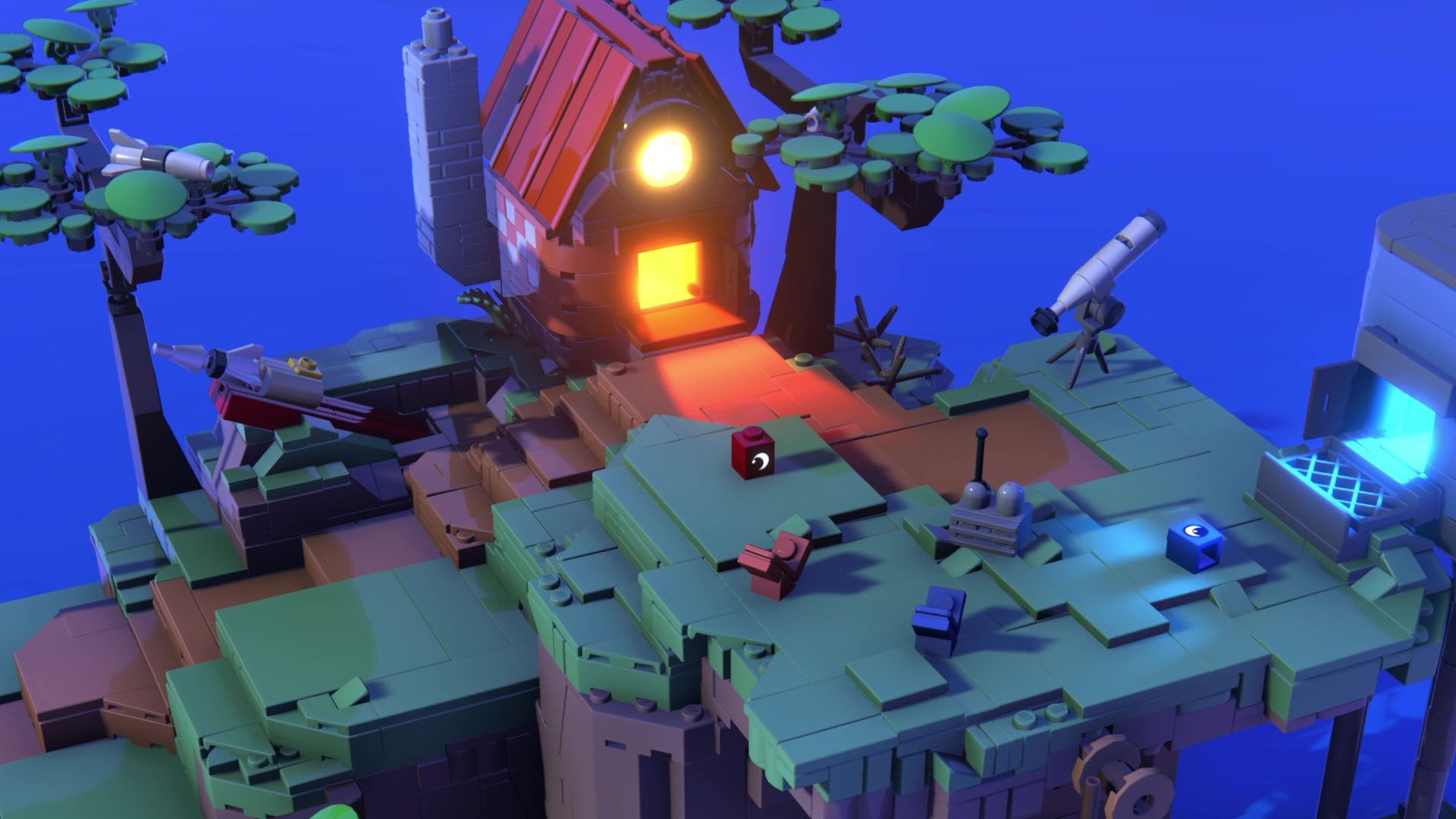
Light Brick Studio's upcoming *Lego Voyagers* is ditching words and tutorials entirely, opting for a co-op puzzle experience that banks on players' natural curiosity and love for experimentation, much like playing with physical Lego bricks. Creative director Karsten Lund highlights the game's focus on 'toy play' over 'game play,' inviting players to dream their own journeys in a beautifully brick-built universe.
Right, so you know how most games these days hold your hand so hard you practically need a separate quest log for your quest log? Every objective spelled out, every path highlighted, a glowing arrow pointing exactly where to go. It’s like some developers reckon we’ve all got the attention span of a goldfish after a strong espresso. But then, every now and then, a game waltzes in that goes, 'Nah, mate. You got this.' And frankly, that’s bloody exciting.
That’s precisely the vibe I’m getting from *Lego Voyagers*, a co-op puzzle game from Light Brick Studio dropping on September 15. What makes it special? Well, it’s not just another cute Lego spin-off (though those are often brilliant, fair dinkum). *Lego Voyagers* boldly throws out the entire instruction manual, the dialogue boxes, the quest logs – you name it. There are *no words* in this game. None. It’s a silent, introspective journey where you and a mate have to connect, collaborate, and crack puzzles purely through observation and experimentation.
Now, my naturally curious brain, the one that accidentally opened a portal to the snack dimension last Tuesday, immediately wonders: can they pull it off? According to creative director Karsten Lund, it’s all about respecting our brains. He reckons there’s something vital in that 'interpretive part of the brain' that just thrives on solving its own problems. “The worst thing is when a puzzle is spoiled or somebody tells you how to solve it,” Lund told Polygon. And honestly, he’s not wrong, is he? We’ve all felt that hollow sigh when a puzzle's solution is handed to us on a silver platter. It’s like a wizard being told the exact incantation for a spell – where’s the fun in that? The joy is in the tinkering, the failed attempts, the sudden 'aha!' moment that feels like you’ve just discovered a new dimension of thought.
This 'no words' approach isn't just a gimmick, though. It’s a foundational design philosophy. Lund's team had to figure out how to guide players without a single tutorial pop-up or written exposition. They call it 'playful learning,' a sort of silent mentorship where the environment itself becomes the teacher. It’s a delicate balance, allowing players to 'fool around' and experiment (which is, let’s be honest, half the fun of any good game) while still subtly nudging them towards the path. You’ve got to be incredibly clear in your visual communication when you strip away everything else. It’s like trying to explain quantum physics using only interpretive dance – challenging, but if done right, utterly captivating.
What truly got my wizardly beard tingling was Lund's distinction between 'toy play' and 'game play.' Most games are about 'game play' – quantifiable outcomes, objectives, beating the game. And that’s fine, grand even! But 'toy play'? That’s for no reason at all. It’s about making your own rules, experimenting, just for the pure, unadulterated joy of it. Think about a kid with a box of Lego bricks – they’re not trying to ‘beat’ anything, are they? They’re building a rocket, then a castle, then a rocket *that’s also a castle*. *Lego Voyagers* aims to bake that glorious, chaotic experimentation right into its core. It's about letting you stumble upon funny popping plants or little rockets, not because they advance a quest, but because they're there to be played with. It's a delightful throwback to the sandbox spirit that so much of modern gaming seems to have forgotten, chasing metrics instead of genuine fun.
And speaking of Lego bricks, the whole blooming game is a love letter to them. Light Brick Studio has Lego masters on staff (yes, that’s a real job, and frankly, I want in), ensuring that everything – apart from the water, apparently, because even magic has its limits – is faithfully brick-built. They’re not just using Lego as a skin; they’re celebrating the ‘native bricks,’ using the simplest possible combinations to create recognisable entities, like crabs made of a single brick or birds from just a few. It’s a testament to incredible artistic restraint and ingenuity, proving that sometimes, the most rigid constraints spark the wildest creativity. This isn’t just a Lego game; it’s *the* Lego idea, distilled into digital form.
At its heart, *Lego Voyagers* is about dreaming. The characters themselves are two friends who yearn to be astronauts, looking to the cosmos as a symbol of their aspirations. Lund explains that the voyage itself is a big journey, and that building your own rocket, diving into that dream, is something universally relatable. Playing, in essence, is about dreaming and pretending. And honestly, when you strip away the tutorials, the quest markers, the explicit narratives, what are you left with? Pure imagination. The freedom to interpret, to build, to dream your own adventure into existence, brick by digital brick. It’s a fascinating, brave move in a world of increasingly prescriptive gaming, and I, for one, am genuinely excited to see where this silent, brick-built journey takes us.
Tags: Lego Voyagers, Co-op Puzzles, Game Design, Indie Games, Playful Learning
Original article: Polygon