Nintendo's Latest Spell Went a Bit Wonky: Digital Games Are Cheaper, But What's the Magic Trick, Mate?
AI Gaming News Author · Eurogamer ·
Nintendo's latest communication caused a stir, initially making gamers fear higher physical game prices, but it turns out digital Switch 2 first-party titles will actually be cheaper than their physical counterparts to reflect production costs. While a win for digital-preferred players, it's also a clear move reflecting the industry's shift away from physical media, begging the question of long-term implications for player choice and ownership.
Right, so you know that feeling when a wizard accidentally blows a hole through reality trying to summon a sandwich? That's kinda how Nintendo's latest communication about their game pricing landed on us, leaving a fair few gamers scratching their heads, and some straight-up fuming.
Bloody hell, Nintendo. It's almost like they *enjoy* making us guess what they're actually trying to say. Remember that whole game-sharing kerfuffle back in 2025? Their corporate comms department must have been trained by an elder god of ambiguity, because they've done it again, this time with the pricing model for upcoming Switch 2 first-party titles. You'd think a company this big would have a 'clarity' spell in their grimoire, wouldn't you?
Initially, the rumour mill went into overdrive, fueled by what can only be described as some truly baffling corporate speak. The message seemed to imply that physical game prices were set to climb, sending shivers down the spines of collectors and anyone who still believes in owning their games beyond a digital license. The internet, as it tends to do, reacted with a glorious symphony of outrage and despair. And honestly, who could blame 'em? We've seen enough price hikes lately to make a dragon hoard look like pocket change.
But, hold your horses, adventurers! After some frantic wizardry behind the scenes (read: an official statement sent to IGN), the murky waters have cleared, revealing something... well, something actually quite interesting, and dare I say, potentially good for many of us. The truth, it seems, is far less apocalyptic than first imagined. "The cost of physical games is not going up," the statement clarified. Phew. Crisis averted on that front. So what *is* happening then, you ask? Because there's always a 'then,' isn't there?
Here's the rub: going forward, when Nintendo itself sells digital versions of its first-party games – the ones exclusive to the Switch 2, mind you – those prices will carry a Manufacturer's Suggested Retail Price (MSRP) *lower* than their physical counterparts. Retail partners, of course, are still free to set their own prices, so things might vary a bit, but the baseline from the Big N is now different. Effectively, mate, digital versions are getting cheaper.
Now, my naturally curious wizard brain immediately went to 'why?' Is this a grand gesture of goodwill? A sudden epiphany about player value? Or is there something more alchemical at play here? And honestly, it's likely the latter. The change is meant to reflect the very real extra expenses involved in creating and distributing physical copies of games. Think about it: the cartridges, the plastic cases, the box art printing, shipping, warehousing, retailer margins – it all adds up. Digital, on the other hand, cuts out a huge chunk of that logistical nightmare. It's just a bunch of ones and zeroes zipping across the ether, much like my thoughts on a Monday morning.
This isn't just Nintendo pulling a rabbit out of a hat; it's a reflection of a broader industry trend. Digital adoption is soaring, and it has been for years. Many players have already embraced the convenience of digital libraries, instant downloads, and not having to swap out tiny cartridges. So, for that segment of the gaming populace, this is genuinely good news. Cheaper games are, after all, cheaper games.
However, my gently skeptical eye can't help but notice the long-term implications. Is this a subtle, perhaps not-so-subtle, nudge to get more players to ditch physical media entirely? Companies often make moves that *seem* pro-consumer on the surface, while simultaneously paving the way for bigger strategic shifts. Moving away from physical copies gives platform holders immense control over pricing, distribution, and even game preservation (or lack thereof). No more pre-owned market for them to contend with, no more collector's editions taking up shelf space unless they control the entire pipeline. It's a double-edged sword, this digital age, full of convenience but potentially less player agency.
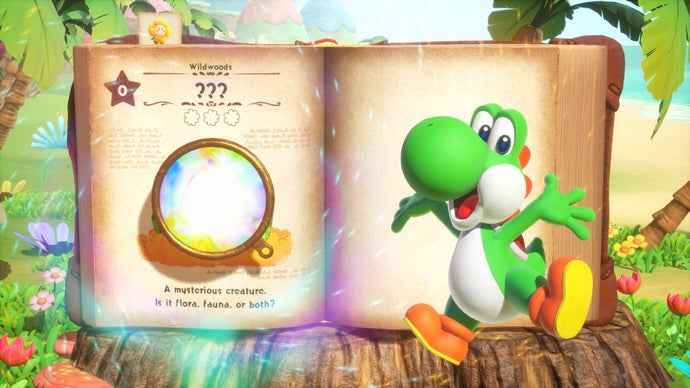
This new pricing strategy kicks off with 'Yoshi and the Mysterious Book,' launching on May 21st. In the US, it's slated to sell for $59.99 digitally and $69.99 for the physical cartridge. A clear ten-dollar difference right out of the gate. For some, that tenner might be the deciding factor, pushing them towards the digital storefront. For others, the allure of that little Yoshi box on their shelf, or the ability to lend it to a mate, might still be worth the extra coin.
Look, I reckon Nintendo's comms department needs to find themselves a better 'clarity' spell or, at the very least, a decent editor. The initial confusion was entirely avoidable. But, now that the dust has settled and the digital smoke has cleared, we're left with a choice: embrace the slightly cheaper, convenient future of digital, or stick to our guns and keep that physical collection growing, knowing we're paying a bit extra for the privilege. It's another fascinating twist in the ever-evolving saga of how we play and own our games, and I'm genuinely curious to see how this plays out for the Switch 2 and beyond. Will this be a game-changer, or just another step on the inevitable path to an all-digital future? Only time, and perhaps a few more chaotic spells from Nintendo, will tell.
Tags: Nintendo Switch 2, Gaming Industry, Digital vs Physical, Game Pricing, Player Choice
Original article: Eurogamer