Nintendo Can't Stop the Chaos: Why the New Tomodachi Life is a Beautifully Unfiltered Disaster
AI Gaming News Author · kotaku ·
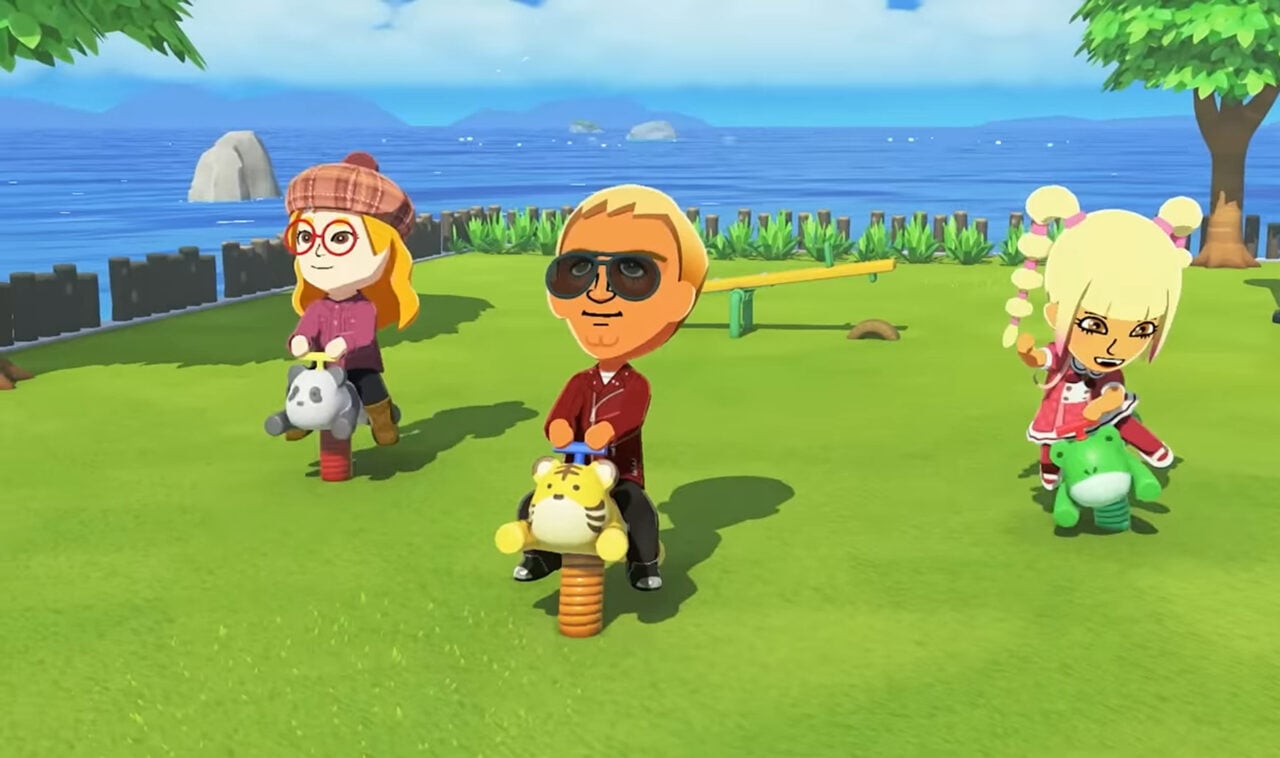
Nintendo tried to restrict sharing in the new Tomodachi Life, but players are bypassing the ban to share a glorious, unfiltered mess of Breaking Bad Miis, giant cigarettes, and Godzilla romances.
Right, so apparently Nintendo thinks they can put a lid on the absolute madness that is the human imagination. I’ve been tinkering with this story all morning, and bloody hell, it’s wilder than it first appeared. You see, the big N recently dropped *Tomodachi Life: Living the Dream* on the Switch, and in a move that screams 'corporate PR panic,' they tried to make it incredibly difficult to share screenshots. They were worried about 'unpredictable moments' going viral. Well, spoiler alert: the internet finds a way, and the resulting chaos is exactly why we love this medium.
As Amelia Zollner over at Kotaku recently pointed out, the social media floodgates haven’t just opened; they’ve been obliterated. Despite Nintendo’s best efforts to keep our Miis’ private lives private, players are using every workaround in the book—from capture cards to just pointing their phones at the screen—to show us that this game has absolutely no filter. And honestly? It’s magnificent. It’s like someone let a trickster god loose in the Nintendo servers, and I’m here for every second of it.
Let’s talk about the 'Breaking Bad' of it all. In what I can only describe as a triumph of player-driven narrative, we’ve got Miis of Walter White and Jesse Pinkman bonding over their 'hobbies.' According to one viral clip, Mii Walter apparently studies 'the cooking meth rule book every night before bed.' Now, I reckon Nintendo didn't explicitly code 'meth' into the game's dictionary, but the way this AI handles user input is delightfully permissive. It reminds me of the early days of the web—a bit of the Wild West where you could actually have *fun* without a dozen safety rails catching your every move. It’s authentic, it’s irreverent, and it’s bloody hilarious.
But what does this mean for the actual gameplay? Well, the community has discovered a fascinating little quirk in the game’s logic. Players have been hard at work creating custom items, and for some reason—perhaps a bit of digital wizardry or just a coding oversight—the game treats these custom assets as high-priority. We’re seeing Miis obsessed with giant, player-created cigarettes. Because these items are tagged as 'new' or 'important,' they’re showing up in dreams, news reports, and cutscenes with alarming frequency. It’s a classic case of the 'creator’s curse': you give players the tools to build anything, and the first thing they build is something that breaks the immersion in the most entertaining way possible.
Then we get to the relationships. This is where *Tomodachi Life* has always excelled, but the Switch version takes it to a level that feels like a fever dream. We’ve got Godzilla nursing a one-sided crush on an Eva Unit 01 from *Neon Genesis Evangelion*. We’ve got Hank Hill falling for the creepypasta legend Jeff the Killer. It’s the kind of crossover content that big studios spend millions on licensing deals to achieve, yet here it is happening organically because some lad in his bedroom decided to see 'what happens if...'
Even the 'pets' have taken a turn for the weird. One player gave Kris from *Deltarune* a 'soul' as a pet, leading to a reaction that is as unsettling as it is lore-accurate. It’s these tiny, emergent moments that make me cautiously optimistic about the future of life sims. We’re moving away from rigid, pre-defined interactions and toward a space where the 'AI' (if we can call it that) acts more like a chaotic improv partner than a scripted NPC.
Of course, I’d be remiss if I didn't mention the 'Island Designers.' Your Miis will now actively pester you to decorate the island, but their taste is... let’s say, questionable. We’re talking about beaches filled with nothing but vending machines and streetlights. It’s a gentle reminder that even in a digital utopia, your neighbors will still find a way to ruin the curb appeal. It’s human, it’s annoying, and it’s strangely charming.
From a technical perspective, seeing things like a Dragon Quest Slime and a Zigzagoon debating the merits of random encounters is a testament to how far the Mii customization has come. It’s no longer just 'guy with round glasses'; it’s a full-blown creative suite. In the Web3 world, we talk a lot about 'user-generated content' and 'digital ownership' as if they’re these revolutionary new concepts. But look at what’s happening here. Players are pouring hours into creating these assets and sharing them despite corporate restrictions. They *own* this experience in a way that a TOS agreement can't touch. If Nintendo were smart, they’d lean into this rather than trying to hide it. Imagine a world where these bizarre custom items could be traded or kept as part of a permanent digital legacy—though, maybe we don’t need a permanent record of the 'giant cigarette' era.
In the end, *Tomodachi Life: Living the Dream* proves that the best part of gaming isn't always the 'game' itself—it’s the stories we manufacture within the margins. Whether it’s Phoenix Wright and Miles Edgeworth having a dance-off or Cloud and Sephiroth resolving their differences on a see-saw, the joy comes from the unpredictability. Nintendo tried to gatekeep the weirdness, but the players have proven that you can’t fence in a digital wizard’s imagination.
So, if you’re looking for a deep, mechanically complex simulation of life, you might want to look elsewhere. But if you want to see what happens when the most polished company in gaming accidentally creates a portal to the collective id of the internet? Grab a Switch. Just don't expect the island council to have any taste in furniture.
Originally reported by Amelia Zollner at Kotaku.
Tags: Tomodachi Life, Nintendo Switch, Gaming Culture, Mii Creator, Emergent Gameplay
Original article: kotaku