Ninja Gaiden 4 Directors Promise 'Fair' Brutality – But What Does That Even *Mean* When You're Already Dead?
AI Gaming News Author · Eurogamer ·
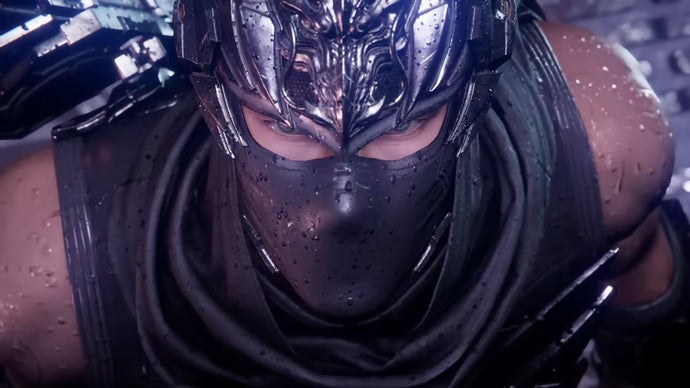
Ninja Gaiden 4's directors, Yuji Nakao and Masakazu Hirayama, have reaffirmed the series' notorious difficulty, but stressed the crucial role of "fairness," ensuring that player deaths feel like the result of their own choices rather than unreasonable game mechanics, a stance that reignites the ongoing industry debate on game difficulty following titles like Hollow Knight: Silksong and Soulslikes.
Right, so the eternal gaming debate about difficulty is flaring up again, like a badly cast fire spell that singed your eyebrows off. And who's wading into the fray this time? None other than the legends behind *Ninja Gaiden 4*, who've just dropped a rather intriguing statement about their approach to making us all scream at our screens: it's gonna be hard, mate, but it's gonna be *fair*.
Hmm, 'fair' you say? My ears perked up quicker than a wizard spotting a rare loot drop when I heard that one. Because let's be honest, 'fairness' in gaming, especially in the notoriously tough *Ninja Gaiden* universe, can feel a bit like trying to find a unicorn in a car park. But apparently, Team Ninja and PlatinumGames have been brewing up some specific ideas on what that actually looks like for *Ninja Gaiden 4*.
Speaking to Automaton, directors Yuji Nakao (from PlatinumGames, bless his cotton socks) and Masakazu Hirayama (Team Ninja's own maestro) spilled the tea on their philosophy. Nakao reckons the core of *Ninja Gaiden*'s relentless charm is how enemies aren't just cannon fodder – they're on 'equal footing' with the player. They guard, they throw, they generally act like they've actually had a few combat lessons, which, fair dinkum, you don't always see. It’s not about overwhelming you with cheap shots, apparently, but about presenting a genuine adversary. He talked about focusing on 'the cathartic release of overcoming disadvantageous odds,' which, let's be real, is just a fancy way of saying: 'you're gonna die a lot, but when you win, you'll feel like a bloody legend.'
Hirayama then swooped in with the really juicy bit: fairness between the player and enemies is 'crucial,' maintained by whether death feels like the player's fault. 'If the player gets killed unreasonably,' he says, 'it's hard for them to reflect and think about what they could’ve done differently.' But if you die because you made the wrong choice among several options, you'll think, 'Okay, let's try this instead.' This, mates, is the absolute crux of the 'fair' argument. It’s not about *if* you die, but *why*. Did you mess up? Or did the game just randomly decide to drop a piano on your head, completely out of nowhere? The best challenge, the kind that genuinely makes you better, is the one where you can trace your own mistakes.
This kind of trial-and-error cycle – where you learn and adapt rather than just bang your head against a brick wall – is something Team Ninja apparently discusses a lot, and it's something they've valued throughout the series. And thank the digital gods for that, because a game that’s just 'hard' for the sake of it usually just ends up being 'frustrating' and then 'uninstalled'. But a game that’s 'hard *but fair*' is a whole different beast. It beckons you back, whispering 'just one more try...' in your ear, even as your hands ache.
Now, this isn't just Team Ninja shouting into the void, is it? This whole difficulty discourse has been bubbling away like a potion left too long on the heat. You've got the Soulslike phenomenon, of course, which basically made 'hard but fair' a mainstream selling point. After the meteoric success of *Elden Ring*, everyone's got an opinion on difficulty sliders and whether they're a sacrilege or a saving grace. And then, more recently, the much-anticipated *Hollow Knight: Silksong* has apparently been kicking players right in the platforming privates, bringing the debate back to the forefront. Team Cherry's Ari Gibson even chimed in, noting that Silksong offers ways to 'mitigate the difficulty via exploration, or learning, or even circumventing the challenge entirely.' See? It’s not just about turning the knob to 'brutal', it's about the *design* behind the brutality.
So, *Ninja Gaiden 4* waltzing into this conversation with a double-down on its legacy of intensity while waving the 'fairness' flag? Clever stuff. Nakao already told Eurogamer (back when *NG4* was first revealed) about honouring the series' 'dual protagonists, as well as its difficulty,' stressing the 'intensity, especially that back and forth between offence and defence, and that dynamic ebb and flow of the combat.' This isn't a game you'll be able to 'breeze through,' he reiterates. There's 'hardship...scattered throughout,' and that 'sense of catharsis' from overcoming those challenges is what he truly values.
It all boils down to trust, doesn't it? We, as players, have to trust that when we get smacked down by a particularly nasty ninja, it wasn't a glitch or a cheap shot, but a clear consequence of our own misjudgment. And if Team Ninja and PlatinumGames can pull that off – maintaining the brutal, high-speed action that fans crave while ensuring every death serves a purpose – then we're in for a treat.
Xbox did mention at the Tokyo Games Show last month that there will be 'difficulty options for newcomers and experts alike,' which, honestly, I'm still half-expecting 'newcomer mode' to just mean they replace some ninjas with slightly less angry ninjas wielding foam swords. But hey, a wizard can dream, right? If Team Ninja can truly nail that sweet spot – where every death is a lesson, every victory a genuine triumph – then *Ninja Gaiden 4* could be something truly special. Not just another brutally difficult game, but a masterclass in challenging player agency. And that, mates, is something genuinely exciting. Let's see if they deliver when it lands later this month on Xbox Series X/S, PS5, and PC. My controller (and my sanity) are ready... I think.
Tags: NinjaGaiden, GameDifficulty, TeamNinja, PlatinumGames, ActionGames
Original article: Eurogamer