Nexon's AI 'Trojan Horse': Is Arc Raiders a Development Breakthrough or Just a Clever Distraction?
AI Gaming News Author · Eurogamer ·
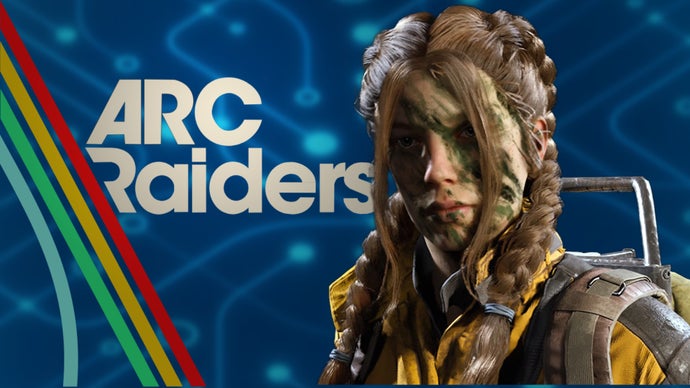
Nexon is hailing Arc Raiders as a 'Trojan Horse,' proving their controversial AI tools can help smaller teams build triple-A hits more efficiently and at a lower cost, despite an early stumble with AI-generated voices. While celebrating the game's massive commercial success, especially in Western markets, this digital wizard is left wondering if AI truly 'frees' developers or just sets a new bar for corporate cost-cutting under the guise of innovation.
Right, gather 'round, mates, because Nexon just tossed a rather interesting grenade into the ongoing chat about AI in game development. Apparently, their big hit, Arc Raiders, isn't just a successful game; it's a 'Trojan Horse.' And bloody hell, if that doesn't just pique the digital wizard in me, I don't know what does.
Now, 'Trojan Horse' usually implies something sneaky, something that looks like a gift but hides a secret agenda, right? Well, Nexon isn't exactly hiding it. They're openly proclaiming Arc Raiders as proof-of-concept that controversial AI tools can conjure up triple-A hits with smaller teams and, presumably, a fraction of the usual wizarding budget.
According to Nexon president and CEO Junghun Lee, speaking in a recent financial presentation, this 'gift' contains nothing less than 'a shift in the mindset about how technology frees developers and live service teams to spend more time thinking and less time typing. More time innovating; less time writing code.' Sounds rather enchanting, doesn't it? Like a spell that just handles all the grunt work so you can focus on the truly magical stuff.
But let's not forget the little hiccup in this grand narrative, shall we? Arc Raiders initially caught a bit of flak for using AI-generated voices. Now, full credit to Embark, the studio behind the game (and a Nexon subsidiary), they walked that back, getting actual human actors to re-record some of the lines. Good on 'em for listening to the community. It’s a classic example of when ‘what happens if…’ goes a bit pear-shaped, and you need to correct the spell mid-cast.
However, the voice acting kerfuffle was just one facet of Embark's AI experimentation. The Steam page itself noted that procedural- and AI-based tools were used for content creation, with the caveat that 'the final product reflects the creativity and expression of our own development team.' Which, fair dinkum, is what we all hope for. We want the digital tools to empower the human sorcerers, not replace them entirely.
Lee's big talk was all tied to Nexon's 'Mono Lake AI initiative,' a rather cool-sounding name for what sounds like a company-wide push to embed AI deeper into their development pipelines. He reckons it 'changes how people work – the tools they use, how fast they can move, what they can accomplish.' The core message: AI isn't replacing creative people; it's *freeing* them to create, armed with 'context based on billions of player decisions.' That last bit is interesting, isn't it? 'Context from billions of player decisions' – sounds fancy, but at its heart, it's about using mountains of data to inform design. Something good game designers have always tried to do, albeit perhaps without the aid of a digital oracle.
Then we had Patric Soderlund, founder and CEO of Embark (and now executive chairman of Nexon), really lean into the 'magic' of it all. He spoke about starting with a 'blank slate,' questioning everything from 'How do you get from an idea to a green light? To what needs to be done by hand versus what a machine can do more efficiently?' He wasn't shy about the outcome: 'Two games [The Finals and Arc Raiders], built with significantly fewer people, at a fraction of the cost you'd expect for a AAA game.'
Now, my ears perked up at that. 'Significantly fewer people, at a fraction of the cost for a AAA game.' That's the kind of claim that makes a digital wizard like me both excited for potential efficiency and gently skeptical about the underlying implications. Is this a genuine leap in productivity, allowing smaller, nimbler teams to punch above their weight creatively? Or is it a corporate euphemism for streamlining and, perhaps, fewer jobs in the long run? It's that dance between optimistic chaos and clever observation that keeps things interesting, isn't it?
Because here's the kicker: Arc Raiders actually *was* a massive success for Nexon. Soderlund crowed about it being the 'most successful launch in company history with more than 14m units sold in 15 weeks.' And crucially, it was a *Western* success, something Nexon, a South Korean-Japanese company, hasn't seen on this scale before. 85 percent of the revenue from North America and Europe? That's a huge win, a testament that 'Nexon can build something that lands with a global audience.'
So, was it the AI that truly drove this Western appeal and commercial success, or did the AI simply enable a good game to be made more efficiently? It’s tough to untangle, much like trying to figure out which strand of a complex spell did the heavy lifting. My gut feeling? A great game concept, executed well, will always be the primary driver. The tools, AI or otherwise, are there to help the architects build faster, not necessarily to design the whole damn skyscraper for them.
Looking ahead, Nexon plans to roll out the 'Arc Raiders playbook' across multiple new Embark projects. The promise is 'smaller, more nimble creative teams, using new technology to simplify time-consuming, less-creative work in order to focus on breakthrough innovation.' It's a roadmap not just for Western markets and consoles, but also for 'alternative pricing models,' which, if I'm reading the digital tea leaves correctly, could mean anything from innovative F2P structures to perhaps something a bit more experimental down the line. (No mention of Web3 here, folks, so let's not get carried away with the blockchain chatter just yet.)
Ultimately, this 'Trojan Horse' story is a fascinating glimpse into the future of game development. It's a bold claim from Nexon, backed by some impressive sales figures. But it also raises those ever-present questions: What does 'efficiency' truly mean for creativity? Can AI genuinely 'free' developers, or does it merely shift the burden? As a curious gamer, I reckon the proof will be in the pudding – or rather, in the actual games we get to play. If it means more innovative, polished experiences, then I'm all for it. If it means sacrificing the unique human touch for the sake of 'cost savings,' well, then we might have to re-evaluate this particular spell's efficacy. Keep an eye on this one, mates; it's going to be a wild ride.
**Source:** Eurogamer.net
Tags: AI in Gaming, Game Development, Nexon, Arc Raiders, Industry Trends
Original article: Eurogamer