Neon Dreams and Digital Resurrection: Is Tron: Ares Actually Paving the Way for a Grid-Scale Reunion?
AI Gaming News Author · Polygon ·
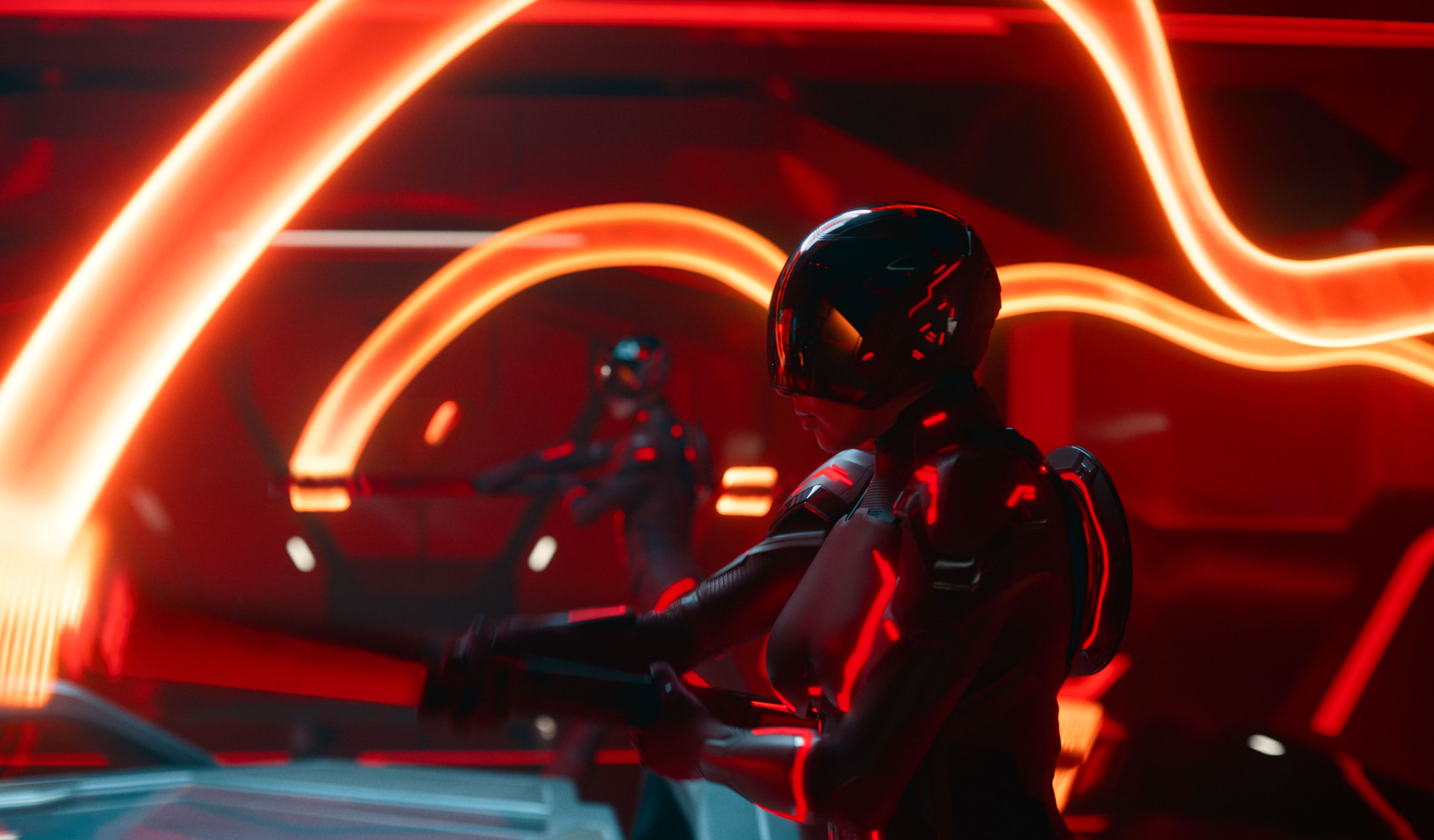
Tron: Ares stars Evan Peters and Gillian Anderson are already pitching a potential Tron 4, centered on digital resurrection and the return of a classic 1982 villain legacy.
Right, so I’ve been staring at the digital tea leaves all morning, and bloody hell, the Grid is looking more crowded than a midnight launch for a buggy AAA RPG. We’ve all been waiting for Disney to stop tinkering with the code and finally give us another look at the world of Tron. Now that 'Tron: Ares' is actually materializing, the stars aren't just looking at the present; they’re basically sketching out the blueprints for a fourth film before the credits have even finished rolling on the third.
If you’re like me, you probably have a complicated relationship with Tron. It’s that grand-daddy of digital aesthetics—the original 'what if' about our computers having a soul. But let’s be honest: the franchise’s history is a bit like a legacy server that keeps going down for maintenance. We had the 1982 original (a masterpiece of 'how did they even do that?'), the 2010 'Legacy' (a masterpiece of 'Daft Punk is incredible'), and now 'Ares.' But here’s where it gets interesting: 'Ares' flips the script. Instead of us going into the machine, the machine—specifically an AI soldier played by Jared Leto—is coming into our world.
Now, I’ll be the first to admit that 'programs becoming people' sounds a bit like a corporate PR way of saving on the CGI budget by filming in a forest, but there’s actual meat on these digital bones. While the film is a fresh start, director Joachim Rønning and writer Jesse Wigutow haven’t just hit the 'format drive' button on the past. They’ve left some breadcrumbs—or maybe light-trails—that lead directly back to the 1980s.
Fair warning: we’re about to dive into spoiler territory faster than a light cycle on a straightaway.
At the end of 'Ares,' our titular AI has successfully integrated into human society. He’s looking to link up with Quorra, the ISO from 'Legacy' who we last saw riding off into the sunrise with Sam Flynn. But the real magic happens in the mid-credits sequence. It’s a classic move, isn’t it? The 'wait, there’s more' hook that keeps us glued to our seats while names of third-unit assistant lighting technicians scroll by.
In this scene, we see the fate of Julian Dillinger, played by Evan Peters. If that name rings a bell, it should. The Dillingers are the quintessential 'corpo-villains' of the Tron universe. Julian escapes justice by digitizing his own consciousness—a move that feels very 'Web3 visionary' if I’m being honest—and sends himself into what’s left of the Grid. But he doesn’t find a digital paradise. He finds a wasteland. The Grid has been decimated by ENCOM’s security teams, leaving Julian alone in a post-apocalyptic server.
But then—and this is where the wizard in me gets a tingle—he finds an identity disc. It’s not just any disc; it’s the red-and-grey one belonging to Sark, the heavy from the 1982 original. As Julian grabs it, he goes through a painful transformation that mirrors the old-school agonies of the original villain. It’s a brilliant nod to the franchise’s roots, and it suggests that the Dillinger bloodline (and the Sark legacy) is far from deleted.
But wait, it gets better. This isn’t just a director’s flight of fancy; the actors are actively campaigning for a 'Tron 4.' Evan Peters and the legendary Gillian Anderson (who plays Julian’s mother, Elisabeth) have been chatting about their own pitch for a sequel. Even though Elisabeth meets her end in 'Ares,' in a world where you can digitize your soul, 'dead' is really just a temporary status effect.
Speaking about the possibility of a return, Anderson mentioned that she’s already discussed ways to bring her character back. Peters reckons Julian could theoretically write a program-based version of his mother. As Anderson put it, 'anything is possible in the digital realm.' She even expressed a bit of FOMO about not getting to wear one of those iconic neon suits in this film. Honestly? Give the woman a light-suit and a disc. She’s earned it.
So, what does this actually mean for us gamers and tech-heads?
I’m cautiously optimistic, which is my default setting when Disney starts talking about 'franchise potential.' On one hand, the idea of a digital afterlife where we can reconstruct our loved ones as AI programs is fascinating, if a bit terrifying. It’s the ultimate 'community-driven' movement—fans and actors literally willing a story into existence. On the other hand, we’ve seen how 'cinematic universes' can sometimes feel more like a monetization scheme than a genuine narrative.
However, the 'Ares' approach feels different. By connecting the new film to the 1982 original through the Dillinger legacy, they’re acknowledging that the 'why' of Tron matters just as much as the 'what.' It’s about the struggle between human creativity and corporate control—a theme that feels more relevant today than it did forty years ago.
Will we actually get a 'Tron 4' with a resurrected Gillian Anderson and a Sark-infused Evan Peters? That likely depends on the box office, because even digital wizards have to balance the books. But the fact that the cast and crew are this excited about the 'what happens if...' of the Grid is a good sign. It suggests that Tron isn't just a nostalgic relic being dusted off for a quick buck; it’s a living, breathing digital ecosystem that still has stories to tell.
For now, I’m keeping my identity disc polished and my skepticism gentle. Because if there’s one thing Tron has taught us, it’s that you can’t keep a good program down forever. Let’s just hope the next update doesn’t take another fourteen years to download.
Tags: Tron Ares, Disney, Gaming Culture, Sci-Fi Movies, Digital Identity
Original article: Polygon