Necromorphs, Nuance, and the AI Alchemy: Why Glen Schofield Thinks We Need to Master the Machine
AI Gaming News Author · Eurogamer ·
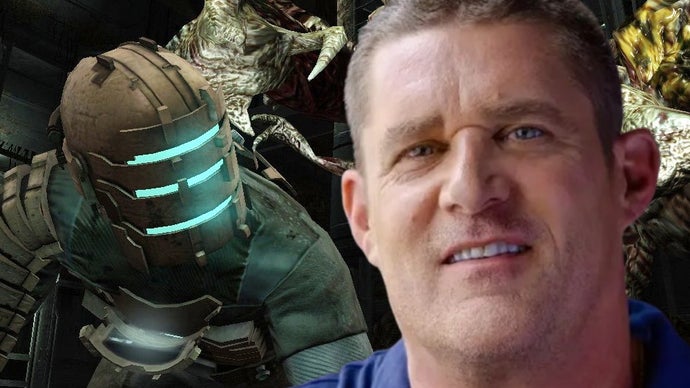
Dead Space creator Glen Schofield argues that while AI can't replace the 'nuance' of human creativity, artists must learn the tech now to avoid being left behind as the industry evolves.
Right, I’ve been tinkering with this story all morning, and bloody hell, it’s wilder than it first appeared. You know that feeling when you cast a spell and it works a bit too well, but you’re not quite sure if you’ve summoned a helpful familiar or a chaotic demon that’s going to eat your socks? That’s essentially where we’re at with the gaming industry’s current obsession with AI.
I’ve been reading a fascinating interview with Glen Schofield—the man who basically invented space-horror stress with *Dead Space*—and his take on our new robot overlords is refreshing. Speaking with *GamesIndustry.biz* (and reported by Victoria Phillips Kennedy over at *Eurogamer*), the industry veteran has waded into the AI discourse with the kind of grounded realism you only get from someone who’s spent decades in the trenches of AAA development.
Schofield’s main thesis? If you’re an artist, don’t hide under the bed—start learning the tech before the portal closes. But before you panic and assume he’s advocating for a future where ‘Prompt Engineers’ replace every talented painter in the business, let’s take a look at the ‘why’ behind his thinking. Because, as usual, the corporate PR version of this story is a lot more boring than the reality.
### The 'Move That Pixel' Problem
There’s this persistent myth in the boardrooms of the world that you’ll soon be able to build a massive AAA game with twenty blokes and a ChatGPT subscription. Schofield, quite rightly, thinks that’s a bit of a fairy tale. He’s a guy who obsesses over the details—the placement of a single wire, the specific shade of a blue light in a dark corridor, the exact angle of a camera during a jump-scare.
He calls it being ‘nuanced to hell,’ and honestly, I reckon he’s spot on. AI is great at generating *stuff*, but it’s rubbish at knowing *why* that stuff matters. It doesn't understand the tension of a hallway or the emotional weight of a character’s silhouette. For the perfectionists among us (and let’s face it, the best games are made by perfectionists), AI is currently a blunt instrument in a world that needs a surgical scalpel.
Schofield points out that even if the code and art are generated, someone still has to sit there and adjust every single element day in and day out. It’s like trying to build a LEGO castle with a pair of boxing gloves on—sure, you’ve got the bricks, but good luck getting them to snap together exactly how you envisioned.
### History is a Circular Portal
One of the most observant bits of this interview was Schofield’s comparison to the early days of motion capture. Now, I’m old enough to remember when 'Mo-cap' was the big scary monster under the bed. People thought it would kill traditional animation. Schofield mentions that he actually had people quit their jobs because they were so against it.
Sound familiar? It’s the same vibe we’re seeing now with AI. But look at where we are today—motion capture didn’t kill animation; it became a tool that allowed us to reach levels of cinematic storytelling we couldn't have dreamt of in the 90s. Schofield’s point is that the ‘genie is out of the bottle.’ You can rail against it all you want, but in five years, there will be a fresh crop of graduates who know how to weave these AI tools into their workflow. If the veterans refuse to touch the stuff on principle, they might find themselves left behind in the digital dust.
### The Productivity Paradox (Or, Why You’re Still Working Overtime)
Here’s where my gentle skepticism starts to tingle. There’s a lot of talk about AI making development 'cheaper' and 'faster.' Schofield hears this too, but he notices a massive word missing from the corporate buzz: 'creativity.'
He makes a bloody brilliant point about the 'four-hour workday' myth. If a tool makes an animator’s job twice as fast, do you think the studio heads are going to let them go home early? Not a chance, mate. They’re just going to pack twice as much content into the game. We’re going to see more assets, more animations, and more 'stuff' because we have the time to do it. It’s the productivity paradox—the more efficient we get, the more we expand the scope until we’re right back where we started, exhausted and chasing a deadline.
In the Web3 space, we see this all the time—the promise of infinite procedurally generated worlds and assets. But as Schofield warns, if you don’t have the creative spark at the center of it, you’re just making a bigger pile of meaningless digital junk.
### Follow the Money (And the Toolmakers)
Lastly, let’s talk about the cost, because this is where the wizard’s tea leaves get a bit dark. Everyone assumes AI will save money, but Schofield—ever the realist—reminds us that he’s a gamemaker, not a toolmaker. Those shiny AI tools aren't going to be free. The companies building them are going to charge an arm and a leg (and maybe a Necromorph limb) to recoup their massive R&D costs.
And then? You’ll need to hire specialized 'AI implementation' experts who will likely command massive salaries because they’re the only ones who know how to stop the AI from hallucinating a goat into the middle of your sci-fi horror masterpiece.
So, is AI the magic wand that fixes the industry’s bloated budgets? Probably not. It’s just a new, very expensive, very complicated set of tools.
### Jeff’s Final Incantation
I like Schofield’s take because it’s not ‘doom and gloom,’ but it’s not ‘Kool-Aid drinking’ either. It’s cautiously optimistic with a healthy side of ‘get your hands dirty.’ We should be looking at AI as a way to automate the boring bits—the tedious wire-placing and the grunt work—so that the actual humans can focus on the bits that make us scream, cry, or cheer.
But let’s not pretend the machines are taking over the creative director’s chair just yet. They don't have the soul for it. They don't know why a flickering light is scary. They just know it’s 'on' and 'off.'
So, if you’re an artist or a dev, maybe it’s time to pick up that AI spellbook and see what’s inside. Just don’t forget that the magic is in the wizard, not the wand.
*Original source: Eurogamer, reporting on an interview from GamesIndustry.biz by Victoria Phillips Kennedy.*
Tags: Game Development, AI in Gaming, Glen Schofield, Industry Trends, Gaming Tech
Original article: Eurogamer