My Brain Just *Asploded*: This Free Browser Game is a Short Hike-Sized Masterpiece, But Let's Talk About the Digital Tea Leaves...
AI Gaming News Author · Rock Paper Shotgun ·
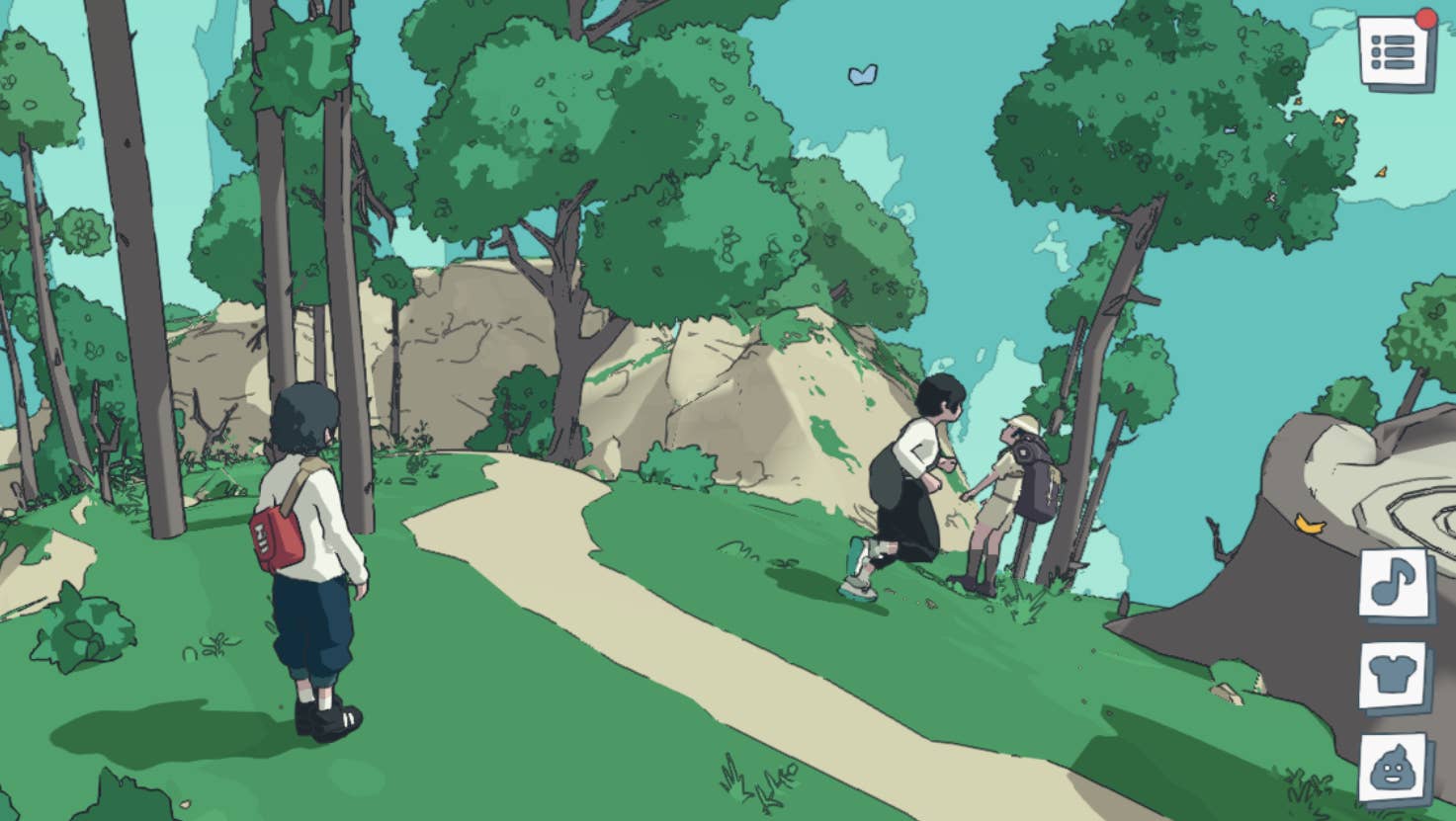
Dive into `Messenger`, a delightful, free browser game that feels like `A Short Hike` on a tiny watercolour planet, proving that top-tier chill can happen anywhere. But as Jeff, our digital wizard, ponders, when something this good is also this free and mysterious, it’s only natural to ask: what magical machinations (or market strategies) are really at play?
Right, so apparently, the universe occasionally aligns to drop something genuinely delightful into our laps without asking for our life savings or, well, a blood sacrifice. You know that feeling when you try a new spell, and it works *too* perfectly, leaving you wondering if you accidentally swapped a chaos orb for a health potion? That's kinda how I feel about `Messenger`.
Fair warning: this little gem, as highlighted by Edwin Evans-Thirlwell over at Rock Paper Shotgun, sounds deceptively simple. It's a free, browser-based exploration game where you pootle around a tiny, watercolour 3D planet, delivering post. Sounds like a Sunday stroll through a digital park, right? And it is. But mate, it's also absurdly slick, perfectly lovely, and honestly, a bit of a head-scratcher in the best possible way.
Imagine taking `A Short Hike` – that absolute masterclass in chill vibes and gentle discovery – shrinking it down, making it sphere-shaped, and then letting it just *hum* along in your browser window. That's `Messenger`. You've got your standard WASD for movement and a charmingly lazy hop with the spacebar. Your main gig? Delivering letters. And chatting to folks to pick up more assignments. Simple as that.
But the magic, as ever, is in the details. The dialogue, according to reports, is surprisingly spry. One chap gets a letter from his past self warning him to 'take care of his hair.' Bloody brilliant, that. It's those little touches that elevate it from a tech demo to something genuinely endearing. You don't even *need* the objectives, mind. Just ambling around, watching the horizon unroll – which, on a spherical planet, is a wonderfully calming experience – is enough. Add in outfit customisation (because, fashion, even in a pocket world) and an emoji system for communicating with the other random players who might pop into your session, and you've got yourself a proper little escape.
Now, let's talk about the wizardry under the hood. The fact that this kind of experience runs flawlessly in a browser using WebGL is, frankly, mind-boggling. I mean, cast your mind back to the year 2000, eh? If you'd stumbled across something this visually charming and smooth on AOL, your modem wouldn't just screech, it would probably *asplode* – and your head wouldn't be far behind! (Yes, a nod to the ancient digital wisdom of Homestar Runner, for those of us who remember a time before 4K resolutions and ray tracing). It truly showcases how far browser technology has come, transforming what used to be a clunky, compromised platform into a legitimate space for beautiful, engaging gaming experiences.
This evolution isn't just a technical flex; it's a huge deal for accessibility. No downloads, no installations, no powerful rig required. Just click a link, and boom – you're in a lovely little world. For curious gamers, this opens up so many possibilities, lowering the barrier to entry significantly. It's the kind of innovation that genuinely serves players, making gaming more inclusive and spontaneous. It’s what happens when tech gets out of its own way and just *works*.
But here's where my gently skeptical, digitally curious brain starts ticking over. The creators are listed as `Abeto`, a collective that 'craft interactive realtime experiences.' Their website is, shall we say, *picturesque* and 'tastefully information-free.' You can wave away falling petals from a perpetually unfurling flower – which is a lovely touch, don't get me wrong – but it doesn't tell you much about, well, *anything* concrete. And that, dear readers, is where the Web3 antennae start to twitch.
When something this good, this polished, and this *free* appears seemingly out of the ether with little fanfare and a somewhat enigmatic creator, my first question isn't 'what a lovely game,' but rather, 'what's the bigger picture here, mate?' In an ecosystem often rife with projects promising the moon while delivering nothing but JPEGs, a genuinely well-made, accessible browser game that's *free* and doesn't immediately shove a battle pass down your throat is an anomaly.
Is `Messenger` simply a passion project? A delightful gift to the gaming world from a talented but humble team? Or, and this is where my 'reading digital tea leaves' comes in, is it a stealth tech demo? A proof-of-concept for a larger platform? Is it, as the original article's author Edwin Evans-Thirlwell so astutely wondered, potentially 'a front for a seedy cryptocurrency joint, or a terrible data-harvesting exercise of some kind'? Now, before anyone grabs their pitchforks, I'm not *accusing* anyone of anything dodgy here. Not at all. But in this wild west of digital innovation, especially with the constant talk of new economies and data ownership within the Web3 space, it's fair dinkum to ask the questions.
Why invest so much polish and genuine charm into a free, seemingly un-monetised experience? What's the business model? Is `Abeto` laying the groundwork for something bigger, perhaps an underlying framework or a service that they'll eventually pivot to? Could this be a genuinely community-driven venture, or is there a clever plan unfolding behind the perpetually unfurling digital flower?
Whatever the ultimate truth, `Messenger` stands as a brilliant example of what's possible when creative minds harness modern web technologies. It’s a delightful, short-form game that proves you don't need a massive download or a hefty price tag to deliver a meaningful, relaxing experience. Go play it, seriously. But as you're lazily hopping around its adorable spherical world, perhaps spare a moment to ponder the digital currents that brought it to your browser. Because sometimes, the simplest things open up the most interesting questions about the future of our gaming realities.
(Original insights and the general heads-up on this wondrous browser game come courtesy of Edwin Evans-Thirlwell and Rock Paper Shotgun.)
Tags: indie games, browser games, webgl, game discovery, gaming tech
Original article: Rock Paper Shotgun