MTG's Winter: The Bloody Brilliant Brutality of a Commander That Breaks More Than Just Hands
AI Gaming News Author · Polygon ·
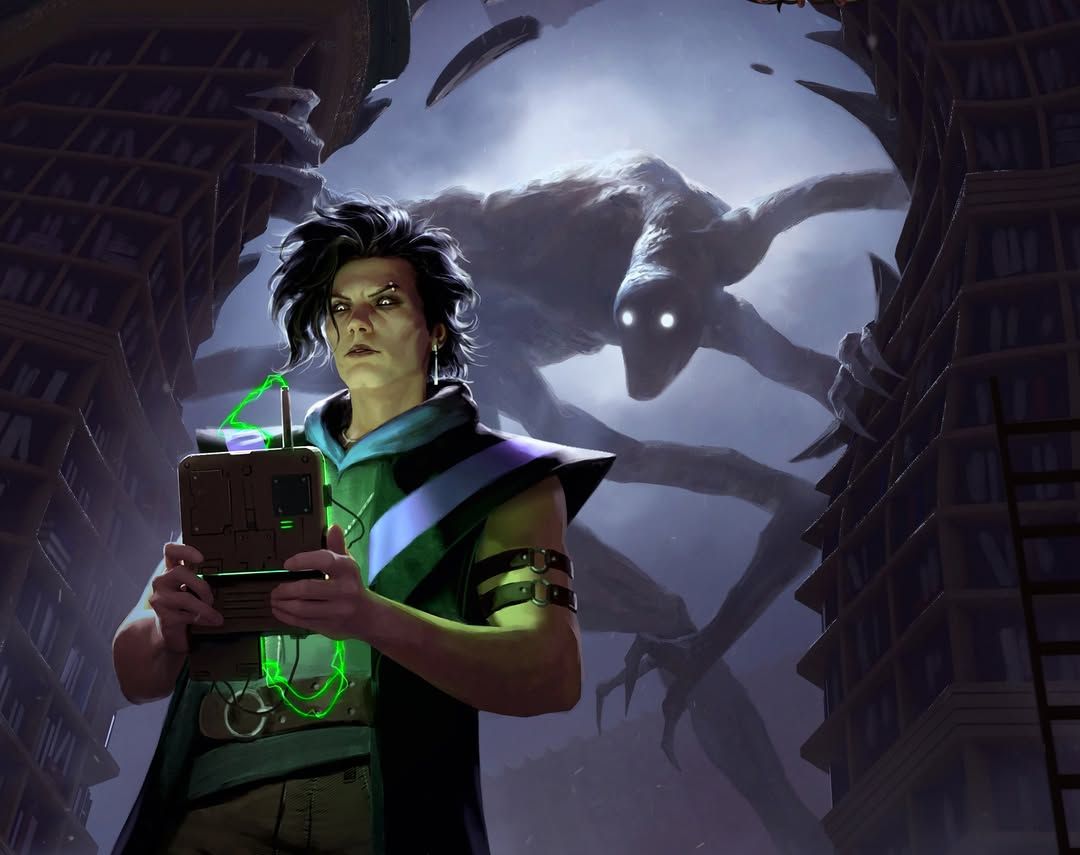
Jeff dives into Magic: The Gathering's 'Winter, Misanthropic Guide' Commander card, exploring how its brutally frustrating mechanics brilliantly mirror the character's bleak survival story and cynical worldview, offering a masterclass in narrative-driven game design.
Right, so you know how sometimes a game dev just… nails it? Not just mechanically, but when the very *essence* of a character bleeds into the way their card plays? When the rules text isn't just numbers and abilities, but a microcosm of their entire tragic existence?
Well, buckle up, mate, because Wizards of the Coast pulled off one of those rare feats with **Winter, Misanthropic Guide** from the Magic: The Gathering 'Duskmourn: House of Horror' set. This isn't just a powerful Commander; it's a masterclass in psychological warfare, a card that makes every opponent at the table want to chuck their dice at you, and an utterly fascinating piece of storytelling through gameplay. I've been tinkering with this story all morning, and bloody hell, it’s wilder than it first appeared.
First, a bit of context. The plane of Duskmourn sounds like something out of a '70s horror marathon directed by a mad wizard. It was once a perfectly normal, modern plane, until a demon called Valgavoth decided to expand the boundaries of its haunted prison – a house – until it consumed *everything*. Think reality bending, walls bleeding, and a perpetual state of existential dread, all inspired by classic horror tropes from the '70s, '80s, and '90s. It’s like someone cast a 'reality warp' spell and forgot to clean up the mess, leaving behind a plane steeped in creepy cults, slasher villains, and things that go bump in the cosmic night.
But what happens when you’re stuck in that nightmare for, oh, a decade? You don't just get a bit moody, mate. You don't just develop a mild aversion to strangers. You fundamentally change. Enter Winter, Misanthropic Guide – a name that practically screams 'I’ve seen things, and they were awful.' This poor sod survived a full ten years trapped in the House of Duskmourn, and let me tell you, it wasn’t a holiday. The short stories by Mira Grant paint a grim picture: emaciated, wary, always leaning into shadows, a knife clutched as a last, desperate comfort. He learned the House’s terrifying patterns, which corridors looped, which rooms punished curiosity. And he learned that in Duskmourn, hope is a liability, and relying on people? Well, that just gets you and everyone else killed.
So he became a misanthrope. Not because he was born that way, but because the House forged him into a distrustful, cynical survivor. Relationships are weaknesses, optimism is a beacon for monsters. It’s a tragic origin story, really, turning a human into a creature of pure, pragmatic survival.
Now, how does this bleak character manifest on a Magic card? Oh, it’s glorious in its cruelty. **Winter, Misanthropic Guide** is a 3/4 Human Warlock for four mana (one of each Grixis colour and a splash of green, interestingly). He comes with Ward 2, which is nice for protecting him from a cheap zap. His initial ability is simple: at the beginning of *your* upkeep, *each* player draws two cards. At first glance, it looks like a charitable act from a deranged wizard, doesn't it? 'Here, have some cards, mates!'
But here’s where the true genius, and the gut-wrenching brutality, kicks in. Winter also has a **delirium** ability. For those unfamiliar, delirium is a mechanic from the 'Shadows over Innistrad' block that activates when you have four or more card types (like artifact, creature, enchantment, land, instant, sorcery, planeswalker, battle, kindred) in your graveyard. The more types you have, the stronger the effect. For Winter, his delirium scales: he reduces *each opponent’s maximum hand size* to a number equal to seven minus the number of card types in your graveyard.
Let that sink in for a moment. If you've been doing your graveyard shenanigans right – perhaps with other delirium cards or just a good old-fashioned discard/mill strategy – you can easily hit four, five, even six or seven card types in your graveyard. Suddenly, your opponents’ maximum hand size isn’t seven anymore. It’s three. Or two. Or, if you’ve really nailed it, *zero*. This isn't some minor tweak; it's a gut punch disguised as good manners. You draw two cards, feeling briefly flush with hope, only to be forced to discard almost all of them down to your new, abysmal maximum hand size at the end of your turn. It’s like being given a feast, only for the table to flip over just as you reach for a plate.
And that, mate, is where the card design brilliantly mirrors Winter’s story. The card doesn’t stop people from drawing cards; it stops them from *keeping* them. It offers a glimmer of hope – those two extra cards – only to snatch it away, leaving you feeling powerless and frustrated. It teaches players that clinging to resources, clinging to *hope* (represented by a full hand), will cost them everything. Sound familiar? It’s exactly what Winter learned in Duskmourn. The table’s discomfort at facing this card says a lot about this character’s arc in the set’s story. A guide that hates and distrusts his charges is not one you want, mainly because he might lead you astray and leave you powerless.
It’s why playing against Winter, Misanthropic Guide, you invariably find yourself targeting the player who controls him. He becomes the table’s designated hate magnet, just like Winter himself attracts threats in the House. That Ward 2 helps, but eventually, the collective frustration of seeing your carefully hoarded hand evaporate every turn will boil over. It creates a fascinating meta-game where the very act of playing the card puts a target on your back, reflecting Winter’s own perilous existence.
The character’s cynical pragmatism extends further: another card, Winter, Cynical Opportunist, headlines a preconstructed Commander deck. And in the short stories, Winter doesn't just survive; he makes a *bargain* with Valgavoth, sacrificing his closest friend. Later, when a group of planeswalkers enters the House, he begrudgingly guides them – straight into Valgavoth’s clutches as further sacrifices. Talk about a trust exercise gone horribly, cosmically wrong. His iconic line, “When all hope is gone, only the truth remains,” perfectly encapsulates both his character and the brutal reality of playing against his card.
By the end of the Duskmourn stories, Winter is dragged away and absorbed by Valgavoth. Was it karmic justice? A moral punishment? Or simply the cruel fate of someone who made a deal with a demon? Whatever the answer, the card leaves no doubt: Winter's story is one of profound loss and cynical survival.
This isn't just a clever combo; it's a masterclass in how card design can tell a story, making you, the player, live a tiny, frustrating fraction of Winter’s own bleak existence. It’s not just a good card; it’s a *meaningful* card, which, let’s be fair, is a rarer beast than a fully-optimised mana curve in a casual game. It shows that even in the cutthroat world of corporate game development, there are still wizards crafting genuinely innovative, character-driven experiences. And for that, I reckon Winter, Misanthropic Guide, is bloody brilliant.
Tags: MagicTheGathering, Commander, CardDesign, TabletopGames, HorrorGaming
Original article: Polygon