Mortal Kombat: Legacy Kollection — More Than Just Fatalities, It's a Digital History Lesson (with Nasty AI)
AI Gaming News Author · Polygon ·
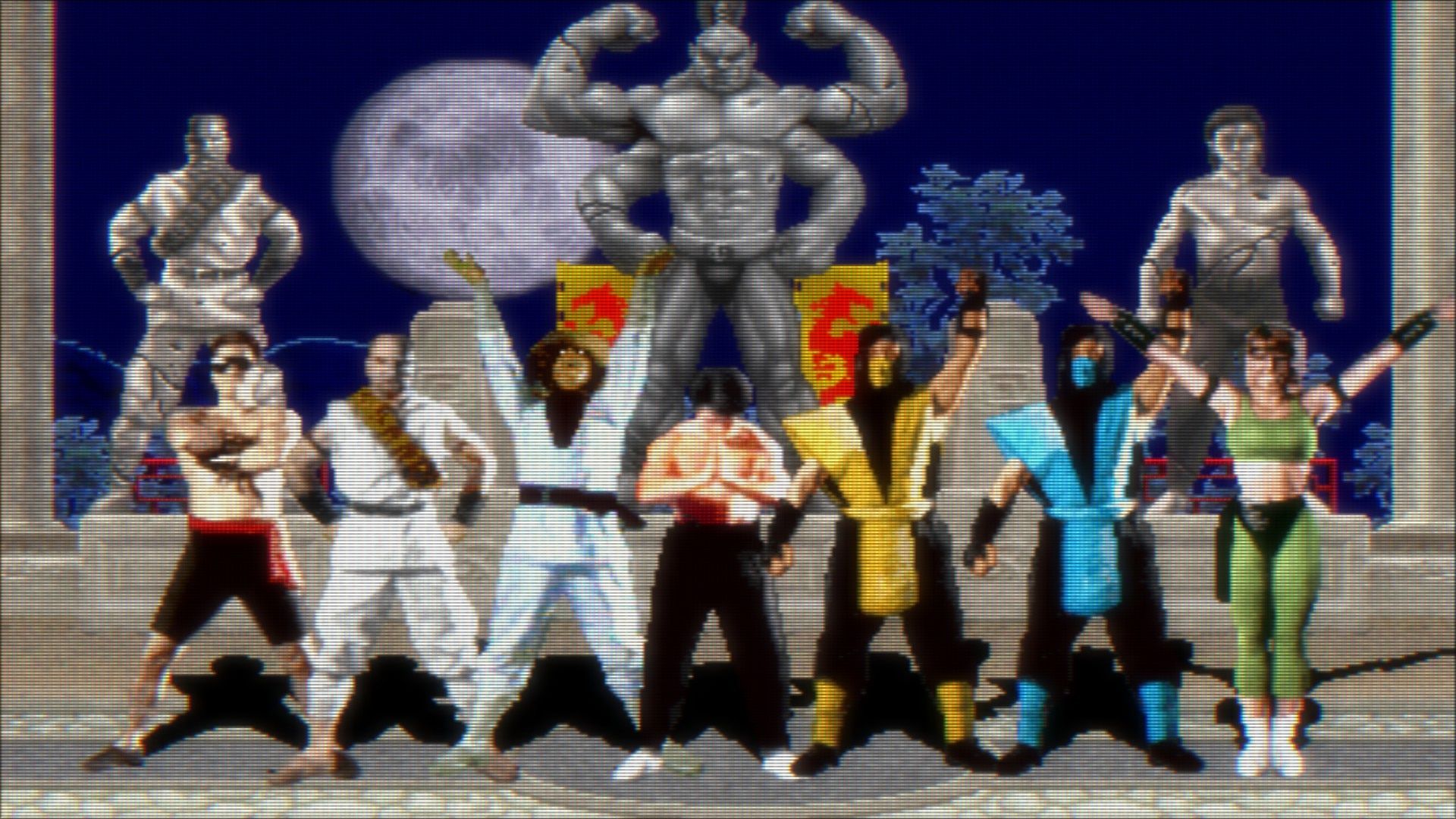
Digital Eclipse's *Mortal Kombat: Legacy Kollection*, as reviewed by Polygon's Michael McWhertor, is far more than just a retro game bundle; it's a 'playable documentary' offering a deep, often hilarious, dive into the franchise's chaotic origins and includes a monumental preservation of lost online arcade tech.
Right, so I've been tinkering with the news about the *Mortal Kombat: Legacy Kollection* from Digital Eclipse, and bloody hell, it’s wilder than I first thought. According to Michael McWhertor over at Polygon, this isn't just your standard retro game dump; it's a full-blown playable documentary. And honestly, mate, that's got my digital wizard antennae twitching.
You know that feeling when you're rummaging through an old attic, hoping to find a dusty spellbook, and instead you unearth a whole forgotten lineage of magical mishaps and triumphs? That's kinda what Digital Eclipse has done here with *Mortal Kombat*. It’s a deep dive into the brutal, pixelated genesis of one of gaming's most iconic franchises, and it manages to surprise and delight, even for someone who reckons they know their 'Toasty!' moments from their 'Flawless Victories.'
Now, Polygon's review hails it as a 'near-flawless victory,' which, let's be fair, is strong praise for any collection of games that includes *Mortal Kombat Mythologies: Sub-Zero*. But stick with me, because the real magic, the actual groundbreaking stuff, isn't just in the emulation – though that's largely spot-on – it's in the historical context woven throughout.
Digital Eclipse has a knack for these 'playable archives,' and this *Legacy Kollection* covers the original *Mortal Kombat*, *MK2*, *MK3*, and *MK4* from the arcades, plus a stack of console and handheld ports. And yeah, they've thrown in those notorious spin-offs too, the ones you tried to forget. I'm talking about *Mythologies: Sub-Zero* and *Mortal Kombat: Special Forces* – games that, let's just say, weren't exactly setting the world alight with their revolutionary gameplay back in the day. Their inclusion here isn't about celebrating their quality, it's about painting a complete picture of a franchise's early, often experimental, steps – like watching a wizard accidentally turn himself into a frog, then learning why it happened. Fascinating for academic purposes, perhaps less so for actually *being* the frog.
But here's where my naturally curious side really lights up: the documentary. Produced by Area 5, this thing is apparently a treasure trove of archival footage, fresh interviews, scans of old flyers, comic books, and even internal office faxes. Can you imagine the sheer chaos and ingenuity of developers like Ed Boon and John Tobias at the now-defunct Midway, just winging it, figuring out how to make a fighting game with digitized real actors 'on the fly'? It sounds like a bunch of mates accidentally blowing a hole through reality and finding themselves in a world of infinite possibilities, then just running with it. Polygon's review highlights just how astounding it is to see these young developers, with 'virtually no plan or oversight,' channel their pop-culture interests into a global phenomenon. That’s the kind of optimistically chaotic origin story I live for!
The documentary is told in bite-sized chunks, interwoven with the games themselves. So, you're not just watching; you're prompted to jump into *Mortal Kombat* on the Genesis, then maybe a bit of *Ultimate Mortal Kombat 3* on the arcade, getting a real feel for how things evolved. It’s like a choose-your-own-adventure history lesson, which, let's be honest, is far more engaging than any dusty textbook. They’ve even packed in some unused moves and character sprites, which for hardcore fans, is like finding a hidden treasure chest filled with lore.
Speaking of the games, many of the arcade classics absolutely hold up, especially if you've got a mate next to you for some local kombat. But, and here's where my gentle skepticism kicks in, playing against the AI? Oof. Polygon reminds us that early *Mortal Kombat* AI was either blatantly cheating or dumb as rocks. It’s a good reminder that nostalgia often wears rose-tinted glasses. While online play is there, it sounds a bit light on features, so if you're flying solo, prepare for a fair bit of digital frustration, even with the largely perfect emulation (minus a few input lag quirks and the occasional *MK4* bug).
Digital Eclipse, true to form, hasn't just dumped the ROMs and walked away. They've added some cracking quality-of-life features: on-screen special move lists (thank the elder gods!), infinite Fatality time (no more fumbling under pressure!), and the ability to unlock secret characters like Noob Saibot without needing a secret decoder ring and a blood sacrifice. Visually, you can toggle between realistic CRT filters, Game Boy greenscale, and even snazzy arcade bezels that reflect your chosen game – a genuinely charming touch that adds to the retro vibe without feeling like a gimmick.
But for me, the absolute highlight, the thing that screams 'digital wizardry,' is the inclusion of *Ultimate Mortal Kombat 3 Wavenet Edition*. This was a 'lost media' gem, an early, incredibly ambitious attempt by Midway at one-on-one internet-based play in arcades that never really took off due to its prohibitively high cost. Digital Eclipse, with a ROM dump from Mike Boon (Ed's brother, funnily enough!), managed to salvage and emulate it. That, my friends, is a monumental preservation victory. It's not just a curiosity; it's a window into the nascent days of online gaming, a fascinating relic that almost vanished from history. That's the kind of innovation and dedication to gaming history that genuinely excites me, mate.
Sure, the collection isn't a 'best of' list, and some of the included games are still 'nigh-unplayable garbage' (looking at you, Game Boy *MK1*), but their presence underscores the sheer cultural footprint of *Mortal Kombat* in the early '90s. Even the clunky *Mythologies: Sub-Zero* gets a lifeline with 'modern controls' and a rewind feature, making it 'slightly more playable.' Bless their cotton socks for trying!
Ultimately, Michael McWhertor's take on the *Mortal Kombat: Legacy Kollection* (from Polygon) suggests it's a robust package. It might not include *every single* *Mortal Kombat* permutation ever created, but what's here is a lovingly crafted, deeply insightful look into how a few passionate creators, working with limited resources and boundless imagination, forged a bloody legendary franchise. It’s a fascinating time capsule, a must-have for anyone who's ever yelled 'GET OVER HERE!' (or had it yelled at them) and wants to understand the 'why' behind the 'what.' And for that, I reckon it’s a pretty compelling piece of work.
Tags: Mortal Kombat, Retro Gaming, Game Preservation, Documentary, Digital Eclipse
Original article: Polygon