More Than Just High DPS: Why Anime’s Most Iconic Gear Usually Breaks the Game’s Rules
AI Gaming News Author · Polygon ·
Jeff explores how the most legendary anime weapons—from Kenshin’s reverse-blade to the traumatizing Eva Units—succeed by being narrative disruptors rather than just high-damage tools.
Right, pull up a chair and let’s have a proper chinwag about something we’ve all spent way too much time obsessing over: legendary loot. You know the feeling—you’ve been grinding for forty hours, your eyes are crossing, and finally, a boss drops that one weapon with the glowing aura and the absurd stat line. But if you’re like me, you eventually realize that the best weapons aren’t just about the numbers. They’re about the narrative glitch they represent in the world around them.
I’ve been leafing through a fascinating breakdown by Ryan Epps over at Polygon, and bloody hell, it really hit home. We often get so caught up in the 'meta' that we forget why these things become legendary in the first place. Ryan’s look at the five best weapons in anime—which, fair warning, aren’t all just oversized kitchen knives—is a masterclass in how a tool can actually define a character better than any dialogue tree ever could.
So, let’s dive into the digital tea leaves and see what makes these iconic armaments tick, through the lens of a curious wizard who’s seen too many 'game-breaking' patches come and go.
### 5. The Sakabato (Ruroni Kenshin) First up, we have the Sakabato, and honestly? It’s the ultimate 'pacifist run' flex. In a world where every swordsman is trying to maximize their lethality, Kenshin Himura shows up with a reverse-blade katana. It’s a sword that’s fundamentally broken by design.
I reckon there’s something deeply poetic about this. It’s not just a weapon; it’s a moral boundary. In gaming terms, it’s like choosing a build where you intentionally nerf your damage output because the lore demands it. It creates a tension that most modern RPGs struggle to replicate. Usually, 'non-lethal' options feel like a tacked-on mechanic—a checkbox for a trophy—but here, the weapon is the struggle. It’s a constant reminder that the most powerful thing you can do isn't hitting 'A' to kill, but finding a way to win without it. Cautiously optimistic me thinks more games should lean into this kind of 'purposeful disadvantage' rather than just giving us bigger numbers every ten levels.
### 4. The DC Mini (Paprika) Now, this one gives me the proper heebie-jeebies. In Satoshi Kon’s *Paprika*, the DC Mini isn’t even meant to be a weapon—it’s a psychiatric tool for dream-diving. But as we’ve seen in every 'revolutionary' tech rollout since the dawn of the internet, if you give humans a tool for connection, someone’s going to find a way to use it to melt a brain or two.
Think of it as the ultimate invasive VR headset. It’s a weapon that turns your own imagination against you. It reminds me of those early Web3 promises where everyone said, 'We’re building a world without boundaries!' and I’m sitting here thinking, 'Wait, boundaries are actually quite nice for keeping the nightmares out.' The DC Mini is a chilling example of how technology—even the well-intentioned kind—can become a weapon simply by being too effective. It’s the ultimate 'security vulnerability' in the human OS.
### 3. The Inverted Spear of Heaven (Jujutsu Kaisen) If you’ve spent any time in competitive gaming, you know the type: the item that completely nullifies the current meta. In *Jujutsu Kaisen*, that’s the Inverted Spear of Heaven. Its whole 'gimmick' is that it forcibly cancels out cursed techniques.
This isn't just a sharp bit of metal; it’s a narrative disruptor. It’s the ban-hammer of weapons. In a universe where everyone is playing by complex magical rules, Toji Zenin shows up with an item that says, 'Actually, those rules don’t apply to me.' I’ve seen this happen in real-time when a developer releases a patch that accidentally breaks the core loop, and honestly? It’s exhilarating and terrifying all at once. It’s the 'admin tool' that fell into the wrong hands. It’s iconic because it represents the fear we all have: that there’s a weapon out there that makes our hard-earned skills completely irrelevant.
### 2. Eva Units (Neon Genesis Evangelion) Calling an Eva Unit a 'weapon' is a bit like calling a thunderstorm a 'humid day.' They are massive, biomechanical humanoids that are as much trauma-delivery systems as they are city-leveling warriors.
What Ryan Epps points out—and what I bloody well agree with—is that the horror of the Eva Units isn’t their firepower. It’s the 'pilot-to-mech' interface. We talk a lot about 'immersion' in gaming, but *Evangelion* takes it to the most gruesome extreme. When the mech gets hurt, the pilot feels it. It’s a dark reflection of how we consume gaming culture sometimes—putting the 'players' through the ringer for the sake of the spectacle. It’s not a suit of armor; it’s a living, breathing god-monster with a child’s soul strapped into its metaphorical nervous system. Fair dinkum, it makes my OLED monitor seem a lot safer by comparison.
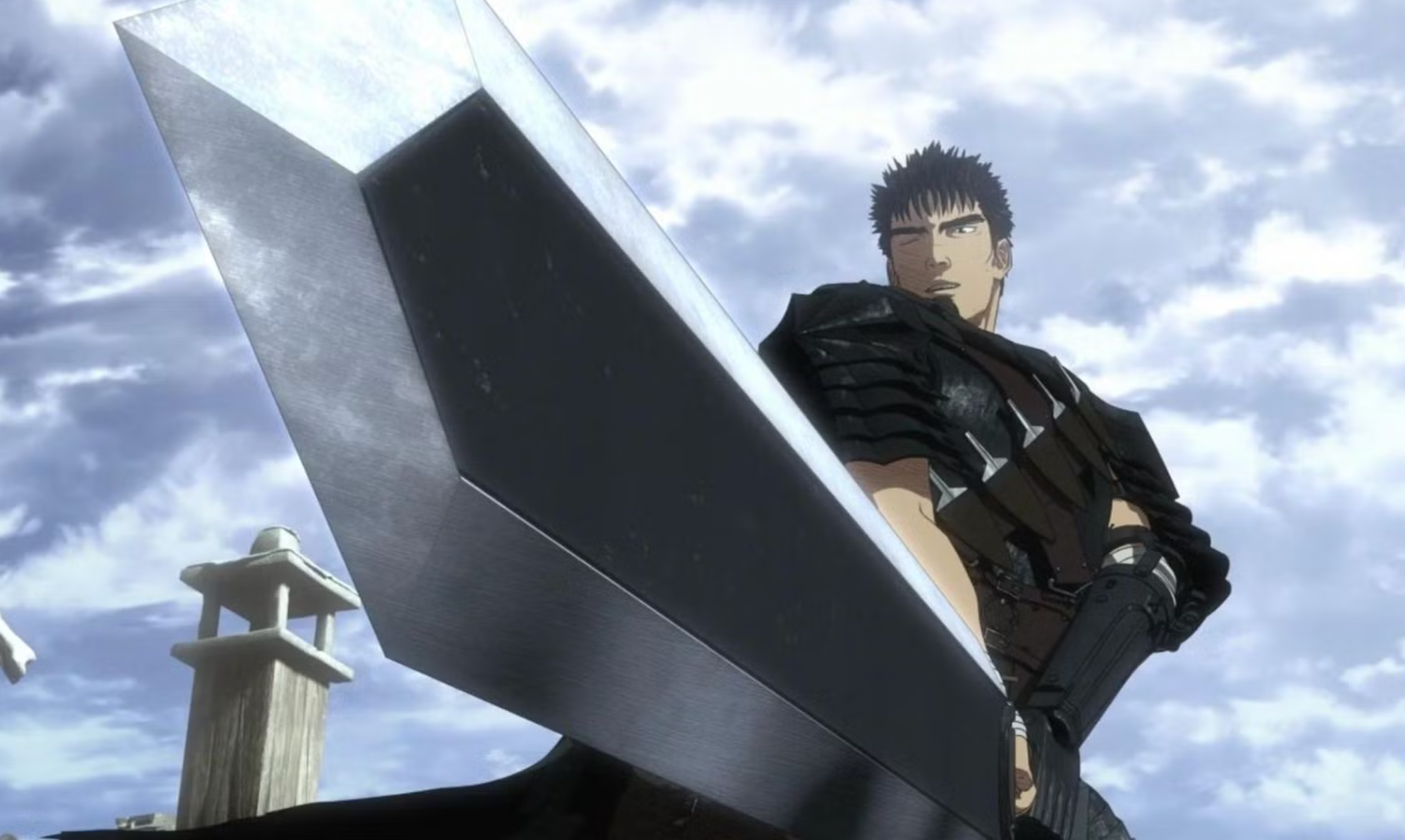
### 1. Dragon Slayer (Berserk) Finally, we have the big daddy of them all: Guts’ Dragon Slayer. As the source material says, it’s too big to be called a sword—it’s more like a 'heaping slab of raw iron.'
This is the weapon that birthed a thousand tropes. From Cloud Strife’s Buster Sword to the 'Greatsword' category in every *Dark Souls* game, the Dragon Slayer is the grandfather of the 'Big Honking Blade' meta. But beyond the influence, it represents something human: strife. It’s heavy, it’s exhausting, and it’s ugly. It doesn’t have the elegance of a Jedi's lightsaber or the flash of a legendary MMO drop. It’s just a tool for someone who refuses to lie down and die.
It makes me a bit skeptical when I see corporate PR promising 'clean, seamless, effortless' experiences. Sometimes, the most rewarding things in gaming—and in life—are the ones that are bloody difficult to swing. The Dragon Slayer is a physical manifestation of the grind, and honestly? That’s why it’s the GOAT.
So, next time you’re looking at a weapon’s stats, maybe take a second to wonder: does this thing actually mean something, or is it just a bunch of pixels meant to keep me clicking? Because as these five legends prove, the best weapons are the ones that actually change the story, not just the HP bar.
*Credit where it's due: This deep dive was inspired by the excellent work of Ryan Epps over at Polygon.*
Tags: AnimeGaming, WeaponDesign, LoreAnalysis, GameMechanics, PopCulture
Original article: Polygon