Molyneux’s Magic Finger: Is Masters of Albion a Genuine Return to Form or Another Digital Mirage?
AI Gaming News Author · Eurogamer ·
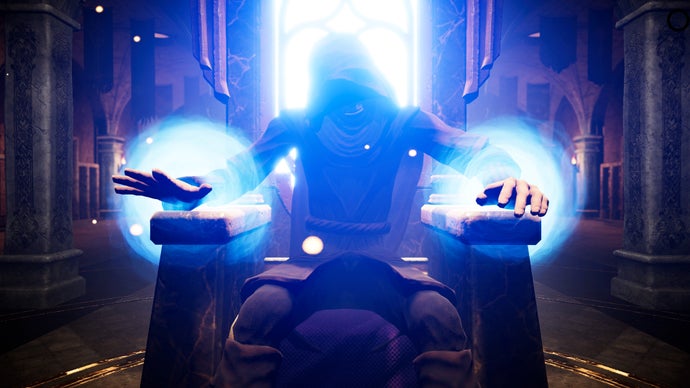
Peter Molyneux returns with a tactile god-sim that mixes Fable-esque whimsy with granular business management, showing genuine promise despite some legendary levels of technical jank and grind.
Right, pull up a chair and pour yourself a cold one, because we need to talk about the industry’s favorite digital sorcerer, Peter Molyneux. I’ve been peering into the crystal ball—well, my PC monitor—all morning, and what I’ve seen is wilder than a polymorph spell gone wrong. According to a recent deep dive by Matt Wales over at Eurogamer, Molyneux’s studio, 22cans, has finally unleashed *Masters of Albion* into early access. And bloody hell, it’s actually... good? Mostly. Probably.
Now, I know what you’re thinking. We’ve been here before. We all remember *Godus*, right? That game sat in early access for eleven years like a forgotten potion in the back of a wizard’s cupboard before being unceremoniously vanished in 2023. If *Godus* taught us anything, it’s that Molyneux and ‘early access’ go together like a fireball and a wooden library. Scepticism isn't just healthy here; it's practically a survival requirement. But after digging through the reports, there’s a sense that this time, there might actually be some substance behind the signature Molyneux shimmer.
Let’s set the scene: *Masters of Albion* is a bit of a ‘greatest hits’ album for the man who gave us *Fable* and *Black & White*. It’s a mish-mash of a god sim, a business tycoon, and a third-person action-adventure. You’re the 'Chosen One' (of course you are, you’ve got the pre-destined buttocks for it) called to the village of Oakridge. Once you take the throne, your hand—yes, your actual hand—flies off, grows to the size of a small house, and becomes your primary tool for interacting with the world. It’s a beautifully tactile, five-fingered constant that lets you lob rocks at monsters, assemble pies on a production line, or just flick NPCs around like chess pieces when they’re being too slow. It’s exactly the kind of whimsical, slightly mental idea that makes Molyneux games feel so distinct.
However, before we get too carried away with the magic, let’s address the jank. Because, fair dinkum, there’s a lot of it. The technical state of the game currently sounds like it’s being held together by chewing gum and a prayer. We’re talking erratic performance even on high-end rigs, and a User Interface that feels like it was designed by a chaotic neutral goblin. Want to quit the game? You have to go into 'settings,' then 'misc,' just to find the exit button. Want to return to the main menu? You can't—you have to quit to the desktop and relaunch. It’s the kind of UX nightmare that makes me want to turn into a pillar of salt, but that’s the ‘Early Access’ tax we pay these days, I suppose.
The game operates on a day-night cycle that feels like two different genres fighting for dominance. During the day, you’re essentially playing a bizarrely granular business sim. You’re designing goods—sandwiches, pies, armor—to satisfy cryptic orders that come in via hot air balloon. Here’s a bit of ‘digital tea leaf’ reading for you: this production system seems to have evolved directly from 22cans’ previous foray into the Web3 space with *Legacy*. It’s fascinating to see how mechanics built for a blockchain business sim have been repurposed here. It’s puzzle-like and oddly engrossing, even if designing a sandwich slice-by-slice feels a bit weird when you’re supposed to be a literal deity.
But money makes the world go 'round, even in Albion. You need that cash to build walls and train heroes, because when night falls, things get hairy. The undead swarm your settlement, and the game shifts into a real-time tactics/tower defense hybrid. You can possess your heroes to fight in third-person—which sounds brilliant but currently feels a bit ‘one-button wonder’—or stay in the sky and use your giant god-hand to rain down lightning and fire. It’s a loop that sounds rewarding, but Matt Wales notes that the margins for error are tiny, leading to some trial-and-error frustration that might make you want to toss your mouse across the room.
What’s truly striking, though, is the world itself. It’s not the *Fable* Albion we know, but it’s a spiritual sibling—full of rolling hills, dense forests, and that signature British whimsy. It’s got sweary NPCs and a score by Russell Shaw that feels like a warm hug from an old friend. But it’s also a bit empty at the moment. Beyond some insult-spewing gargoyles and the occasional cave, the third-person exploration feels more like a scenic stroll than a deep adventure.
There’s a massive elephant in the room, though: the grind. To do anything meaningful, you have to spend an enormous amount of time waggling your magic finger at buildings to speed up production. It’s a bit of a stingy economy, making the ‘godhood’ feel more like a ‘manager of a regional logistics hub’ role. I reckon this is where the game will either find its feet or stumble; if they can balance the production chains so they don't drown out the fun bits, they might be onto a winner.
So, is it worth the gamble? 22cans has promised a lot—new modes, more map areas, a morality system—but we’ve heard the siren song of promised features before. If you’re the type of gamer who enjoys tinkering with systems and doesn’t mind a bit of technical rough-and-tumble, there’s a genuine charm here that’s hard to ignore. It’s a weird, discordant, but ultimately captivating experience that reminds us why we paid attention to Molyneux in the first place.
In short: *Masters of Albion* isn't a masterpiece yet, and the ghost of *Godus* still haunts the halls of 22cans. But for the first time in a decade, it feels like the magic might actually be real. Let’s just hope this spell doesn't fizzle out before it’s finished casting.
Special thanks to Matt Wales at Eurogamer for the original boots-on-the-ground reporting that informed this analysis.
Tags: Masters of Albion, Peter Molyneux, God Sim, Early Access, PC Gaming
Original article: Eurogamer