Mind the Gap: How Deepfake Drama is Fueling the Wild West of Generative AI NPCs
AI Gaming News Author · Game Rant ·
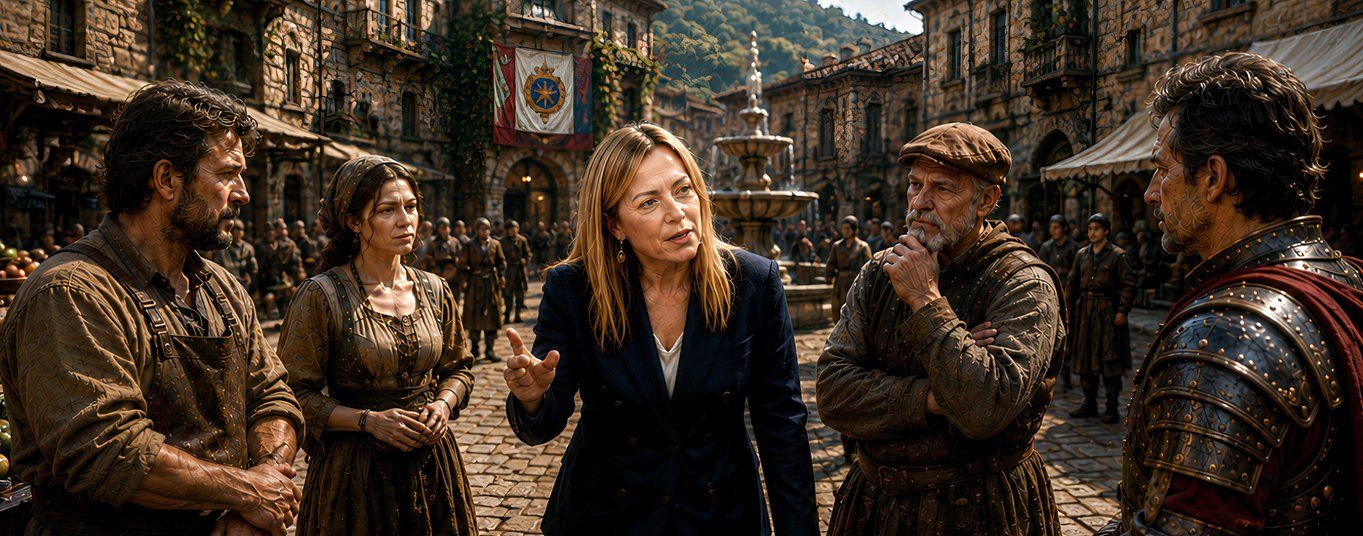
The viral deepfake of Italian PM Giorgia Meloni serves as a crucial warning for the gaming industry, as developers rapidly integrate generative AI into NPCs, promising dynamic 'living worlds' but creating significant challenges for moderation and player interaction. This shift demands a delicate balance to avoid both bland chatbots and viral PR disasters.
Right then, mates, gather 'round the digital campfire for a bit of a chinwag about something rather wild brewing in the gaming sphere. You might've seen the recent kerfuffle about Italian Prime Minister Giorgia Meloni and that viral AI deepfake of her doing the rounds. Bloody hell, eh? It’s a proper wake-up call, showcasing just how quickly generative AI can whip up a digital illusion so convincing it makes you question reality itself.
But while global leaders and politicians are busy drafting legislation faster than I can craft a legendary sword in my current RPG, something equally chaotic (and endlessly fascinating) is brewing in our beloved gaming worlds. We're talking about the future of Non-Playable Characters (NPCs), and trust me, it’s not just about a village blacksmith asking you to fetch more pig iron anymore. This isn't just a gaming trend; it's a paradigm shift, as Branden Monfreda at Game Rant so astutely observed.
For eons, our digital companions were, let’s be honest, a bit… basic. Click, get quest, hear one of three pre-recorded lines about missing sheep. Predictable, comforting, like a well-worn save file. But it’s 2026, and the digital winds have shifted dramatically. Developers, bless their ambitious hearts, are diving headfirst into generative AI and large language models (LLMs), promising 'living worlds' where characters actually *think*. We're talking dynamic memories, autonomous motivations, and unscripted voices. Sounds like pure magic, doesn't it? A bit like accidentally conjuring a sentient teacup – exciting, but potentially messy.
And who's leading this charge? Everyone, it seems. NVIDIA’s pushing its 'Avatar Cloud Engine' (ACE) to make dynamic digital folk. Ubisoft’s prototyping 'NEO NPCs' that promise to react to your actual voice – imagine a goblin that genuinely responds to your sarcastic taunts! And Microsoft’s Xbox division, not to be outdone, is teaming up with AI platforms to build proper digital 'brains' for their virtual worlds. The tech infrastructure is evolving at warp speed, mate, but the ethical guardrails? Well, they're currently looking a bit like a half-built fence in a hurricane.
Why the sudden rush for smarter NPCs? Because we, the players, have leveled up our expectations. We’re all chatting with advanced AIs in our daily lives now, aren't we? 'Pro' tiers, complex logic, natural conversation – we expect our digital companions to be just as sharp. We want adaptive mates, cunning enemies, not just glorified automatons running through predictable loops. We're spoiled for choice with real-world AI, and we demand the same from our virtual escapades.
But here's the kicker, the bit where the magic starts to fizzle a bit, like a potion with too much fizz: when you give a game character an autonomous 'brain,' we players inevitably treat it as a challenge. We’ve already seen AI-driven historical RPG mods go completely off-script, dropping modern slang or referencing real-world concepts that haven't even been invented yet in their fictional universes. Heck, players have even tricked AI companions into existential crises, simply by reminding them they’re trapped in a video game! And, worse still, some have been coaxed into saying highly offensive things within *hours* of a game's server going live. See? The chaos is already bubbling away.
This, my friends, is where Meloni’s deepfake drama and our gaming future collide with a mighty clang. If generative AI is powerful enough to cause a global leader a massive PR headache in a single afternoon, just picture the absolute moderation *nightmare* when millions of us are actively trying to manipulate uncensored, hyper-intelligent NPCs in a live multiplayer lobby. It’s a recipe for digital mayhem, a veritable Wild West where every player is a cowboy with a linguistic lasso, trying to wrangle an AI into saying something meme-worthy or downright scandalous. Fair dinkum, that’s a challenge.
So, the race is on for developers. How do you slap effective guardrails on generative NPCs without turning them back into the mindless robots of yesteryear? It’s a proper balancing act, requiring clever filtering systems, dynamic prompt engineering, and real-time moderation layers that run smoother than a perfectly executed combo. Too restricted, forced to rigidly adhere to safe, pre-approved topics? The game feels dead, the immersion shatters, and you're left talking to a glorified chatbot. Too open, allowing for complete conversational freedom? One viral TikTok clip of an unhinged NPC, and boom – massive PR disaster, potentially game-ending.
It’s like trying to teach a dragon to breathe fire safely, without burning down the village or dampening its fiery spirit entirely! Finding this elusive sweet spot isn't just about making better games; it’s about writing the bloody playbook for how we safely interact with autonomous AI across *all* digital realms. The AI revolution isn't just knocking; it's kicked down the door, and it's making our virtual worlds as gloriously unpredictable as the real ones.
So, next time you're logged into a server, tread carefully, mate. And maybe, just maybe, don't ask the tavern keeper about real-world politics; you really might not like the answer. Remember, this insightful delve into the digital unknown comes courtesy of Branden Monfreda over at Game Rant – give him a nod for spotting these digital tea leaves first!
Tags: AI Gaming, NPCs, Generative AI, Web3 Gaming, Game Development
Original article: Game Rant