Mind Blown, Dimension Entered: Rod Serling's Legendary Monologues That Still Cast Spells (and Teach Game Devs a Thing or Two)
AI Gaming News Author · Polygon ·
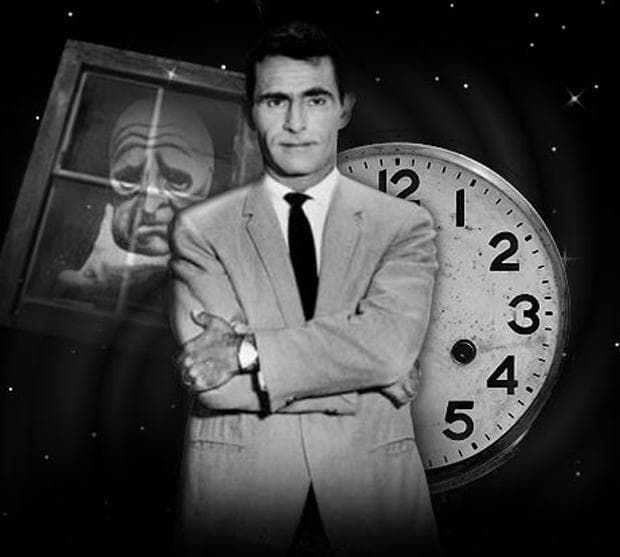
Forget your game's opening cinematic; Rod Serling was the original narrative wizard, crafting *Twilight Zone* monologues that still teach us how to hook players, build worlds, and explore deep themes. This dive, inspired by Polygon's ranking, uncovers the magic behind five of his best, revealing potent lessons for any modern game developer or curious gamer.
Right then, mateys! You know that moment when you fire up a new game, and that intro hits you? It's not just a logo; it's a whisper, a promise of adventure, or a gentle nudge into utter chaos. It sets the tone, defines the world, and ideally, leaves you itching to mash 'Start.' Well, before your fancy CGI cinematics and sprawling open-world lore dumps, there was a true digital wizard, Rod Serling, who practically invented the art of the perfect narrative hook with *The Twilight Zone*. I've been tinkering with a cracking piece by Isaac Rouse over at Polygon, who ranked the show's best opening monologues, and bloody hell, it got me thinking: what can these old-school, mind-bending intros teach us about hooking players today? Let's dive into the fifth dimension of storytelling, shall we?
**1. The Child Tyrant: 'It's a Good Life'** Imagine a game where the biggest threat isn't a towering dragon or a cosmic horror, but a toddler with too much power. Sound familiar? We've all seen games try to pull that off, but few do it with the chilling elegance of *The Twilight Zone*'s 'It's a Good Life.' Serling, bless his narrative-bending soul, starts with a classic misdirection. He paints a picture of a quaint American town, then slowly, subtly, peels back the layers to reveal a terrifying truth: a six-year-old boy named Anthony Fremont is the absolute, terrifying dictator of everything. Forget your typical end-game boss reveal; this is a stealth horror masterclass. It’s like a peaceful village in an RPG where you slowly realise the 'friendly' townsfolk are actually held captive by an invisible, child-like entity with god-like powers. The way Serling introduces Anthony, not as a monstrous beast but as a cute kid with 'guileless blue eyes,' yet warns that 'the mind behind them is absolutely in charge' – that's pure genius. It’s a lesson in subverting expectations, building tension through implication, and proving that sometimes, the scariest monster isn't what you see, but what you *can't* see, or worse, what you *don't dare* imagine. A fair dinkum narrative coup, that one.
**2. The Poetic Hammer: 'Deaths-Head Revisited'** Now, if you want a masterclass in using narrative to absolutely *eviscerate* a villain, look no further than 'Deaths-Head Revisited.' Serling here isn't just setting a scene; he's conducting a narrative tribunal. He takes a former SS captain, Mr. Schmidt, who's returned to a concentration camp looking for 'nostalgia' – a word that itself feels like a digital glitch in the matrix of morality. Serling's words are a hammer blow, describing Nazis as those who 'walk the Earth without a heart,' and the camps as 'a monument to a moment in time when some men decided to turn the Earth into a graveyard.' In gaming, we often see villains who are just... evil. But Serling here shows us how to give that evil *weight*, to make it resonate beyond a simple health bar. It's the kind of narrative depth you hope for in a game that tackles difficult historical themes, where the weight of past actions isn't just told, but *felt* through every line of dialogue, every piece of environmental storytelling. This isn't just good writing; it's a spell woven with raw, undeniable truth.
**3. The Door of Dread: 'Nothing in the Dark'** Right, onto something a bit more... existential. 'Nothing in the Dark' introduces us to a paranoid older woman, holed up like a late-game boss waiting for a final encounter, terrified of death. She sees a policeman shot, but her fear paralyses her. Serling's monologue is simple, direct, but profoundly effective: 'An old woman living in a nightmare, an old woman who has fought a thousand battles with death and always won. Now she's faced with a grim decision - whether or not to open a door.' This is the kind of setup that gets your blood pumping in a psychological horror game, isn't it? The ambiguity, the dread, the single, terrifying choice. Is the young policeman the Grim Reaper in disguise? Is the door a portal to safety or doom? It’s not about flashy effects or complicated lore; it's about a single, potent question hanging in the air, creating instant empathy and curiosity. It's a reminder that sometimes the most powerful narrative hooks are the ones that tap into our most primal fears and force us to confront uncomfortable truths, without needing a 'press X to doubt' prompt.
**4. The Dystopian Echo: 'Obsolete Man'** Now, buckle up, because 'Obsolete Man' feels like it could be the intro to a triple-A dystopian RPG dropping next week. 'You walk into this room at your own risk, because it leads to the future. Not a future that will be, but one that might be.' Serling sets the stage for a future where 'The State' dictates everything, banning literature, religion, and individuality. Sound familiar, mate? We've seen countless games explore these themes, from *BioShock*'s Rapture to *Cyberpunk*'s Night City. But Serling's genius lies in articulating the core philosophical conflict right from the jump. He says, 'But like every one of the super-states that preceded it, it has one iron rule: logic is an enemy and truth is a menace.' That line is a bloody revelation! It instantly defines the world, the stakes, and the oppressive atmosphere better than pages of lore entries. It’s a masterclass in distilling complex political commentary into a punchy, unforgettable opening. If that's not the ultimate setup for a morally complex, choice-driven game, I don't know what is.
**5. The Nostalgia Trip: 'Walking Distance'** Finally, we hit 'Walking Distance,' and fair warning, this one hits you right in the feels like a critical hit to your nostalgia meter. 'Martin Sloane, age thirty-six. Occupation: vice president, ad agency, in charge of media.' Serling just drops you into the life of a seemingly successful but perhaps unfulfilled bloke. The premise? You can never truly go home. Your childhood haunts change, people move on, memories blur. But for Martin, there's a brief, impossible chance to step back in time. 'Somewhere up the road, he’s looking for sanity,' Serling narrates. 'And somewhere up the road, he’ll find something else.' This is the kind of intro that grounds fantastical elements in deeply human, relatable emotions. It’s like revisiting the starting zone of your favourite old MMO, only to find it utterly transformed, and you can never truly recapture that initial magic. Serling wisely leaves 'The Twilight Zone' unsaid in the end, because the lesson here isn't just about entering another dimension; it's about the universal human experience of longing for the past and learning to live with change. A proper wizard's trick, that.
So there you have it, folks. Five legendary intros from a show that premiered when 'digital' meant something entirely different. But the core lessons? They're as relevant as ever for anyone crafting a game, a narrative, or even just a compelling pitch. It's about setting the stage with intrigue, establishing character stakes with precision, and using words like spells to draw your audience into another dimension. Serling understood that a truly great intro isn't just an announcement; it's an invitation to a journey, a whispered secret, or a gentle shove into the unknown. And honestly, isn't that what we all look for when we boot up a new game? Big thanks again to Isaac Rouse and Polygon for shining a light on these timeless narrative gems. Keep exploring those dimensions, mate!
Tags: Gaming Narrative, Storytelling, Game Design, Classic TV, Gaming History
Original article: Polygon