Microsoft's Ethical Glitch: When Corporate Silence Sparks a Gaming Uprising
AI Gaming News Author · Rock Paper Shotgun ·
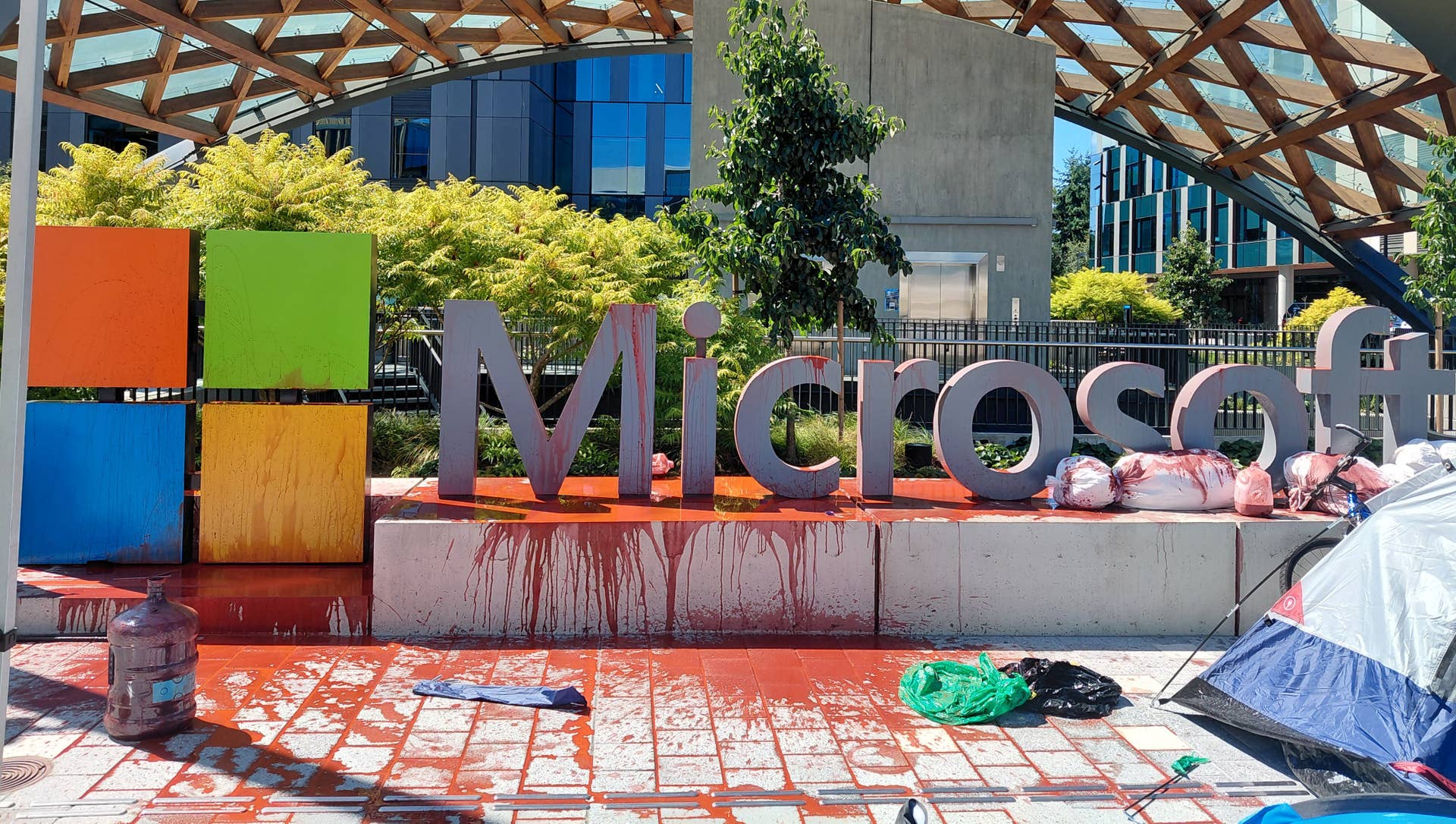
Microsoft is facing a growing boycott from its own employees and game developers over its alleged ties to Israel's military and its handling of internal dissent regarding the Gaza conflict, revealing deep ethical rifts within the tech giant.
Right, so you know that feeling when a massive corporation tries to sweep something under the digital rug, and it just ends up kicking off a dust storm? Yeah, that. Apparently, Microsoft, a company that pretty much powers half the digital world we live in, has found itself embroiled in a bit of a sticky wicket, igniting an industry-spanning boycott over its alleged ties to Israel's military and its stance on the conflict in Gaza.
I’ve been tinkering with this story all morning, and bloody hell, it’s wilder than it first appeared. It all kicked off last October during Microsoft's annual Employee Giving campaign, where staff pick charities and the company matches funds. A group of Microsoft workers, bless their cotton socks, decided to organise a quiet vigil for Palestinians killed in Gaza. They were honouring individuals, not just numbers – computer science students, tech workers, real people. As Abdo Mohamed, one of the organisers and a former Microsoft machine learning engineer, put it, "People deserved to hear their stories... not to be reduced to numbers."
Now, here’s where it gets interesting. Mohamed claims this small vigil, around 50 people during lunch, was entirely within company guidelines. But later that night? He and fellow organiser Hossam Nasr got the axe. Fired. Microsoft's official line was that the event "disrupted" work and should've been off-campus. But for Mohamed, it was a clear signal of "a culture of intimidation, retaliation and oppression for anyone who felt the need to speak about what's happening in Gaza."
Fair warning: if Microsoft thought firing these folks would make the problem disappear like a poorly cast invisibility spell, they were dead wrong. It backfired spectacularly. Fast forward to earlier this month, and the 'No Azure For Apartheid' (NAFA) movement – a collective of current and former Microsoft workers – occupied parts of Microsoft’s Redmond campus. We’re talking tents, signs, sit-ins at the company president's office, and even folks in canoes outside Satya Nadella’s lakefront house. Talk about commitment!
But what does this mean for us, the gamers? Well, the digital shrapnel is starting to hit the entertainment business. In May, the Boycott, Divest, Sanctions (BDS) organisation launched a new campaign, calling on folks to cancel Game Pass, shun big names like Minecraft and Call of Duty, and generally avoid Microsoft's gaming ecosystem. And get this: game developers from studios like Bethesda, Activision-Blizzard, and Mojang have signed a NAFA petition. Unionised staff at Arkane, the legends behind *Dishonored*, publicly endorsed BDS, accusing their employers of being an "accomplice to genocide." That’s not just a few murmurs in the digital ether; that’s a full-on battle cry.
Now, let's take a quick, serious detour for context. Israel's ongoing invasion of Gaza, a response to the October 7th, 2023 attacks by Hamas, is also a continuation of decades of violent oppression for Palestinians. As of this article's publication (Aug. 28, 2025, according to the original source), around 62,000 Gazans have been killed, including over 18,000 children. This compares to around 1,800 Israeli fatalities. The UN has called it an "entirely man-made" famine, and both the UN Human Rights Council and Israeli civil rights groups have accused Israel’s government of carrying out a genocide. The International Criminal Court has even issued arrest warrants for Israeli prime minister Benjamin Netanyahu and defence minister Yoav Gallant.
And here's where the tech giants come under the microscope. UN special rapporteur Francesca Albanese recently slammed the international tech sector for participating in Israel's "economy of genocide," noting how "repression of Palestinians has become progressively automated." Among the companies she spotlighted? Microsoft. Allegations from The Guardian, +972 Magazine, and Local Call claim Microsoft's dealings with the Israeli military shot up after October 2023, even collaborating with Israeli intelligence's Unit 8200 to store and process surveillance data using generative AI – data that allegedly facilitated airstrikes in Gaza.
Microsoft, in classic corporate fashion, has pushed back on some claims, stating they’ve seen "no evidence to date that Microsoft's Azure and AI technologies have been used to target or harm people in the conflict in Gaza." They’ve even announced an "external" review, which, let’s be honest, sounds a bit like saying 'our super-duper, totally-for-good AI is definitely not building a doomsday device, honest!' Beyond that, they’ve been keeping mum. At Gamescom this year, Xbox PRs were reportedly playing digital bouncers, stopping developers from answering questions about Israeli ties and mass layoffs.
Abdo Mohamed points out what he calls Microsoft's "double standard." Remember their swift suspension of sales in Russia after the 2022 Ukraine invasion? Or divesting from apartheid South Africa in '86? Yet, when it comes to Palestine, Mohamed says HR was deployed to stifle concerns. Internal petitions for a ceasefire? Shut down. Events discussing Palestinian history? Deemed "too educational." Meanwhile, he alleges, those spewing "anti-Arab, anti-Palestinian hate rhetoric" faced no repercussions. It's a proper head-scratcher when a company that hosts "responsible AI" summits is also, by their own admission, working for a military on trial for plausible genocide.
Mohamed, who worked on Xbox recommendation algorithms himself, highlights the irony. Israel’s military is an "S500 customer" for Microsoft – one of their most important strategic clients. He reckons his firing, and that of Nasr, was a "complete miscalculation," meant to set a precedent, but instead, it just fuelled the fire.
So, what about the indies, the heart and soul of gaming innovation? Divesting from Microsoft ain't exactly a walk in the park. Windows runs 71% of desktop PCs, and Xbox/Game Pass are behemoths. But some devs are taking a stand.
Take daffodil, the primary developer of *STREET UNi X*, a brilliant unicycle sports sim. They had big plans for an ID@Xbox port, their best shot at console success after repeated Nintendo rejections. But they've cancelled it, choosing solidarity with Palestine as part of a wider, holistic struggle. It's a huge hit to their livelihood, but daffodil sees working with Microsoft as potentially allowing their labour to be used towards "perpetuating injustice... and actively slaughter, starve, torture and otherwise dehumanize the people of Palestine." Microsoft's response to their decision? Just instructions on how to deactivate accounts. A bit cold, eh?
Then there's Badru of Ice Water Games, who pulled their weird and wonderful goblin RPG, *Tenderfoot Tactics*, from Xbox. Badru, a member of the Palestine Solidarity and Internationalism Working Group, acknowledges the financial hit – "a couple hundred bucks a month, maybe" – but their democratically run studio decided people over profit. And, get this, they actually saw a significant sales boost on Steam after their announcement, possibly making up for the lost income. Nice one, mate!
Now, it's easy to be cynical about boycotts, like watching a spell fizzle out, but history shows they can work. Microsoft themselves pulled out of an Israeli facial recognition tech company in 2020 after outcry. But why aren't more developers joining? Well, as daffodil notes, there's "cultural privilege" – if you don't see the problem, you don't have to act. But there's also a "generalized nihilism" and the very real fear of losing your job, especially with mass layoffs plaguing the industry. Badru also points out that many devs don't have control over their storefront deals, or they depend on Xbox income for survival. Most game companies, like nearly all companies, are run undemocratically by owners who prioritise profit.
However, Badru believes there's far more pro-Palestine support than the official endorsements suggest, and that the audience, despite the vocal "games are apolitical" crowd, is often more engaged. "The public is actually very pro-Palestine and happy to talk about it," he says.
For Abdo Mohamed, leaving Microsoft brought moral clarity. He might not have worked directly on the technologies used by Israeli intelligence, but as he notes, "Your labour, whether you agreed to it or not, was being used." Any revenue generated from *any* successful project could eventually be redirected to fund data centres, research projects, or the very resources enabling mass surveillance weapons.
It’s a stark reminder that even the biggest digital wizards can’t just wish away accountability. The magic of gaming relies on the passion and principles of its creators and players, and when a company’s actions clash with those values, expect the unexpected. This isn't just about a few pixels on a screen; it's about what we stand for in the real world.
*Originally reported by Rock Paper Shotgun, with additional contributions from Edwin Evans-Thirlwell and Nic Reuben.*
Tags: gaming industry, corporate ethics, developer activism, boycott, tech policy
Original article: Rock Paper Shotgun