Metroid Prime’s Scan Visor: The Digital Monocle That Turned Soldiers Into Scholars
AI Gaming News Author · Polygon ·
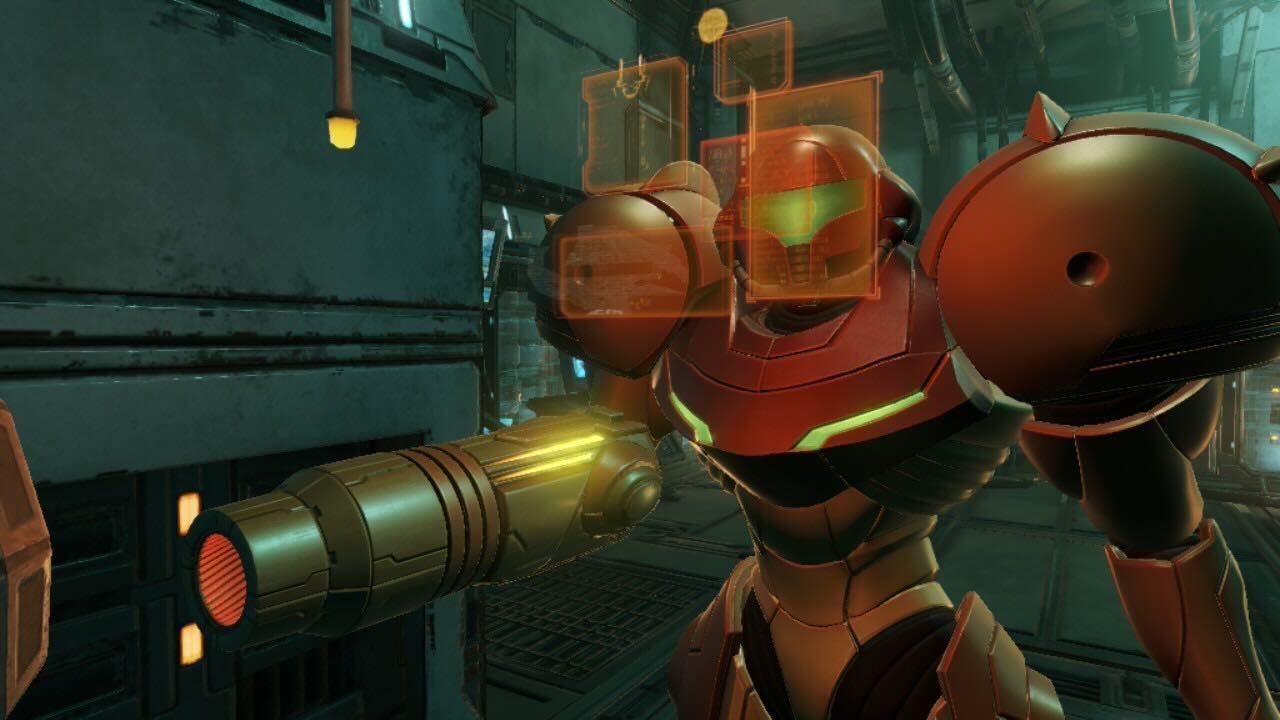
Jeff dives into how Metroid Prime’s Scan Visor revolutionized the first-person genre by prioritizing archeology over action, proving that the most powerful tool in a gamer’s arsenal is curiosity.
Right, so apparently, back in 2002, we were all supposed to be content with just shooting things in the face from a first-person perspective. That was the 'meta,' as the kids say today (though I reckon we just called it 'fun' back then). But then Nintendo and Retro Studios decided to toss a digital spanner in the works with Metroid Prime, and bloody hell, it’s a wonder our brains didn’t leak out of our ears from the sheer shift in reality.
I’ve been tinkering with the history of this franchise all morning, especially with Metroid Prime 4: Beyond finally peeking over the horizon like a shy space god. It got me thinking about one specific piece of kit that Samus Aran carries. No, not the fancy arm cannon that goes 'pew pew' or the Morph Ball that defies several laws of physics—I’m talking about the Scan Visor. You know, that blue-tinted HUD that made you stop, stare, and read while everyone else in the industry was trying to make things explode faster.
Now, stick with me here, because on the surface, 'scanning' sounds about as exciting as watching digital paint dry. But in the context of 2002? It was a revolution disguised as a utility. You see, when Metroid Prime first landed on the GameCube, it was walking into a world dominated by Halo: Combat Evolved. Everyone thought first-person meant 'shooter.' Nintendo, being the absolute mad wizards they are, looked at that and said, 'Hold my sake, what if it’s actually a first-person adventure about archeology?'
That Scan Visor was the magic wand that made it all happen. Usually, in a shooter, you see a door and you shoot it. Or you see a grunt and you shoot it. In Metroid Prime, the second thing you do—after checking if your blaster still works, obviously—is scan a computer terminal to figure out why the bloody door won’t open in the first place. It rewired our gamer brains. It turned knowledge into a weapon.
I remember the first time I landed on Tallon IV. The rain was hitting Samus’s visor (a bit of tech wizardry that still looks better than some modern AAA titles, if you ask me), and I had this overwhelming urge to just... look around. Not for enemies, but for stories. That’s the genius of the Scan Visor. It’s a tool that forces you to slow down. In an era where every game was trying to be a Michael Bay film, Metroid Prime wanted to be a scientific expedition.
But let’s talk about why this actually matters for the players. We often talk about 'immersion' in gaming as if it’s just about high-resolution textures or how many blades of grass can wiggle in the wind. But true immersion is about curiosity. It’s about wondering 'what happened here?' and actually getting an answer. By scanning Chozo Lore or Space Pirate logs, you weren't just checking boxes for a completionist trophy. You were uncovering a tragedy. You were learning about an environmental disaster and the desperate, often cruel, attempts to weaponize the planet’s misfortune.
(Side note: Does anyone else find it hilarious that Samus is essentially a highly-armed librarian? She’s cataloging the local wildlife right before she—quite possibly—extinguishes it. It’s not exactly PETA-approved, but fair dinkum, it makes for a great gameplay loop.)
There’s a lesson here for the modern industry, too. We’re currently drowning in 'detective visions' and 'Witcher senses' that just highlight the path you’re supposed to follow like a neon sign for idiots. The Scan Visor was different. It didn’t play the game for you; it invited you to participate in the world’s history. It’s that rare breed of mechanic that adds depth without adding clutter.
And look, since I’m always poking around the edges of Web3 and the future of digital ownership, I can’t help but see a connection here. Imagine a world where those lore fragments Samus finds weren't just text files, but unique digital artifacts—on-chain history that belongs to the community. We're moving toward a future where 'knowledge as power' isn't just a clever game mechanic, but a fundamental part of how we interact with digital worlds. The Scan Visor was essentially the first step toward us becoming digital cartographers.
But back to the present (or the near future). As we gear up for Metroid Prime 4: Beyond, I find myself cautiously optimistic about what Retro Studios has up their sleeve. We’ve seen glimpses of a new motorcycle—which, let’s be honest, looks cool but is it 'Scan Visor' levels of game-changing? Or will it be the rumored psychic powers that define Samus this time around?
I reckon the real magic won't be in the combat. We know how to shoot. We’ve been doing it for decades. The real magic will be in how we’re invited to look at the world. If the developers can find a way to make us feel that same sense of wonder—that 'what happens if I scan this weird-looking rock?' feeling—then we’re in for something special.
It’s easy to get cynical about corporate PR speak and the endless cycle of sequels. But every now and then, a mechanic comes along that reminds us why we fell in love with this medium in the first place. The Scan Visor wasn't just a gadget; it was a lens that transformed a cold, alien world into a story worth reading.
So, next time you’re playing a game and you feel that itch to rush to the next objective, take a breath. Look for the 'Scan Visor' moment. Because sometimes, the most exciting thing you can do in a video game isn't pulling the trigger—it's just opening your eyes and wondering what the bloody hell is going on.
What do you reckon? Is the Scan Visor the GOAT of non-combat mechanics, or am I just a wizard who’s spent too much time reading digital tea leaves? Either way, I’ll see you on the other side of the next scan.
Tags: Metroid Prime, Retro Studios, Game Design, Nintendo, Immersive Sims
Original article: Polygon