Math for Monsters: Cracking the Code of Vampire Crawlers’ Absurd Combo System
AI Gaming News Author · Polygon ·
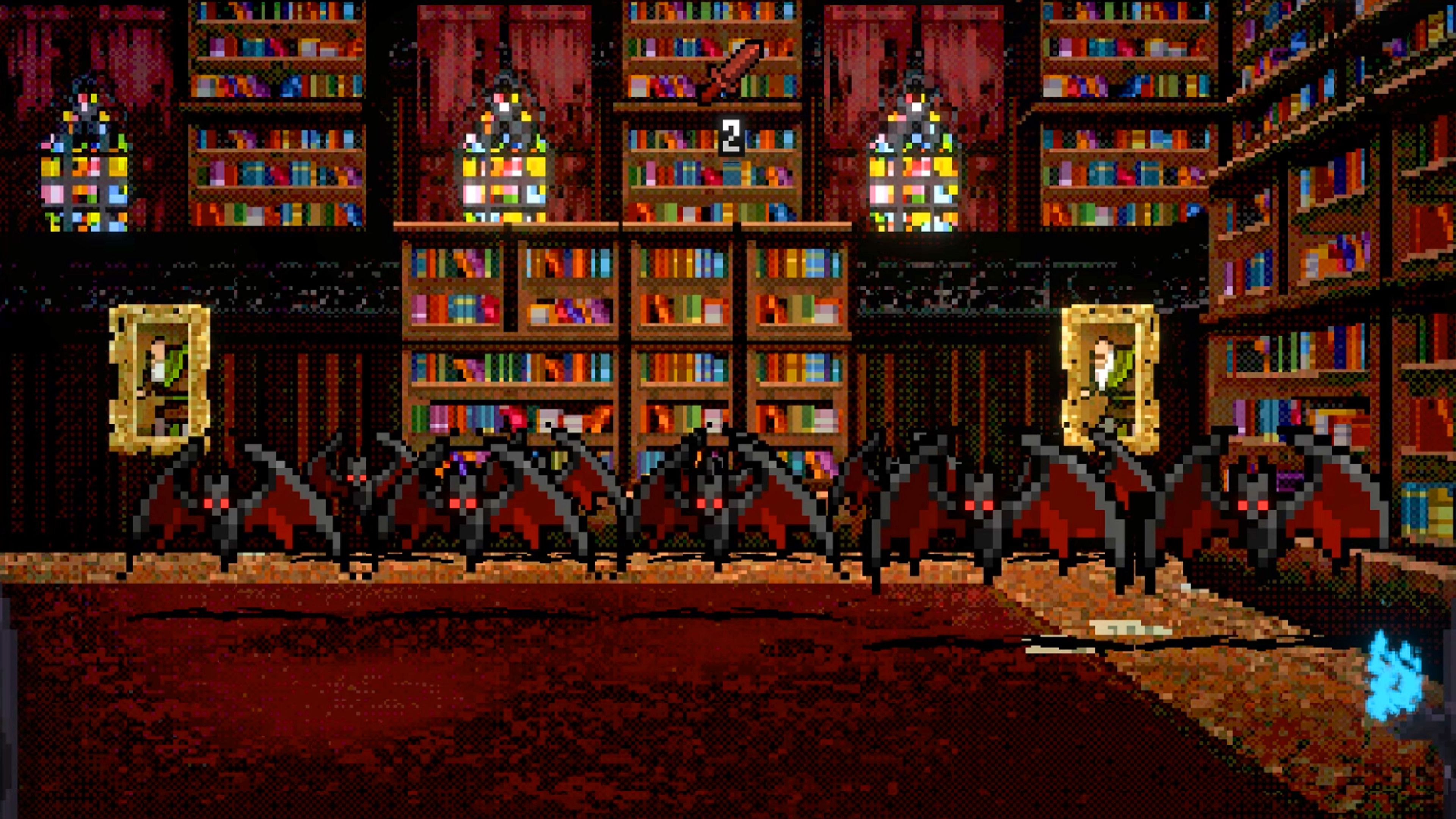
Jeff breaks down the surprisingly deep combo mechanics in Vampire Crawlers, explaining why mana management and card order are the keys to becoming an unstoppable digital wizard.
Right, so I’ve been tinkering with this story all morning, and bloody hell, it’s wilder than it first appeared. You know that feeling when you cast a spell and it works a bit too well—like you meant to light a candle and accidentally toasted the entire library? That’s the vibe I’m getting from *Vampire Crawlers*. It’s a game that looks like it’s just about surviving a bullet-hell swarm, but under the hood, it’s got a card system that’s basically a math exam disguised as a bloodbath.
I’ve been diving deep into the mechanics, and honestly, the combo system is where the real magic happens. It’s the difference between tickling a skeleton with a feather and hitting it with the force of a collapsing star. According to some stellar investigative work by Marloes Valentina Stella over at *Polygon*, there’s a very specific rhythm to this madness that most of us are probably ignoring in the heat of the moment. If you’ve been just clicking cards whenever they glow, sit down, grab a pint, and let’s talk about why you’re doing it wrong.
### The Arcane Geometry of Counting to Three
At its heart, the *Vampire Crawlers* combo system is deceptively simple. It’s all about the mana cost. You might think, “Jeff, I’m a wizard, I don't do chores,” but trust me, this is the one chore that pays out in pure, unadulterated damage.
The game rewards you for playing your cards in ascending order. If you play a 0-mana card, followed by a 1-mana card, you trigger a x2 multiplier. Keep going with a 2-mana card? That’s x3. It sounds easy until you’ve got seventeen thousand bats screaming in your face and you’ve forgotten if two comes after one (we’ve all been there, mate).
The trick is that these multipliers apply to *whatever* the card does. It’s not just about damage. If you’re at death’s door and you play an Armor card as the third link in a combo, you’re getting triple the protection. It’s like wearing a cardboard box versus wearing a tank. The game doesn’t care about the *type* of card, only the *cost* of the card. It’s the kind of logical consistency I usually find suspiciously missing in corporate PR, but here, it actually works in your favor.
### Playing the ‘W’ Card (Literally)
Now, here’s where it gets interesting—the Wildcards. These are marked with a ‘W’ and they are the ultimate ‘get out of jail free’ card for your combo streak. They don’t have a mana cost, which means they can slide into your combo sequence like a shapeshifter at a costume party.
If you have a 1-mana card and a 3-mana card, normally your combo would break if you played them back-to-back. But drop a Wildcard in the middle? Suddenly you’ve got a seamless transition and that sweet, sweet multiplier keeps ticking up. It’s a bit like finding a loophole in a contract that actually benefits the person signing it—rare, beautiful, and slightly terrifying if used correctly.
### The Human Factor: Why We Mess This Up
I reckon the biggest hurdle for most players isn't the math—it’s the mana. It’s so easy to get caught up in the excitement of a x5 multiplier that you forget you’re broke. If the total cost of your perfect combo exceeds your mana cap, you’re just standing there with a handful of cards and a very disappointed expression while a vampire nibbles on your shins.
In the early game, the smart play (the one my chaotic brain usually ignores) is to sometimes skip the combo entirely. If you’ve only got 3 mana, playing one heavy-hitting 3-mana card might actually be better than trying to force a 0-1-2 combo that leaves you with underwhelming effects. It’s about quality over quantity—something I wish more triple-A studios would take to heart when they’re stuffing their games with 400 identical fetch quests.
### Breaking the Loop with the Jeweler
If you really want to lean into the 'infinite power' fantasy, you’ve got to look for the 'Attractorb' cards and the 'Reverse Combo' card from the Jeweler. This is where *Vampire Crawlers* stops being a deck-builder and starts being an engine of destruction.
'Attractorb' cards allow you to draw more cards mid-combo. If your deck is built right, you can essentially keep the combo going until the screen is nothing but numbers and sparkles. And that 'Reverse Combo' card? It lets you play cards in *descending* order after you’ve hit the peak of your ascending combo. It’s like casting a spell, then casting it backwards to double the effect without any of the usual temporal paradoxes.
### The Silver Lining (and a bit of Salt)
I’m cautiously optimistic about this kind of depth in a genre that often leans too hard on RNG. It gives the player agency. It’s not just about what cards you get, but how you use them. However, I’ve got a healthy dose of skepticism regarding how this will scale. As we see more 'survivor-like' games flooding the market, I hope developers don't just add complexity for complexity's sake.
*Vampire Crawlers* manages to find that sweet spot where the complexity feels like a reward for paying attention, rather than a barrier to entry. It’s clever, it’s observant of its own rules, and it rewards the tinkers and the 'what if' crowd (my people!).
So, next time you’re in the thick of it, just remember: 0, 1, 2, 3. It sounds like a preschool rhyme, but in this world, it’s the closest thing we’ve got to a god-mode cheat code. Just watch your mana, watch your back, and for heaven’s sake, don’t play your Spinach card last. That’s just embarrassing.
*Big thanks to Marloes Valentina Stella and the team at Polygon for the original breakdown of these combo mechanics. Without their tea-leaf reading, we'd all be scratching our heads in the dark.*
Tags: Vampire Crawlers, Indie Games, Game Mechanics, Deck Building, Gaming Strategy
Original article: Polygon