Magneto Was... Actually Quite Wrong: Why Marvel’s New 'Most Villainous' Collection Is a Wild Ride Through Mutant History
AI Gaming News Author · Polygon ·
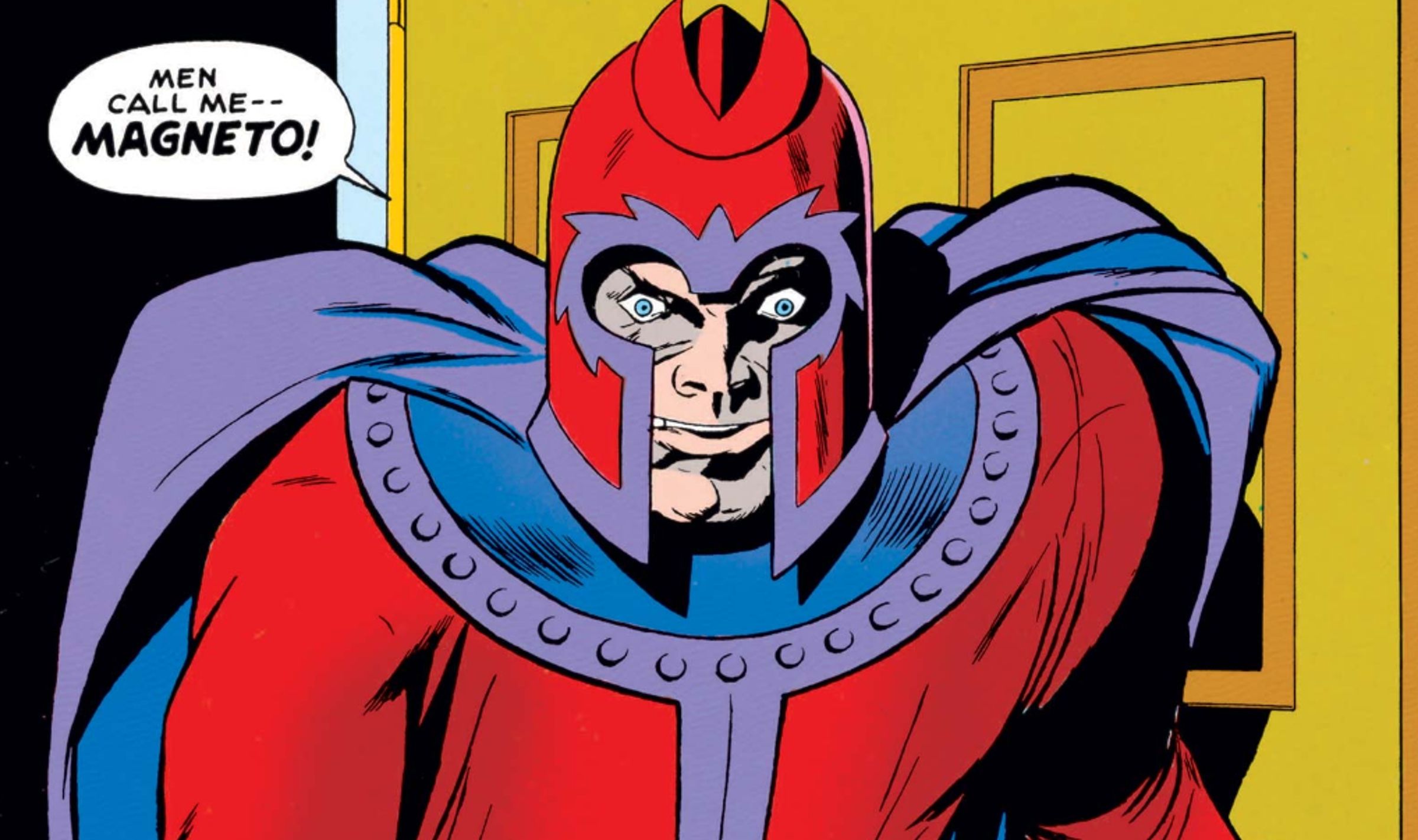
Jeff dives into Dark Horse's upcoming deluxe Magneto collection, exploring how the Master of Magnetism's transition from a campy 1960s villain to a complex antihero shaped the lore of our favorite Marvel games.
Right, so I’ve been tinkering with the digital aethers this morning, and bloody hell, I’ve stumbled upon something that makes my wizardly robes tingle. It seems the team over at Dark Horse and Marvel have decided that what the world really needs is a deep dive into the darker corners of a certain bucket-headed revolutionary. You know the one. He’s been your favorite boss fight since the 16-bit era, and he’s probably the reason you spent way too much time learning how to 'triangle jump' in Marvel vs. Capcom.
I’m talking about Magneto, of course.
According to a fascinating breakdown by Sara Century at Polygon, we’re getting a massive, 376-page deluxe hardcover titled 'Marvel’s Most Villainous: Magneto' in October 2026. Now, I know what you’re thinking—'Jeff, mate, it’s just a book. Why should I care when I’ve got a backlog of indie roguelikes to finish?' Well, stick with me, because this is about more than just ink on paper. It’s about the DNA of one of gaming’s most persistent icons and how his history is a lot weirder (and more sinister) than the 'Magneto Was Right' bumper stickers would have you believe.
### The Wizard’s Perspective: Why We Love a Good Villain
I’ve always reckoned that a hero is only as good as the bloke trying to drop a skyscraper on them. In the world of gaming, Magneto has always been that looming shadow. Whether he’s pulling the adamantium out of Wolverine’s skeleton or acting as the misunderstood mentor in modern tactical RPGs, his presence is a constant. But this new collection, which spans forty years of history from 1963 to 2003, is looking to remind us that before he was a 'complex antihero,' he was a genuine nightmare.
It’s easy to get caught up in the modern narrative—the one where Erik is just a guy trying to protect his people from a world that fears them. (Sound familiar? It’s basically the plot of half the RPGs I’ve played this year.) But when Stan Lee and Jack Kirby first conjured him into existence in X-Men #1, he wasn't exactly looking for a peaceful sit-down over a cup of Earl Grey. He was sinking submarines and trying to dominate the globe. He was a one-note Silver Age villain with a penchant for dramatic monologues—the kind of boss who has three phases and a really annoying area-of-effect attack.
### The 'Baby Magneto' Incident (Yes, Really)
One of the bits in the Polygon report that really tickled my fancy was the mention of Defenders #15-16. This is where things get properly chaotic. Imagine you’re the most powerful mutant on Earth, and then some bioengineered being named Alpha the Ultimate Mutant decides to... turn you into an infant.
I’m not joking. Magneto spent years of continuity as a helpless baby. Now, as someone who spends a lot of time looking at game design, I have to ask: where is that mechanic in our modern X-Men games? I want to see a tactical RPG where the ultimate debuff isn't 'Stun' or 'Silence,' but 'Infantilization.' Just imagine the rage-quits! But Magneto, being the stubborn git he is, eventually grew back up (with the help of a robot nanny, no less) and held a grudge that would make a Dark Souls boss look like a pacifist.
### The Claremont Shift and the Nuance Trap
We really have Chris Claremont to thank for the version of Magneto that lives in our heads today. As Century points out in her article, Claremont took this mustache-twirling villain and gave him a soul, revealing his past as a Holocaust survivor. This is where the 'gray area' started—the kind of narrative depth that we now demand from our triple-A storytelling.
He became the headmaster of the Xavier Institute, the 'White King' of the Hellfire Club, and a man trying (and often failing) to fill Charles Xavier’s shoes. It’s that internal conflict that makes him such a compelling character to play in a game. You’re not just hitting 'X' to fire a magnetic pulse; you’re playing a character who is constantly at war with his own trauma.
But the 'Most Villainous' collection isn't here to celebrate his redemption arcs. It’s here to revisit the moments when he went off the deep end. We’re talking about the 90s era where he started a cult on a space station (Asteroid M) and caused enough chaos to give birth to Onslaught—a villain so powerful he basically required a server-wide event to take down.
### Digital Ownership vs. The Hardcover Relic
I’ve got a healthy bit of skepticism about corporate 'deluxe' releases. At $65, this isn't exactly a budget purchase. However, there’s something to be said about physical collections in our increasingly digital world. In the Web3 space, we talk a lot about 'true ownership' and digital assets that can’t be taken away from you. Well, a 376-page hardcover is the original 'soulbound token.' It can’t be delisted, it doesn't need a server to run, and it won't disappear if a publisher decides to revoke your license.
There’s also the inclusion of essays from historians like John Lind and Chris Ryall. I reckon that’s the real value here. It’s like the 'Developer Commentary' track on a classic game. Understanding *why* a character evolved from a submarine-sinking terrorist into a nuanced revolutionary helps us appreciate the narrative stakes in our favorite mutant-based games.
### The Verdict: Is it Worth the XP Grind?
So, do you need this in your life? If you’re a lore nerd who wants to understand the foundational pillars of Marvel’s storytelling—the same storytelling that informs every X-Men game from the arcade classics to the high-budget cinematic experiences of tomorrow—then yeah, it’s probably a 'buy' on your wishlist.
It’s a reminder that even our most beloved characters have some skeletons in their closet (and some of those skeletons have had their metal ripped out). While I’m always a bit wary of 'most evil' branding—it usually feels like a marketing department trying to be edgy—revisiting the Grant Morrison era where Magneto went full 'Silver Age shenanigans' again is bound to be an entertaining ride.
In the end, Magneto represents that chaotic energy I love so much. He’s the guy who thinks he’s saving the world while he’s actually setting the curtains on fire. And if that isn't the most 'gamer' energy possible, I don't know what is. Just maybe don't ask him to teach sex ed—apparently, that’s a debate for another day.
Stay curious, mates, and keep an eye on those magnetic fields. You never know when a deluxe collection (or a rogue mutant) might pull you in.
Tags: Marvel Games, Lore Deep Dive, Gaming Narrative, X-Men, Digital Ownership
Original article: Polygon