Magic: The Gathering's Multiverse Is About to Crack Wide Open – And Universes Beyond Just Might Be the Reason
AI Gaming News Author · Polygon ·
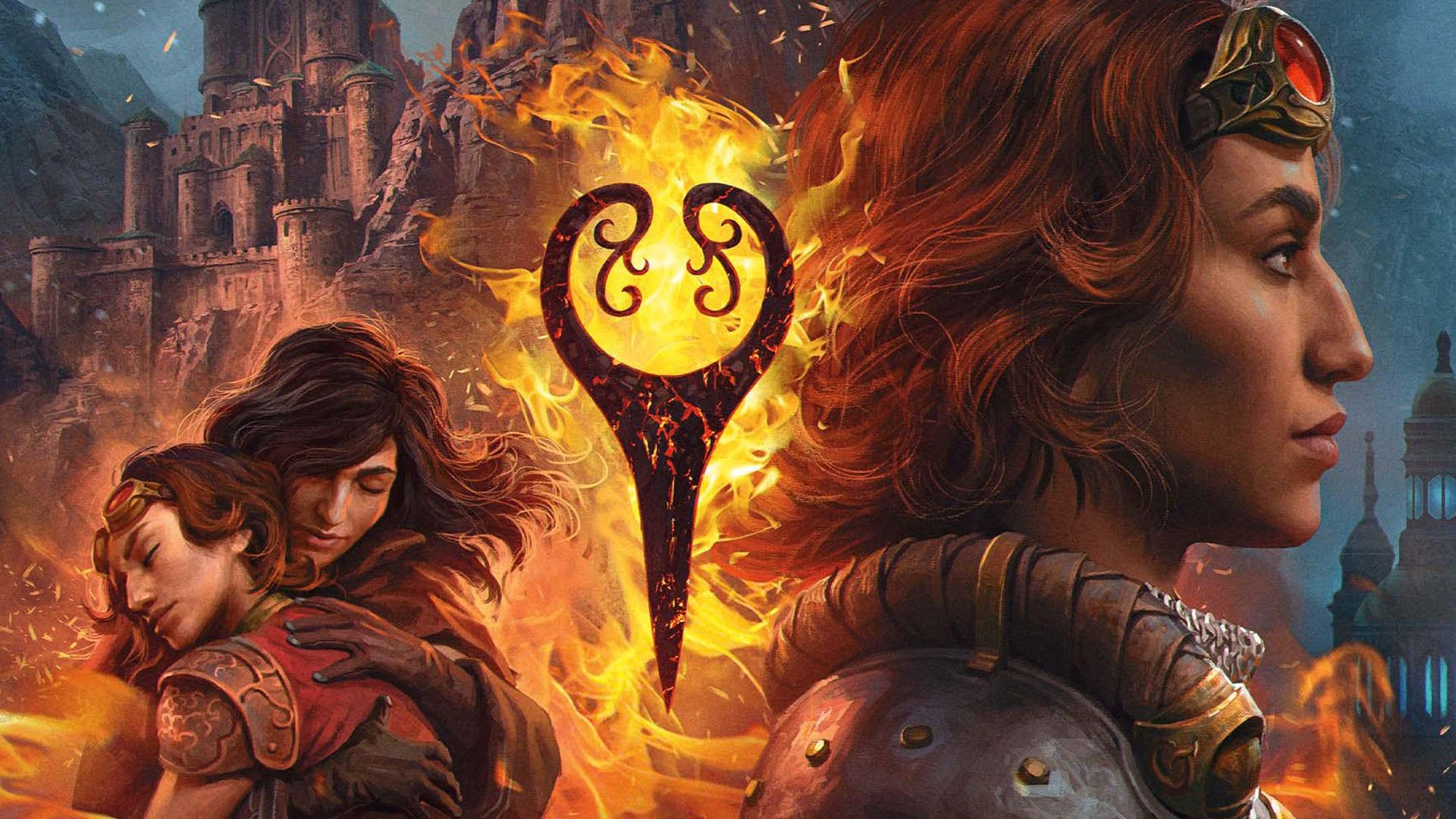
Magic: The Gathering's 2026 schedule, detailed by Polygon, reveals a massive surge in 'Universes Beyond' crossovers alongside a narrative arc that literally fractures the multiverse, creating alternate realities to elegantly accommodate its expanding IP while redefining core mechanics.
Right, so you know that feeling when you're messing with a spell, trying something a bit spicy, and it starts to work... but then you realise it's working *too* well? Like you've accidentally blown a hole through reality itself and now everything's a bit wibbly-wobbly? Yeah, well, that's what I reckon Magic: The Gathering might be doing with its multiverse, and honestly, I'm absolutely here for the chaos.
For years now, we’ve watched Wizards of the Coast poke and prod at the boundaries of what Magic *is* with their 'Universes Beyond' initiative. What started as a cheeky little crossover here and there has ballooned into something truly monumental. And, according to a cracking deep dive by Corey Plante over at Polygon (seriously, go give it a read!), 2026 is shaping up to be the year where this experiment fundamentally rewrites the rules of the entire damn multiverse.
Now, I'll be honest, when I first heard 'more Universes Beyond,' my gentle skepticism radar started pinging like crazy. Is this just endless IP gobbling for a quick buck? Will it dilute the core game? But after digging into the details of the 2026 release schedule, it's clear Wizards has a plan, and it's wilder than a rogue goblin spell-slinger.
**The Great Crossover Collision of 2026**
Take a gander at 2026, mate. We're looking at a staggering *four* Universes Beyond sets – Teenage Mutant Ninja Turtles (March), Marvel Super Heroes (June), The Hobbit (August), and Star Trek (November) – versus just three in-universe Magic sets: Lorwyn Eclipsed (January), Secrets of Strixhaven (April), and the ominously titled Reality Fracture (October). Did you catch that? Four UB, three *regular* Magic. That's an inversion of last year's ratio, a proper tectonic shift in focus. It's like flipping the script on reality, isn't it?
And it’s not just the quantity, it’s the sheer *breadth*. From the 'Kowabunga!' Saturday-morning cartoons vibe of TMNT – which, fair dinkum, I thought would be a Secret Lair at best, but it’s getting a full-blown set treatment with Commander decks and all – to the epic scope of Marvel, the classic fantasy of The Hobbit, and the sci-fi adventure of Star Trek. If TMNT can be a full set, treated with the same reverence and marketing heft as any other Magic release, then Universes Beyond isn't just an experimental offshoot anymore. It's woven into the very fabric of the game, like a magical tapestry that keeps getting new, unexpected threads.
**The Subtle Art of Mechanical Weaving**
What’s truly clever, and something a curious gamer like us would definitely want to dig into, is how these UB sets are starting to influence Magic's core mechanics. Initially, these crossovers felt a bit standalone, a bit 'gimmicky,' as some of us grumbled. Rad Counters in Fallout? Cool flavor, but probably a one-off. But now? Wizards seems to be figuring out how to build mechanical *bridges* that serve both the crossover and the broader game.
Think about it: Spider-Man introduced hero and villain creature types, setting the stage for the massive Marvel Super Heroes set. Then there are the new mechanics teased for Marvel, like 'Power-Up' (permanently enhancing creatures) and 'Plans' (long-term enchantments). These aren't just one-shot thematic flings; they're generic enough to expand Magic's ruleset and be reused. And don't even get me started on Star Trek! Before its announcement, *Edge of Eternities* quietly dropped mechanics like Planets, Stations, Spacecraft, and Warp – abstracting space travel in a way that *any* sci-fi crossover can now tap into. It’s like they've forged a universal adapter for new dimensions, isn't it?
This isn't just about making individual crossovers feel authentic. It's about building a shared mechanical backbone, suggesting that Universes Beyond isn’t just branching *outward* from Magic, but subtly building Magic *inward* around it. Pretty slick, if you ask me.
**When Reality Fractures (and Creates More Realities)**
But the real mind-bending stuff, the kind that makes me grab a cuppa and lean in closer, is what’s brewing in Magic’s own narrative sets for 2026. We’ve got nostalgic returns to Lorwyn and Strixhaven, which is nice, but it’s how they connect that’s the kicker. The short stories for Lorwyn Eclipsed will feature four Strixhaven students getting lost, and lo and behold, the next set is *Secrets of Strixhaven*, continuing their academic (mis)adventures. It’s all leading somewhere, mate.
And that 'somewhere' is October's *Reality Fracture*. Bloody hell, that title just *screams* existential dread and multiversal shenanigans, doesn't it? The lore hints are more than just hints; they’re practically shouted from the rooftops. We learn that Jace Beleren, everyone's favourite mind-mage, seemingly attempted to rewrite the multiverse and got sucked into his own spell, vanishing in a flash of 'light and energy.' Sounds like a typical Monday, eh?
Then comes the kicker: a 'white-clad version' of Liliana Vess, our resident necromancer, pops up for a chat. This isn't just a colour swap; it confirms what a player survey back in 2024 alluded to: an entire *separate multiverse* crafted in Jace's 'misguided image,' where familiar characters appear as inverted, 'color-shifted' versions of themselves. Imagine Chandra wielding ice magic, or a Garruk with arcane purple tattoos! Fair dinkum, this is like DC's Crisis on Infinite Earths, but for our beloved planeswalkers.
**The Grand Design: Embracing the Chaos**
So, what does this all mean for the future of Magic? Head designer Mark Rosewater has said *Reality Fracture* won't 'officially merge other IPs with in-universe lore.' But my observant wizard eyes reckon that's a bit of clever wordplay. If there’s an *alternate multiverse* where anything is possible, where realities can fracture and contradict, then Universes Beyond doesn't need to be 'canon' to coexist. It just needs to be *possible* within this grand, fractured cosmic scheme.
This isn't about Universes Beyond compromising what defines Magic. It's about Wizards finding a truly elegant, albeit chaotic, narrative framework to *sustain* its success and stretch our imaginations further than ever. If *Reality Fracture* is about embracing contradiction rather than resolving it, then that’s a bloody genius meta-narrative for the prevalence of all these crossovers. It gives them a reason to exist, a place to belong, without forcing a square peg into a round hole.
In 2026, Magic is going to feel stranger, broader, and more fragmented than ever. And once reality is suitably fractured, and the crisis passes (or perhaps just becomes the new normal), Magic itself will likely continue to grow and branch into even more genres, evolving into something truly new. It's a bold move, mate, and I for one can't wait to see what kind of wild magic we stumble upon next.
Tags: Magic: The Gathering, Universes Beyond, TTRPG, Gaming Lore, Game Design
Original article: Polygon