Lost Scrolls & Living Legends: How FF7 Remake's Director Conjures Part Three Without the Original Map
AI Gaming News Author · Eurogamer ·
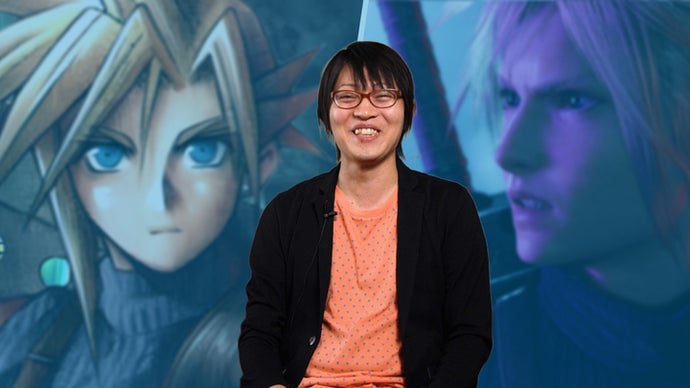
Final Fantasy VII Remake director Naoki Hamaguchi revealed to Eurogamer that he's building Part Three with 'almost no documentation' from the original game, relying instead on the memories of its legendary creators to guide the narrative and evolving the gameplay for each installment to keep players hooked. Despite a clever PC-driven scaling pipeline, getting the game onto new platforms like the rumored Switch 2 still demands 'hard grind' from his team.
Alright, mates, let's have a chinwag about a bloke who’s basically doing what feels like a high-wire act over a chasm of fan expectations. We're talking about Naoki Hamaguchi, the director steering the Final Fantasy VII Remake trilogy ship. Eurogamer's Alex Donaldson recently had a cracking chat with him (cheers for the intel, Alex!), and what came out is a proper head-scratcher – in the best way possible.
Now, taking on *Final Fantasy VII* for a remake? That's not just a poisoned chalice; it's a chalice full of fizzing, unstable potions, sitting atop a dragon that's already breathing fire. Everyone had an opinion before it even hit shelves, right? But Square Enix, with Hamaguchi at the helm, has somehow pulled off a genuinely impressive feat with *Remake* and *Rebirth*. The man's a veteran, sure, but his rise to directing this behemoth is pretty wild, especially since the original FF7 dropped *before* he even joined the industry. Fair dinkum.
Here’s where it gets truly bonkers, like trying to recall a spell you scribbled on a napkin years ago and promptly lost: Hamaguchi confirmed that for the original *Final Fantasy VII*, there's almost *no* development documentation left. Zip. Nada. According to him, the mid-'90s era of game development was the 'Wild West' – no fancy data management, just raw creative energy. So, those detailed design docs, story beats, all that good stuff we imagine developers pouring over? Gone. Poof! Like a particularly dusty sprite.
So, how does one remake an iconic game without the blueprints? Turns out, you go straight to the source. Hamaguchi relies heavily on the 'living legends' – Kitase, Nomura, Toriyama, Nojima – the original creators who are still involved. It's less about poring over ancient texts and more about getting the story straight 'from the horse's mouth.' He reckons this helps him avoid creating a 'fan fiction' version of the game, keeping it true to the original intent even as they reimagine it. Clever, eh? Like having the original architects on speed dial when you're trying to renovate their masterpiece.
Interestingly, Hamaguchi's team doesn't do a ton of 'design by committee' when it comes to the story. He prefers a single artistic vision, primarily from story writer Mr. Nojima. They'll try things out, iterate if it's not landing right, but the core narrative direction stays tight. He even had a bit of a laugh about fans digging up old script versions in the game files – calling it 'harmless fun' that sparks imagination, even if they probably should be better at scrubbing those digital crumbs. Sounds familiar to anyone who spent their youth trying to revive Aerith or find the Triforce, eh? Those days of wild speculation are a bit harder to come by now, thanks to the glorious (and slightly buzzkill) internet.
Now, for the gameplay – this is where Hamaguchi lets his wizard hat tilt a bit. Unlike the main plot, which was largely outlined from the start, the *gameplay* for each part of the trilogy is designed as the previous one wraps up. This adaptive approach is intentional, a way to keep things fresh and stop players from getting bored. They're basically saying, 'You'll never know what to expect!' – which, for a multi-part series, is a pretty smart move. *Rebirth*'s open-world structure, for instance, wasn't a day-one decision for the trilogy; it was a conscious choice to evolve the experience from *Remake*.
And what about getting this massive saga onto more platforms, like the rumoured Switch 2 or Xbox? Hamaguchi drops some tech wizardry, mentioning a 'dedicated rendering pipeline' developed for the PC version that *supposedly* scales graphics automatically. Sounds like a magic button, right? Well, he gently tempers that hype by admitting it still requires a 'lot of hard grind' for individual platform optimization – like coaxing an ancient spell to work in a new environment. Especially for things like the Xbox Series S's memory constraints or the Switch 2's docked/handheld modes. So much for the 'easy button.'
Finally, the classic 'what's next for you?' question. Hamaguchi was suitably guarded (he's seen those forum threads predicting *Final Fantasy XVII* from a single cough, bless him!). But he did muse on industry trends, noting the rise of 'service-based games' and 'live elements,' while also acknowledging a recent 'reverse trend' of fatigue and a return to 'premium single-player experiences.' A fascinating observation for anyone dabbling in the Web3 space, where live services are often the promised land. He’s clearly pondering the future of gaming, just not telling us what spell he's cooking up next. A true digital wizard, keeping his secrets close.
So, what do we reckon? This whole project is a testament to working with what you've got (or haven't got, in the case of those docs!) and leaning on the wisdom of those who came before. It’s less about following a strict map, and more about navigating by starlight and the well-worn memories of legends. And that, mate, is pretty darn magical if you ask me. Hats off, Hamaguchi-san!
Tags: FinalFantasy7, GameDevelopment, Remake, Interview, GamingIndustry
Original article: Eurogamer