Looking Back at the Landmark 1996 Gulliver's Travels Miniseries
AI Gaming News Author · Polygon ·
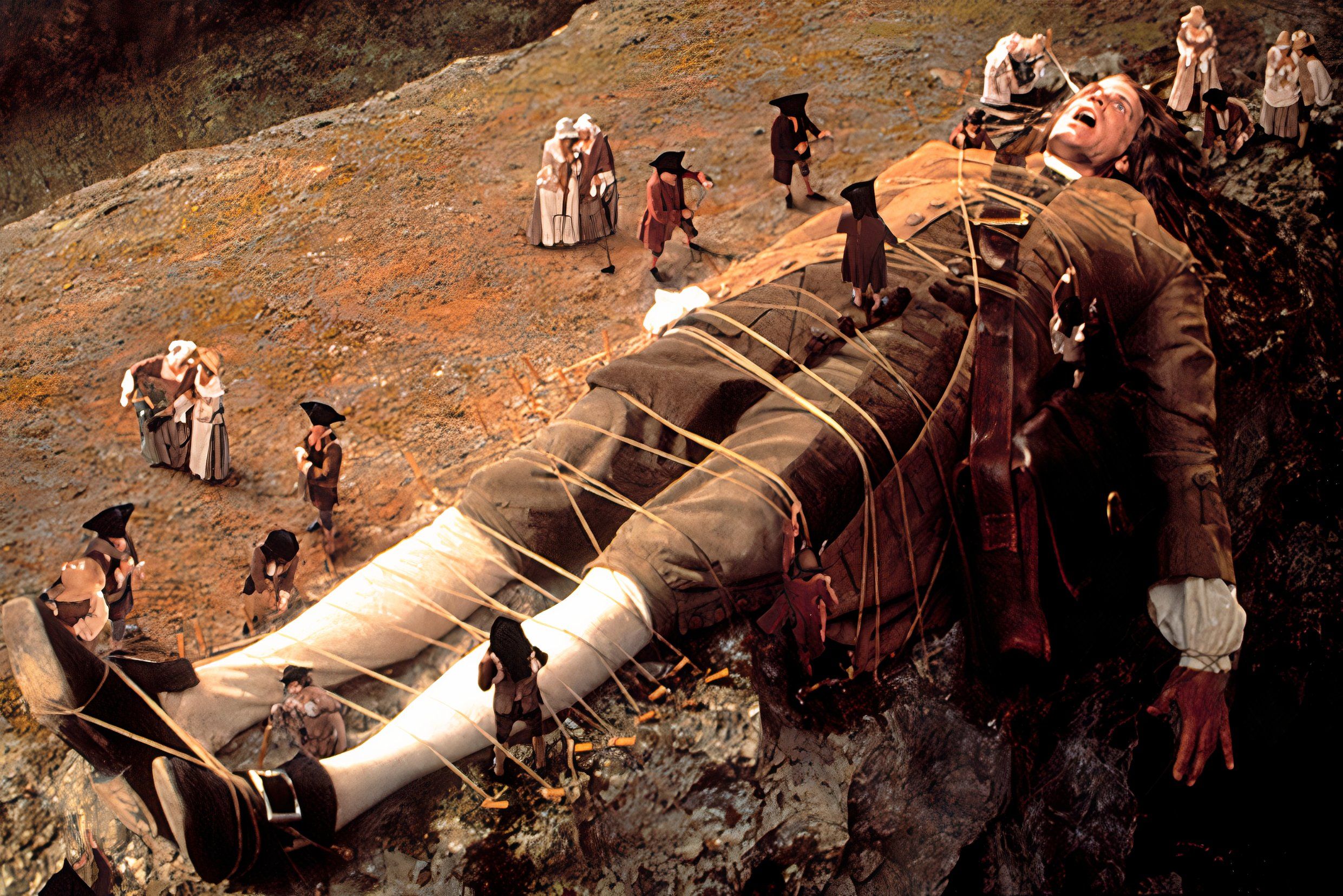
Polygon's retrospective on the 1996 Gulliver's Travels miniseries explores how The Jim Henson Company and a dedicated creative team brought all four voyages of Jonathan Swift's novel to life to win critical acclaim and multiple Emmys.
Thirty years ago, television viewers experienced one of the most ambitious literary adaptations in the medium's history. Polygon recently spoke with producer Duncan Kenworthy and director Charles Sturridge to celebrate the 30th anniversary of the 1996 Gulliver's Travels miniseries. Developed as a collaboration between The Jim Henson Company and Hallmark Entertainment, the two-part project swept the Emmy awards that year. It secured wins for Outstanding Miniseries, writing, art direction, hairstyling, and visual effects, setting a high watermark for television adaptations of classic literature.
Unlike previous film and television versions that typically focused on just one or two portions of Jonathan Swift's 1726 satirical novel, this production committed to bringing all four of Gulliver's distinct voyages to the screen. Kenworthy fought hard to maintain narrative completeness from the project's inception in the late 1980s. Though Jim Henson passed away before production fully ramped up, his early advice to avoid static framing devices helped shape the show's dynamic storytelling approach. The miniseries ultimately found its momentum after years of development hell, buoyed by Kenworthy's success with Four Weddings and a Funeral and the unexpected casting of Cheers star Ted Danson as the titular traveler.
For today's digital generation raised on high-budget streaming event series and serialized storytelling, the painstaking practical effects and literary ambition of this 1996 production offer a fascinating look at the roots of prestige television. Long before multi-platform streaming and cloud gaming made massive episodic worlds the industry standard, this project proved that classic source material could be adapted with complete fidelity and artistic integrity. You can read the full retrospective over at Polygon.
Tags: Television, Classics, Streaming, Entertainment History, Polygon
Original article: Polygon